
6 Reasons Your House Smells Musty After Heavy Rain
That damp, earthy odor that floods your home after a New Orleans rainstorm is never random — each cause has a specific source and a targeted solution. Here’s exactly what’s causing it.
If you have lived in New Orleans for any length of time, you know the smell. Within hours of a heavy rainfall, certain rooms in your home take on a damp, musty, earthy odor that no amount of air freshener can eliminate. That musty smell after rain is not just unpleasant — it is a signal that something in your home’s building envelope, drainage system, or indoor environment is failing.
The smell itself comes from microbial volatile organic compounds (MVOCs) — gases produced by mold, mildew, and bacteria as they consume organic material in the presence of moisture. In New Orleans’ subtropical climate, where relative humidity averages above 75% year-round and the city receives over 60 inches of rainfall annually, this is one of the most common and persistent indoor air quality complaints homeowners report after heavy rain events.
The good news: each of the six causes below has a specific source, specific warning signs, and a specific fix. Understanding which one is driving your home’s odor is the first step toward eliminating it permanently — rather than masking it temporarily.
Active Mold Growth Hidden Inside Your Walls

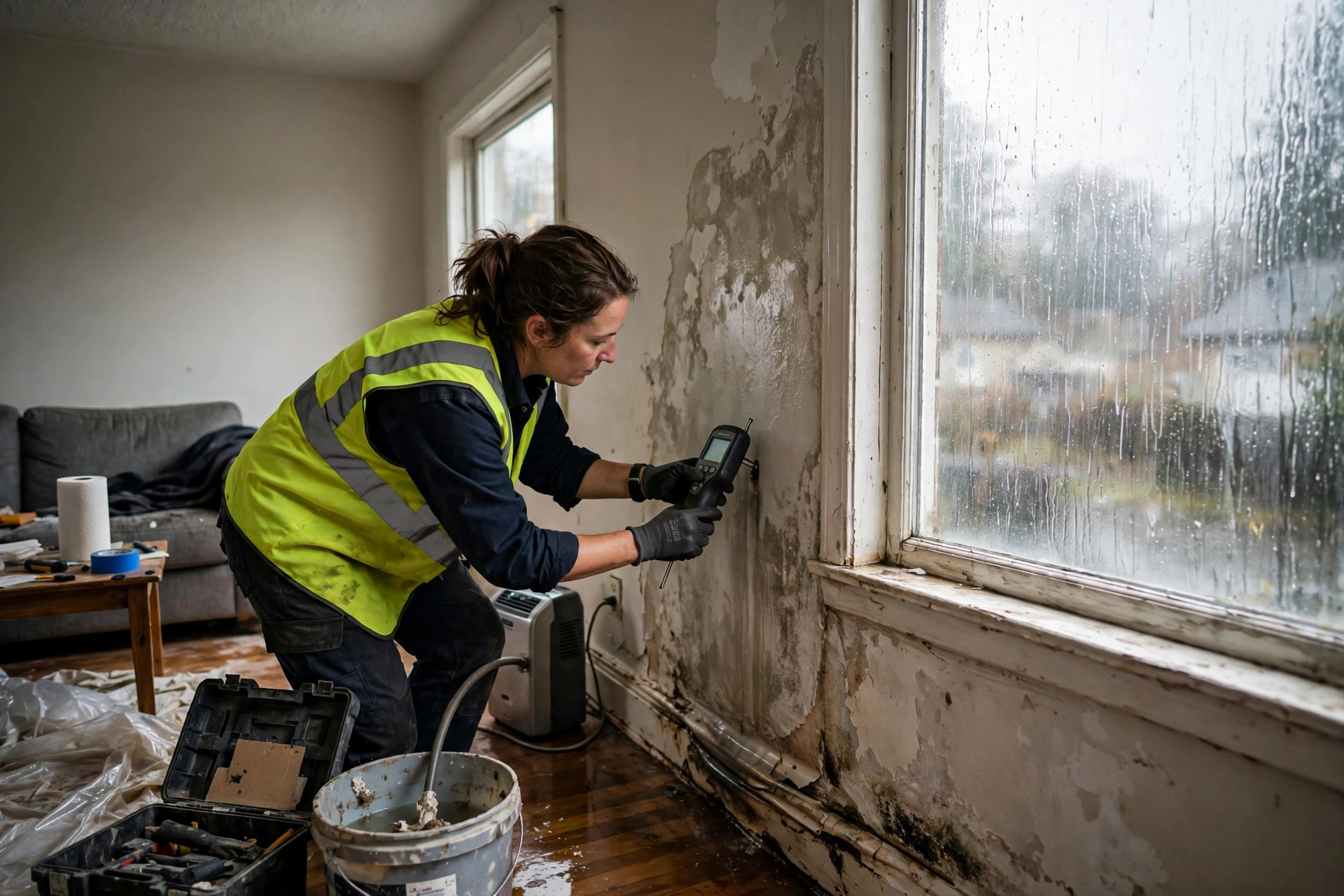
The single most common cause of a persistent musty smell after rain in New Orleans homes is active mold growth already established inside wall cavities, behind baseboards, and within ceiling assemblies. Mold colonies produce MVOCs continuously, but the odor intensifies dramatically after rain because increased exterior humidity raises indoor relative humidity — accelerating spore release and making the musty compounds more concentrated in your indoor air.
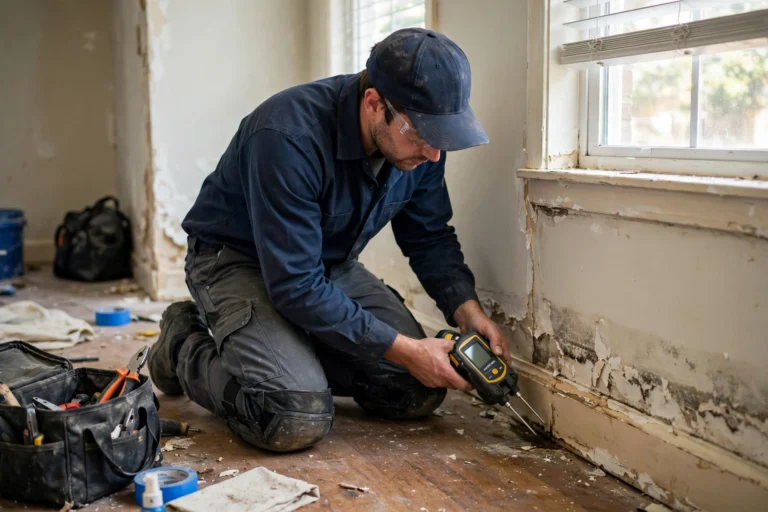
The critical point: if rain makes an existing odor noticeably worse, the mold is already there. Rain is not creating the odor — it is revealing a pre-existing mold problem that was already growing in a hidden moisture zone. This is particularly common in New Orleans homes that experienced any water intrusion in the past 12 to 24 months, including minor events that seemed fully dried at the time. Our professional mold inspection uses thermal imaging to find exactly where the colony is located — without opening walls unnecessarily.
Warning Signs
- Odor concentrated near one specific wall or room
- Smell is significantly stronger after rainfall
- Paint discoloration or bubbling on wall surfaces
- Respiratory symptoms worse when at home
What To Do
- Schedule a professional mold inspection immediately
- Do not open walls yourself — disturbing mold spreads spores
- Run dehumidifiers while awaiting inspection
- Do not paint over discoloration as a fix
Water Infiltrating Through Foundation Cracks or Gaps

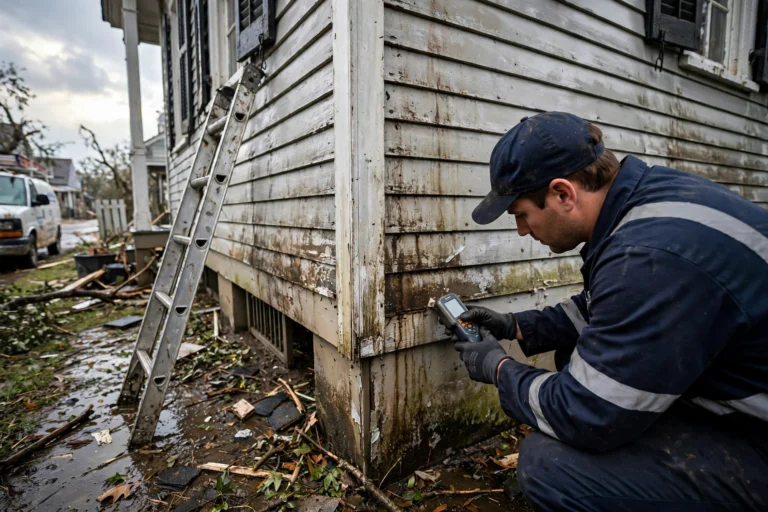
New Orleans homes sit on some of the most challenging soil in the country — highly saturated, clay-rich fill that expands and contracts dramatically with rainfall. Over time, this movement creates cracks in foundation walls, pier connections, and slab perimeters. During heavy rain, hydrostatic pressure forces water through these cracks directly into the lowest parts of your home — and the damp concrete, soil, and organic debris provide immediate fuel for the bacterial and fungal growth that generates musty odors.
Even homes without traditional basements — including the many pier-and-beam properties throughout Uptown and the Lower Garden District — experience this through crawl space floor moisture. A post-rain inspection of your crawl space or foundation perimeter is one of the fastest ways to confirm this as the odor source. If you find active water intrusion, professional extraction and drying must begin within 24 hours to prevent mold establishment.
Warning Signs
- Odor strongest at floor level or in lowest rooms
- Visible efflorescence (white mineral deposits) on walls
- Damp or wet soil visible in crawl space after rain
- Standing water in utility rooms after heavy rain
What To Do
- Inspect foundation perimeter after each heavy rain event
- Install or service a crawl space vapor barrier
- Have foundation cracks assessed by a professional
- Improve grading around foundation to direct runoff away
Musty Smell Returning After Every Rain?
That’s a moisture intrusion sign — not a cosmetic issue. IICRC-certified inspection available 24/7 across Greater New Orleans.
Mold and Bacteria in Your Air Ducts and HVAC Unit

Your HVAC system runs nearly year-round in New Orleans, and it produces significant condensation as it dehumidifies the indoor air. When drain lines clog, condensate pans overflow, or simply over time as organic debris accumulates on coils and in ductwork, mold and bacteria establish colonies throughout the system. After heavy rain, the sudden increase in outdoor humidity raises the moisture load on your HVAC — and the musty compounds already present in your ducts get concentrated and blown through every supply vent in your home.
This is why the musty smell after rain sometimes seems to come from everywhere simultaneously rather than from one specific location — your duct system is distributing it. Professional air duct cleaning and antimicrobial treatment is the only effective solution. Running the system harder in hopes of drying things out actually makes it worse by spreading more contaminated air throughout your home.
Warning Signs
- Musty smell emerges immediately when AC turns on
- Odor seems to come from multiple vents at once
- Visible dark growth on vent grilles or diffusers
- Allergy symptoms worsen indoors in affected rooms
What To Do
- Schedule professional air duct cleaning and treatment
- Have evaporator coil and drain pan inspected and cleaned
- Replace air filter immediately and increase change frequency
- Do not run the system until after professional assessment
Moisture Behind Grout, Tile, and Natural Stone Surfaces

Many New Orleans homes — particularly those in historic neighborhoods like the Garden District, Uptown, and the French Quarter — feature marble flooring, travertine tile, granite countertops, and other natural stone surfaces in bathrooms and kitchens. What many homeowners do not realize is that when grout seals fail or tile adhesive deteriorates, moisture infiltrates behind the tile surface during wet weather. This trapped moisture creates a dark, damp microenvironment against the cement board or drywall backer — ideal for bacterial and fungal growth that produces musty odors that intensify noticeably after heavy rain.
Natural stone surfaces themselves can also trap moisture within their porous structure when they lose their protective seal — which accelerates in New Orleans’ high-humidity environment. If the musty smell after rain seems to originate from your bathroom or kitchen, the tile and grout system is a primary suspect. Professional marble and stone restoration includes deep cleaning, antimicrobial treatment, resealing, and grout restoration — eliminating the moisture pathway that allows bacterial growth to persist behind your stone surfaces.
Warning Signs
- Musty odor concentrated in bathroom or kitchen after rain
- Dark discoloration or fuzz in grout lines
- Staining or etching appearing on marble or travertine
- Loose or hollow-sounding tiles when tapped
What To Do
- Schedule professional stone and grout deep cleaning
- Have tile adhesive integrity assessed if tiles sound hollow
- Reseal grout lines annually — more frequently in wet rooms
- Reseal natural stone surfaces on a regular maintenance schedule
Roof Leaks and Attic Moisture Accumulation

Attic spaces in New Orleans homes represent a near-perfect environment for moisture accumulation and subsequent musty odor generation. When even minor roof leaks allow water to enter the attic space during heavy rain — whether through failing flashings, deteriorated shingles, compromised ridge vents, or gaps around penetrations — that moisture saturates insulation, roof decking, and wood framing. These materials then off-gas musty MVOCs downward into your living spaces through ceiling penetrations, recessed lighting gaps, and HVAC returns.
After significant storm or hurricane damage, this is one of the most common post-rain odor complaints we address across Greater New Orleans. The attic damage may be so minor that no visible ceiling staining has occurred yet — but the insulation is saturated and mold is already establishing on the roof decking. Annual roof inspections and prompt attention after any storm event are the most effective preventive measures.
Warning Signs
- Musty smell strongest on upper floors or near ceiling
- Ceiling discoloration appearing after rainfall events
- Attic insulation appears compressed, damp, or dark
- Visible staining on roof decking boards when accessed
What To Do
- Inspect attic after every significant rain or storm event
- Schedule annual roof inspection — especially post-hurricane season
- Ensure ridge vents and soffit vents are clear and functional
- Address any damaged flashing, shingles, or penetration seals promptly
Sewer Gas and Drain System Backflow During Heavy Rain

New Orleans’ combined sewage and stormwater drainage system is one of the most overburdened in the country. During heavy rainfall events, the system regularly surcharges — and that surcharge can push sewer gases backward through your home’s drain lines, through floor drains, floor-level cleanouts, and infrequently-used fixtures. The resulting odor is distinctly musty and sulfurous, and it appears specifically during and immediately after heavy rainfall when system pressure is highest.
Dry P-traps — the U-shaped pipe segments beneath drains that use a small water reservoir to block sewer gas — are a particularly common culprit in New Orleans homes with infrequently used fixtures like utility sinks, floor drains, and secondary bathrooms. The trap dries out during dry spells, then rain-induced sewer pressure pushes gas through the empty trap into your home. This is a distinct source from mold-related musty odors but is frequently confused with it. If the smell is particularly sharp or sulfurous, drain system backflow is the more likely cause.
Warning Signs
- Smell appears specifically during or immediately after rain
- Odor is sulfurous or sewage-like alongside musty notes
- Smell strongest near floor drains or utility sinks
- Multiple drains in house gurgling simultaneously during rain
What To Do
- Pour water into all infrequently used floor drains monthly
- Have a plumber inspect backflow prevention valves annually
- Install trap primers on floor drains prone to drying out
- Have drain lines snaked if gurgling or backflow is observed
Not Sure Which Cause Is In Your Home?
Our certified inspection team identifies the exact source of post-rain musty odors — thermal imaging included across Greater New Orleans.
Why a Musty Smell After Rain Is a Health Concern — Not Just Unpleasant
Many homeowners treat a post-rain musty smell as a nuisance to be masked rather than a symptom to be investigated. In New Orleans’ climate, that approach consistently leads to larger, more expensive problems. The microbial volatile organic compounds (MVOCs) that create musty odors are generated by biological activity — and that biological activity has real health consequences.
Respiratory Irritation
MVOCs and mold spores trigger coughing, wheezing, and breathing difficulty — symptoms that worsen with continued exposure in a contaminated environment.
Allergic Reactions
Eye irritation, runny nose, and skin rashes often attributed to outdoor allergies are frequently caused by indoor mold exposure — especially in New Orleans where exposure is year-round.
Neurological Symptoms
Headaches, brain fog, and fatigue that improve when leaving the home and return upon re-entry are classic indicators of chronic indoor mold or MVOC exposure.
Sleep Disruption
Poor sleep quality in affected bedrooms — even without awareness of the odor — has been linked to elevated MVOC concentrations in sleeping environments.
Recurring Illness
Frequent upper respiratory infections, chronic sinusitis, and recurring bronchitis in household members that respond poorly to treatment often have a mold component as the underlying driver.
Structural Damage
Beyond health, the biological activity producing musty odors is simultaneously consuming building materials — drywall, wood framing, insulation, and natural stone — accelerating structural deterioration.
Troubleshooting the Musty Smell After Rain — Step by Step
Use this systematic approach to narrow down which of the six causes is affecting your home before calling in professional assessment.
- Step 1 — Locate it: Walk through each room immediately after heavy rain and identify where the smell is strongest. Note whether it is at floor level, ceiling level, or from vents.
- Step 2 — Time it: Does the smell appear during rain, immediately after rain, or only when the AC is running? Timing narrows the cause significantly.
- Step 3 — Check the HVAC: Turn the system off. If the smell reduces noticeably, your air ducts or air handler are the primary distribution point.
- Step 4 — Inspect crawl space and attic: After the rain stops, inspect both spaces for standing water, wet insulation, or visible dark staining on wood surfaces.
- Step 5 — Check all drains: Pour water down every floor drain and infrequently used fixture. Note if the smell intensifies near any specific drain during rain.
- Step 6 — Check tile and stone rooms: Pay specific attention to bathrooms and kitchens — especially rooms with marble, travertine, or stone tile. Note if the odor is concentrated there.
- Step 7 — Call for professional inspection: If you cannot confidently identify the source, or if any source involves water-damaged materials or visible mold growth, contact a certified restoration professional. Do not delay.
Musty Smell After Rain — Source Identification Table
Quick-reference guide to matching your specific symptoms to the most likely source of the post-rain musty smell in your New Orleans home.
| Cause | When Smell Appears | Location | Urgency | Professional Needed? |
|---|---|---|---|---|
| Hidden mold in walls | During / after rain | Specific wall or room | High | Yes — inspection required |
| Foundation water intrusion | During / after rain | Floor level, lower rooms | High | Yes — extraction needed |
| HVAC / air ducts | When AC runs after rain | All rooms from vents | High | Yes — duct cleaning needed |
| Stone / grout / tile backer | Hours after rain | Bathroom or kitchen | Medium | Yes — stone restoration |
| Roof leak / attic moisture | During / after rain | Upper floors, ceiling area | High | Yes — roof and attic assessment |
| Drain system backflow | During heavy rain only | Near floor drains | Medium | Plumber + restoration |
Humidity Prevention Strategies — Stop the Smell Before It Starts
Prevention in New Orleans requires accepting that rain and humidity are constants — and building your home’s defenses around that reality rather than against it.
Maintain Indoor Humidity Below 55%
Whole-home dehumidifiers are the single most effective tool for New Orleans homeowners. Below 55% indoor relative humidity, mold growth is dramatically inhibited regardless of outdoor conditions.
Service Your HVAC System Annually
Annual professional HVAC servicing including coil cleaning, drain pan clearing, and air duct inspection prevents your system from becoming a musty odor generator and distributor.
Inspect Your Building Envelope After Every Storm
Check your roof, foundation perimeter, window seals, and exterior wall penetrations after every significant rain event. Minor gaps become major moisture pathways quickly in New Orleans’ rainfall intensity.
Seal Stone and Grout Annually
Annual grout sealing and natural stone surface sealing — provided by marble and stone restoration professionals — eliminates moisture penetration pathways behind tile surfaces in bathrooms and kitchens.
Maintain Your Plumbing and Drains
Pour water into all infrequently used drains monthly to keep P-traps primed. Annual plumbing inspection catches deteriorating connections before they create hidden moisture zones behind walls.
Annual Professional Mold Inspection
Schedule a professional mold inspection each year — ideally after hurricane season — to catch hidden mold growth before it creates persistent post-rain odors throughout your home.
Our Guarantee on Every Restoration Project
- Full written scope and estimate before any work begins
- Thermal imaging and moisture mapping on every inspection
- EPA-registered antimicrobial treatment on all affected areas
- Post-treatment air quality and moisture verification testing
- Complete photo documentation for insurance claim support
- No hidden fees — satisfaction guaranteed on every project
Frequently Asked Questions — Musty Smell After Rain in New Orleans
That Musty Smell After Rain Is Telling You Something — Listen to It
A post-rain musty odor is a moisture warning signal that gets more expensive to ignore with every passing week. Our certified restoration team identifies the exact source and fixes it permanently — available 24/7 across Greater New Orleans.
Mold Remediation Stone Restoration Water Damage Air Duct Cleaning Storm Damage Chimney Repair
2 Comments