When a fire breaks out, the flames get all the attention. But long after the fire trucks leave, smoke and soot keep working — staining walls, etching glass, corroding metal, and pushing stubborn odor deep into every soft surface in the house.
With the first cold front of the season arriving tonight, many homeowners will light their fireplaces for the first time since spring — a common source of smoke odor calls each fall. Whether the smoke came from a fireplace mishap, a kitchen fire, or something more serious, knowing what to do in the first hours makes the difference between a quick cleanup and lasting damage.
What Smoke Damage Actually Does to Your Home
Smoke damage is more than a bad smell. Soot is made of fine, acidic particles that bond to surfaces and keep reacting:
- Dry soot comes from fast-burning fires, like paper or wood. It is powdery and vacuums off hard surfaces easily — but it spreads everywhere through the air.
- Wet or oily soot comes from slow, smoldering fires — plastics, rubber, or food. It is sticky and smeary, and needs professional cleaning agents.
- Protein residue comes from kitchen fires. It is nearly invisible but coats everything with a greasy film and an overpowering odor.
Soot’s acidity discolors plastics within hours and etches glass, mirrors, and metal within days. Porous materials — drywall, carpet, upholstery, drapes — absorb soot and odor deep into their fibers. That is why smoke damage from even a small fire can affect rooms the flames never touched.
Safety First: Before You Touch Anything
- Make sure the fire is fully out and the fire department has cleared the property for re-entry.
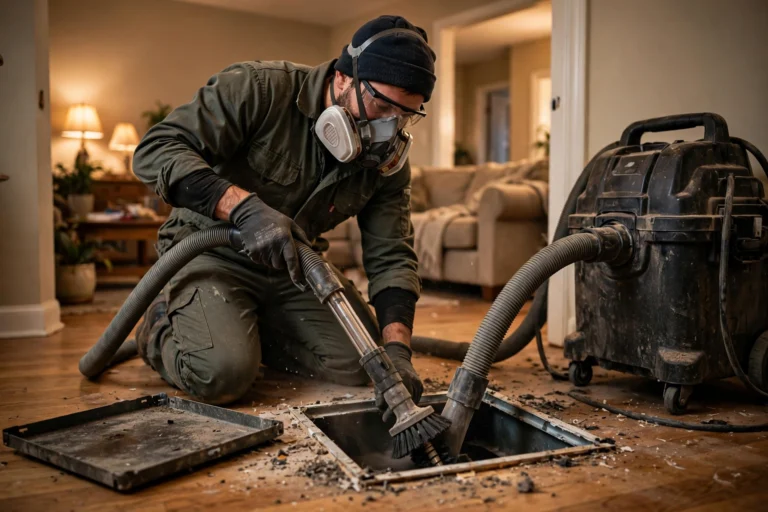
- Turn off your HVAC system. Running the air handler pulls soot through the ducts and spreads it into every room — ductwork will likely need air duct cleaning as part of the job.
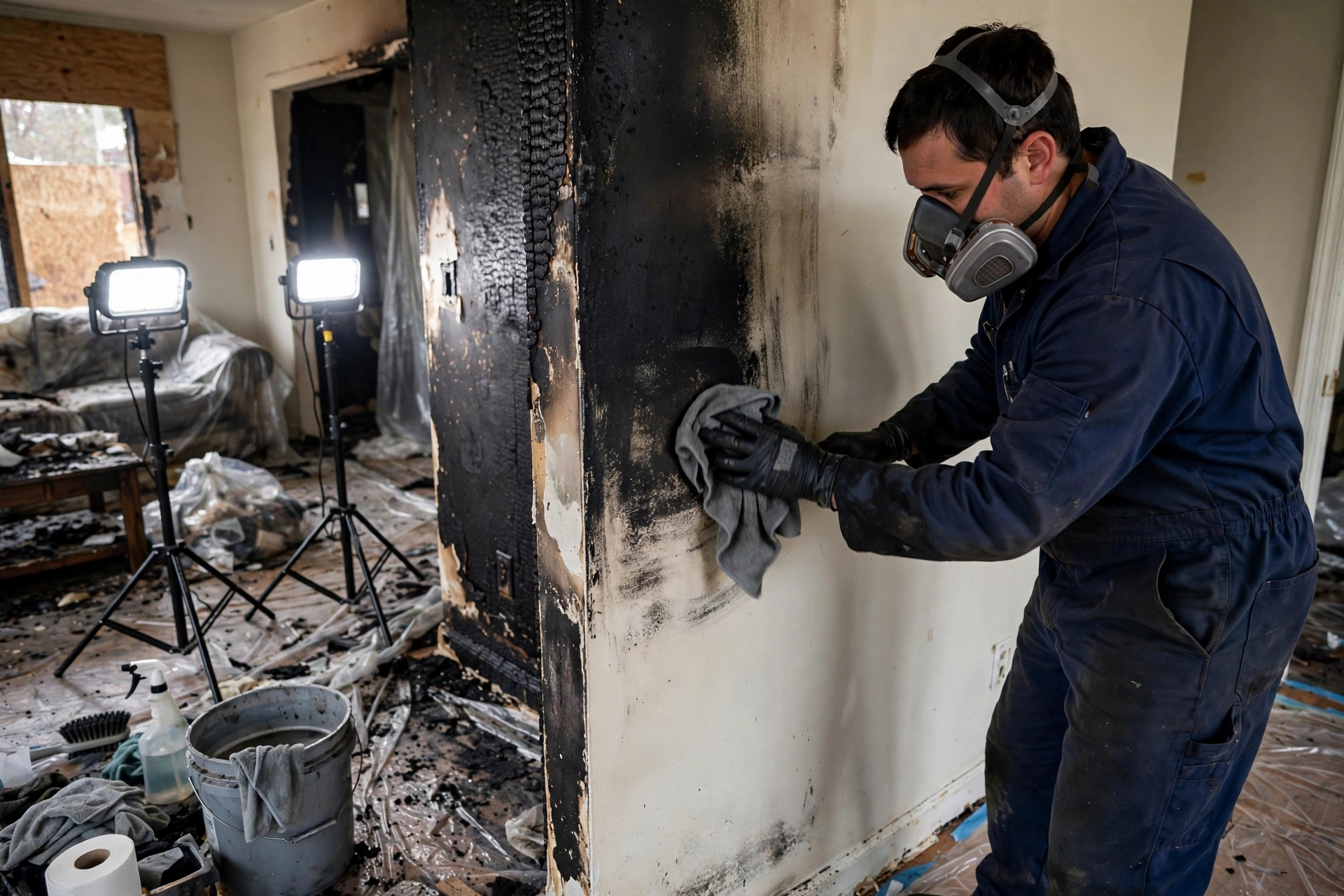
- Wear gloves, eye protection, and a respirator mask — soot contains irritants you do not want in your lungs.
- Do not touch walls, upholstery, or clothing with bare hands — skin oils make soot harder to remove.
- If wiring, outlets, or appliances were exposed to heat, have an electrician check them before restoring power.
What Homeowners Can Safely Do Right Away
For light, contained smoke damage, these steps keep things from getting worse:
- Ventilate. Open windows and doors. Tonight’s cool front helps — set a fan in a window blowing outward.
- Vacuum loose soot. Using a vacuum with a HEPA filter, hold the nozzle just above sooty surfaces and draw the particles up. Never wipe dry soot — rubbing grinds it into the surface.
- Protect what survived. Cover clean furniture with sheets or plastic to keep airborne soot off it.
- Document everything. Photograph every affected area before you clean — detailed photos support your insurance claim later.
- Remove plants, pets, and food. Soot is not safe for any of them; discard open food packaging.
Be honest about the scale. If soot covers multiple rooms or the odor is strong days later, DIY stops here.
When to Call a Professional Restoration Company
Bring in a professional fire and smoke restoration team when:
- The fire affected more than one room or left heavy soot throughout.
- Soot got into the HVAC system or ductwork — contamination spreads every time the system runs.
- The smoke odor is still strong several days after the fire, which means soot has embedded in porous materials.
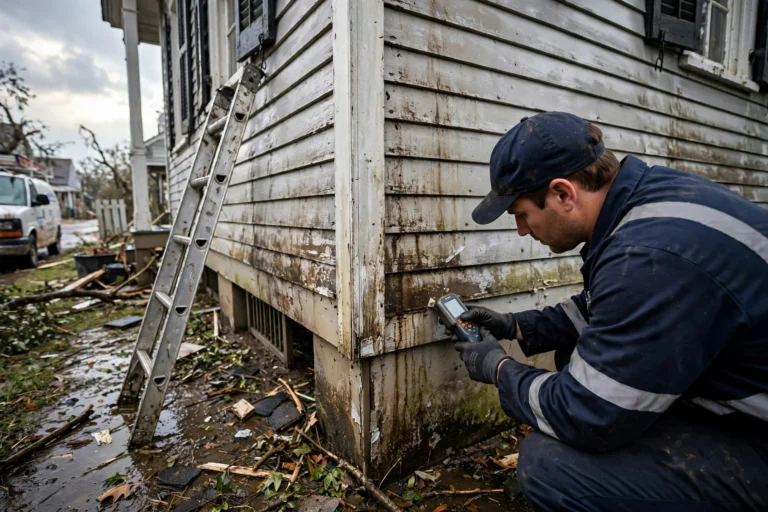
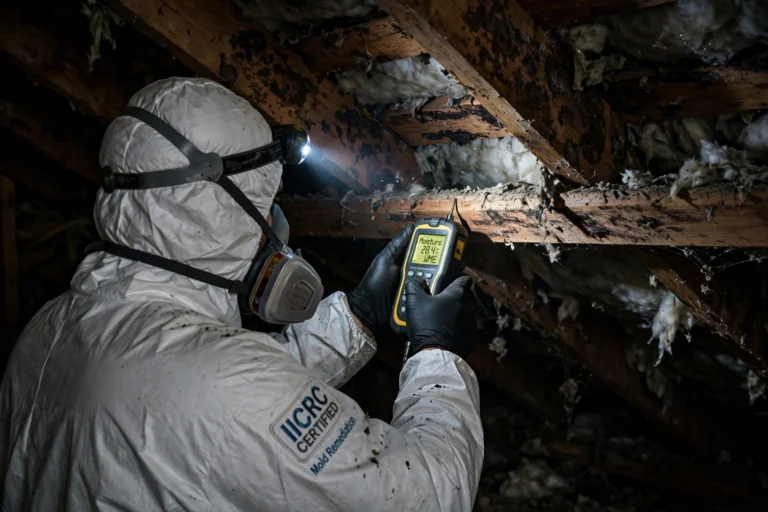
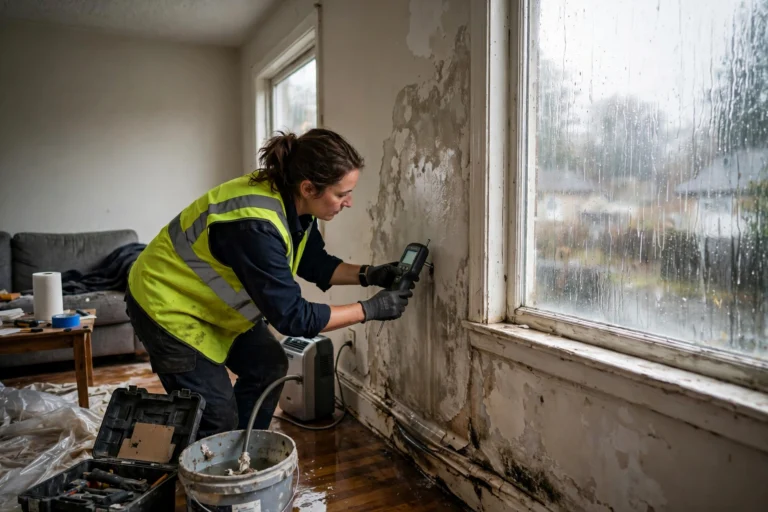
- Water was used to put out the fire. Soaked materials can grow mold within days in New Orleans humidity — you may also need mold remediation alongside smoke cleanup.
- You need documentation for an insurance claim — restoration companies provide the photo records adjusters expect.
What Professional Smoke Damage Cleanup Includes
A certified crew works through a set order:
- Assessment. Technicians map every affected area, including rooms that look fine — hidden contamination shows up under inspection.
- Dry soot removal. Industrial HEPA vacuums and dry chemical sponges lift soot without grinding it in.
- Wet cleaning. Specialized alkaline cleaners dissolve sticky and protein residues that dry methods cannot touch.
- Contents cleaning. Furniture, clothing, and personal items are cleaned on-site or packed out for ultrasonic or ozone treatment.
- Deodorization. Thermal fogging or hydroxyl generators neutralize odor at the molecular level instead of masking it.
- HVAC and duct cleaning. Registers, returns, and ductwork are cleaned so the system does not re-contaminate the home.
- Repairs. Sealing, repainting with odor-blocking primer, and replacing materials that cannot be salvaged.
Preventing Smoke Odor Problems in New Orleans Homes
Most fall smoke calls are preventable:
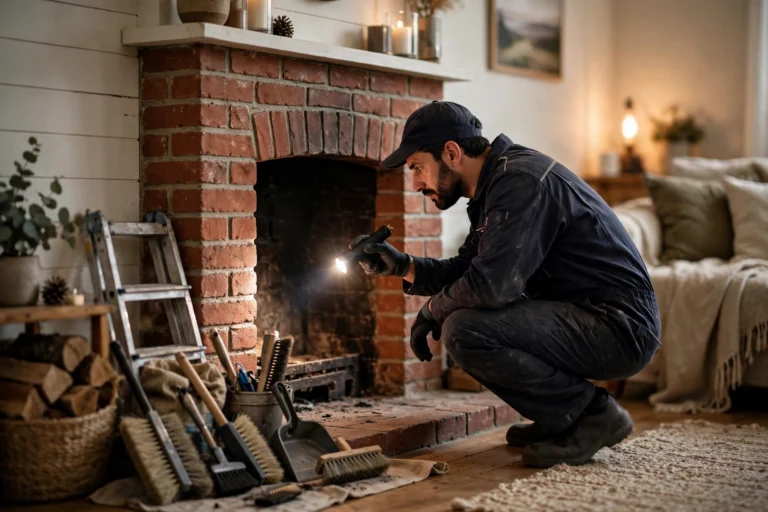
- Get your chimney swept before the first fire. Creosote buildup and blockages are the top cause of fireplace smoke puff-back — our fireplace checklist covers what to check first.
- Open the damper fully before lighting a fire, and crack a nearby window so the chimney drafts.
- Never leave cooking unattended — kitchen fires are the most common source of protein-residue smoke damage.
- Clean the dryer vent annually. Lint buildup is a fire hazard and a frequent source of laundry-room smoke.
- Test smoke detectors when the season changes, and replace batteries.
Frequently Asked Questions
Q: How long does smoke smell last after a fire?
A: Light odor from a small contained incident can clear in a few days with ventilation. Heavy soot contamination can smell for months — or permanently — if porous materials are not professionally treated. Odor does not fade on its own once soot has embedded.
Q: Can I clean smoke damage myself?
A: Light surface soot in one room can be vacuumed with a HEPA-filter vacuum. Anything beyond that — multiple rooms, HVAC contamination, sticky residue, or lingering odor — needs professional equipment and cleaning agents. Aggressive DIY scrubbing drives soot deeper and makes professional removal harder.
Q: Does homeowners insurance cover smoke damage cleanup?
A: In most cases, yes — smoke and soot damage from a covered fire event is included in standard homeowners policies. Photograph everything before cleaning, keep receipts for emergency work, and check your policy for specific limits.
Q: Why does my house smell like smoke after using the fireplace?
A: Usually a drafting problem — a partially open damper, a cold or blocked chimney, or creosote buildup pushing smoke into the room instead of up the flue. A professional chimney sweep and inspection before the season resolves most of these issues.
Q: Will smoke odor go away on its own?
A: No. Soot embeds in drywall, wood, carpet, and fabrics, and odor reactivates whenever humidity rises — a real problem in New Orleans. Professional deodorization neutralizes odor compounds instead of masking them.
If smoke or soot has affected your home, call (504) 520-4646 — our team responds 24/7 across the Greater New Orleans metro.