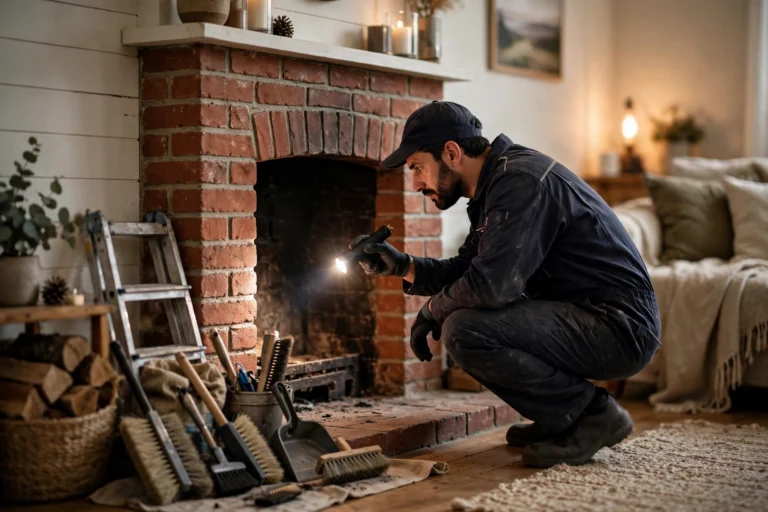
Most New Orleans homeowners never look inside their attic or under their house until something forces the issue. That is exactly why those two spaces are where mold does its best work — out of sight, in the damp, for months at a time. Right now Louisiana ranks number one in the country for search interest in “mold removal,” with attic and crawl space queries rising fastest in the state. In our climate, these are the two rooms in a house most likely to stay wet long enough for mold to take hold.
Why attics and crawl spaces grow mold in New Orleans
Mold needs moisture, a food source, and warmth. New Orleans hands it all three. Attics collect heat and humid air directly under the roofline, where any small leak lands first. Crawl spaces sit on damp ground with little airflow. Wood framing, plywood decking, and insulation supply the food. The usual triggers here: a slow roof leak dripping onto decking, a bathroom fan venting into the attic instead of outside, poor attic ventilation, or a crawl space with no vapor barrier on soil soaked by October rains.
Signs of mold in the attic
You do not need to crawl around up there to catch the early warnings:
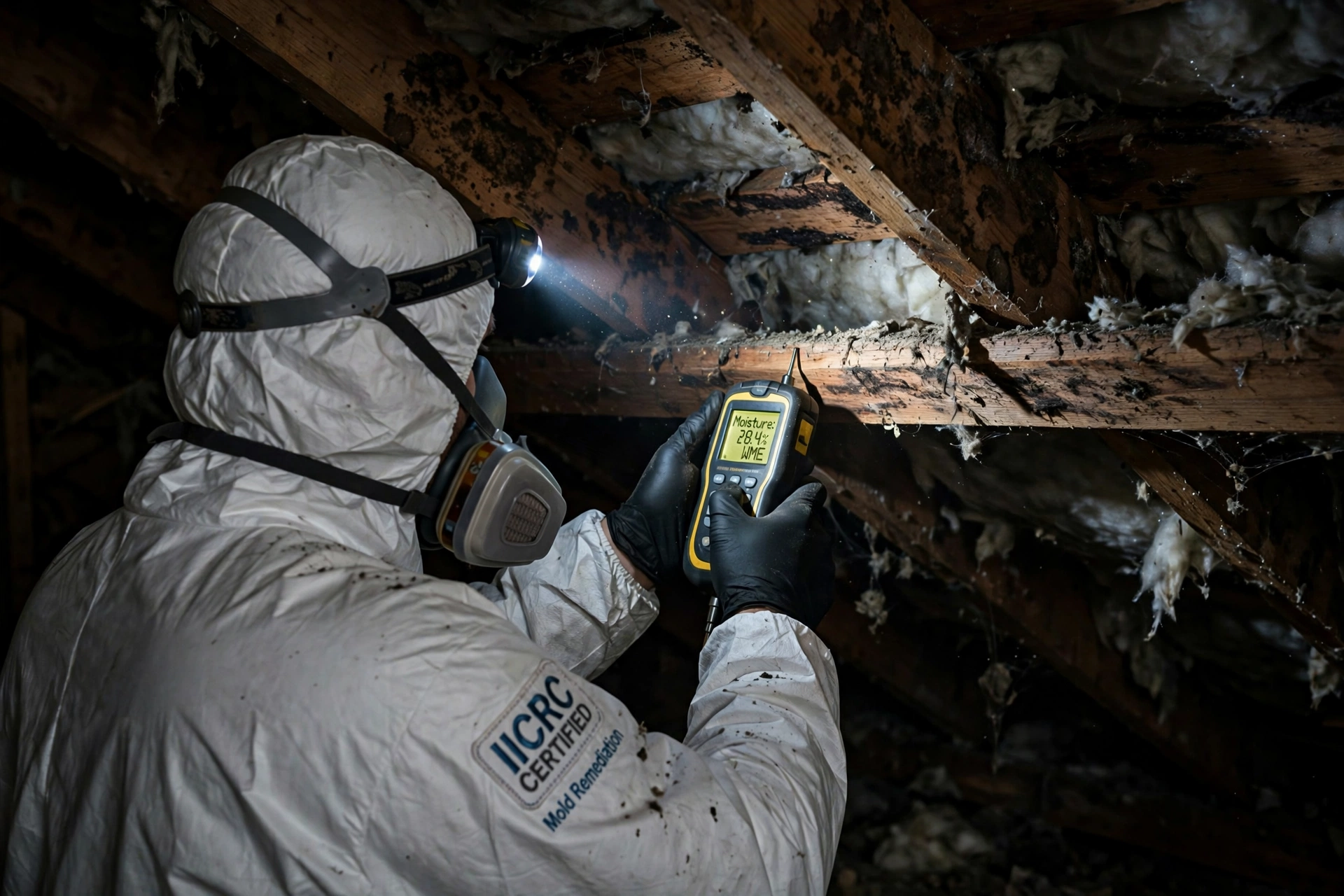
- Staining on the roof decking. Look up from the attic hatch with a flashlight. Dark streaks or blotches on the underside of the plywood or on the rafters are worth a closer look.
- Damp or matted insulation. Blown-in insulation that looks clumped or compressed may be holding moisture.
- A musty smell near the hatch. Mold often smells before it shows. If the hallway under the attic access smells earthy, something is growing above.
- Roof problems outside. Missing shingles, damaged flashing, or clogged gutters are how the water gets in. Roof-origin leaks are storm damage restoration territory, not a mold-only job.
Signs of mold under the house
Crawl spaces give fewer obvious clues, which makes long-term growth more likely:
- Standing water or persistently wet soil under the house — ground moisture feeds everything above it.
- Sagging or damp insulation under the floor joists, sometimes with visible dark patches.
- A musty smell rising through floor vents or around the home’s perimeter.
- Cupping or buckling floors inside — wood flooring reacting to moisture coming up from below.
If you have noticed musty odors elsewhere in the house after rain, our musty smell guide walks through the usual sources room by room.
What you can do yourself — and where to stop
A small patch of surface mold on a hard, cleanable surface — a windowsill, a bathroom tile line — can be handled with household cleaning. Attics and crawl spaces are a different story.
Stop and call a professional when the growth covers a wide area or multiple surfaces, it is inside insulation or wood framing rather than on a hard surface, or the moisture source is unidentified. Attic and crawl space mold is rarely a surface problem — it is a moisture problem with mold as the symptom. Wiping visible growth without fixing the source means it returns within weeks, and disturbing large colonies without containment spreads spores through the house. That is professional mold remediation work.
What professional mold removal actually involves
A proper job is a process, not a spray bottle:
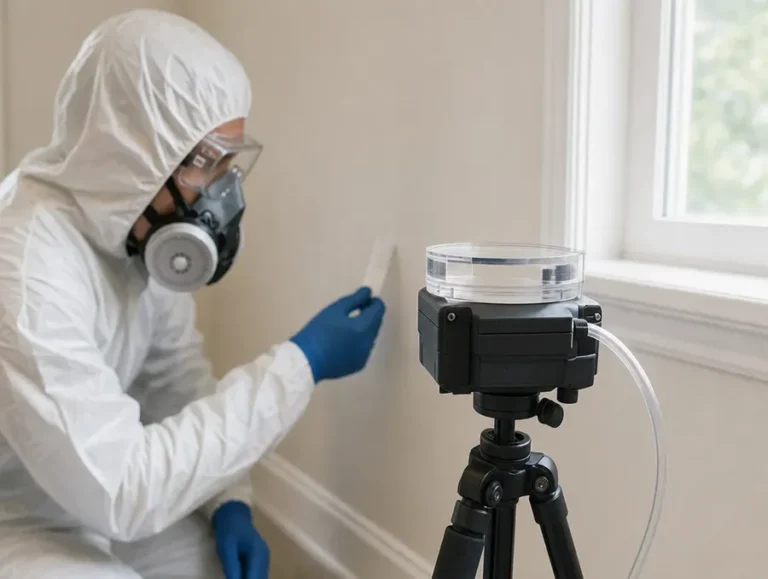
- Inspection and moisture testing. Technicians locate visible growth, then use moisture meters to find damp areas where mold is likely growing unseen.
- Containment. Affected areas are sealed with plastic sheeting under negative air pressure so spores do not migrate into living spaces.
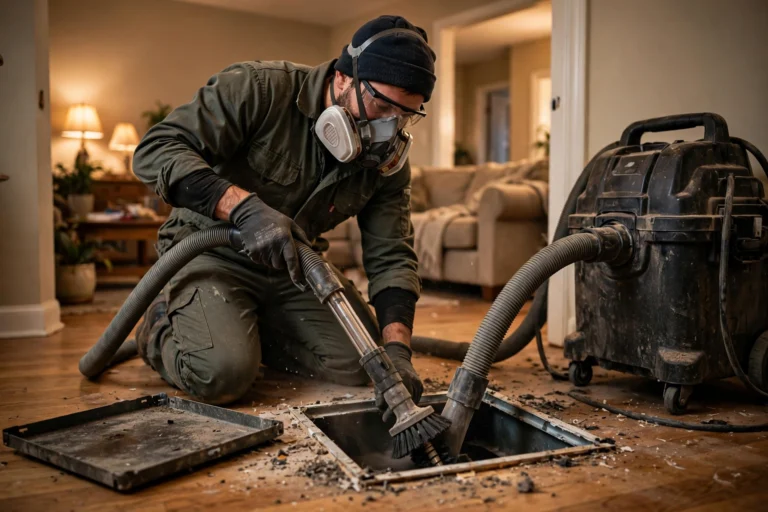
- Removal and cleaning. Moldy insulation and compromised materials come out; structural framing is cleaned in place; HEPA-filtered air scrubbers capture airborne spores.
- Drying and verification. The space is dried to levels where mold cannot re-establish, and post-work checks confirm the growth is gone.
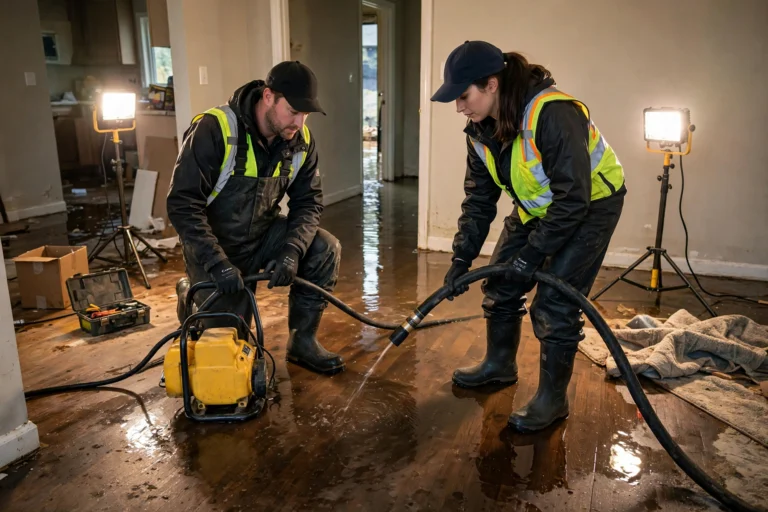
Anything that got wet from the same moisture source — flooded floors, soaked drywall downstairs — is water damage restoration work and should be handled as part of the same job.
Fixing the cause so it stays gone
Remediation without repair is a temporary win. The fixes that matter most in New Orleans attics and crawl spaces:
- Vent bathroom and dryer fans to the outside, never into the attic — one of the most common attic-mold causes here, and one of the easiest to correct.
- Repair the roof leak properly. Stains on decking mean water is still getting in. Patch the source, not just the stain.
- Improve attic ventilation so hot, humid air can exit instead of condensing on the underside of the roof.
- Add or replace the crawl space vapor barrier and make sure ground water drains away from the foundation.
Our post on mold hiding spots covers the other places in a New Orleans house where mold gets a head start — worth a read once these two spaces are handled.
FAQ
Is attic mold dangerous?
Attic mold is a moisture problem that gets worse with time: it feeds on wood and insulation, can spread spores into living spaces, and signals a leak or ventilation issue that will keep damaging the roof structure. It should be assessed, not ignored.
Can I remove attic mold myself?
Small, isolated surface patches can be cleaned with household methods, but attic and crawl space growth usually involves a hidden moisture source and hard-to-reach areas. If the area is large, inside materials, or the source is unknown, professional remediation is the safer route.
What does crawl space mold smell like?
A musty, earthy, or sour odor that seems to rise from under the house — noticeable near floor vents, in rooms above the crawl space, or around the home’s perimeter on still, humid days.
Will homeowners insurance cover mold removal in New Orleans?
It depends on the cause. Mold resulting from a covered sudden event — like storm-driven rain entering through roof damage — is more likely to be covered than mold from long-term humidity or an unaddressed slow leak. Photograph the damage before any cleanup and check your policy’s mold provisions.
How do I keep mold from coming back after removal?
Fix the moisture source first — that is the entire ballgame. Ventilate the attic, repair roof leaks, manage crawl space groundwater and vapor barriers, and keep indoor humidity controlled. Remediation that ends with the moisture problem solved is remediation that lasts.
The bottom line
Attics and crawl spaces are the two places in a New Orleans home where mold can grow for months unnoticed. Check the warning signs, fix the moisture source, and bring in professionals when the growth is more than a surface patch.
Get Restoration New Orleans offers 24/7 emergency response across the metro area. Call (504) 520-4646 for attic, crawl space, and whole-home mold removal in New Orleans.