Fall is when New Orleans fireplaces and heaters get their first workout of the year. The first cold front of the season just passed through, which means space heaters, furnaces, and fireplaces are firing up — and with them, the cooler-month uptick in house fires. When the fire department leaves, most homeowners stand in the driveway asking the same question: what now?
Fire damage restoration is what happens between that moment and a livable home again. Here’s what the first 48 hours should look like, what professional restoration actually involves, and the mistakes that quietly make everything worse.
The first 48 hours after the fire is out
Don’t go back inside until you’re cleared to. The fire department will say when the structure is safe to enter. Even small fires leave unseen hazards — weakened flooring, damaged wiring, air still carrying soot. If you must step in briefly, wear a respirator; a dust mask doesn’t filter fine soot.
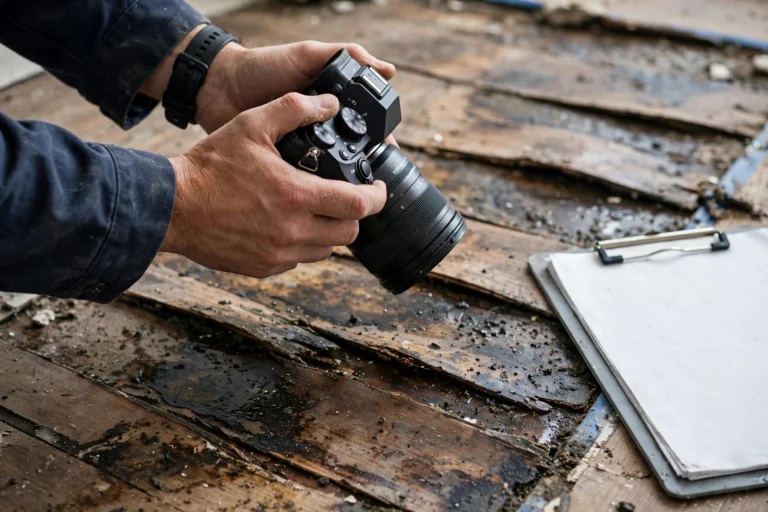
Call your insurance company right away. Most policies require prompt notification. Ask for your claim number, the adjuster’s name, and what documentation they want. Photograph and video everything before anything is moved — smoke travels, and rooms far from the flames can carry soot and odor damage your adjuster needs to see.
Secure the property. Fires leave openings — broken windows, burned doors, access holes the crew cut. Seal the house against weather and trespassers fast: one rain shower through an open roof section adds water damage on top of fire damage. Our insurance claim guide covers how adjusters evaluate this documentation.
Get a professional assessment before you touch anything. Don’t haul out ruined furniture the morning after — not before a restoration professional has documented the scene. Moving things first can complicate your claim, and disturbing charred materials spreads soot into clean rooms.
A house fire is actually three kinds of damage
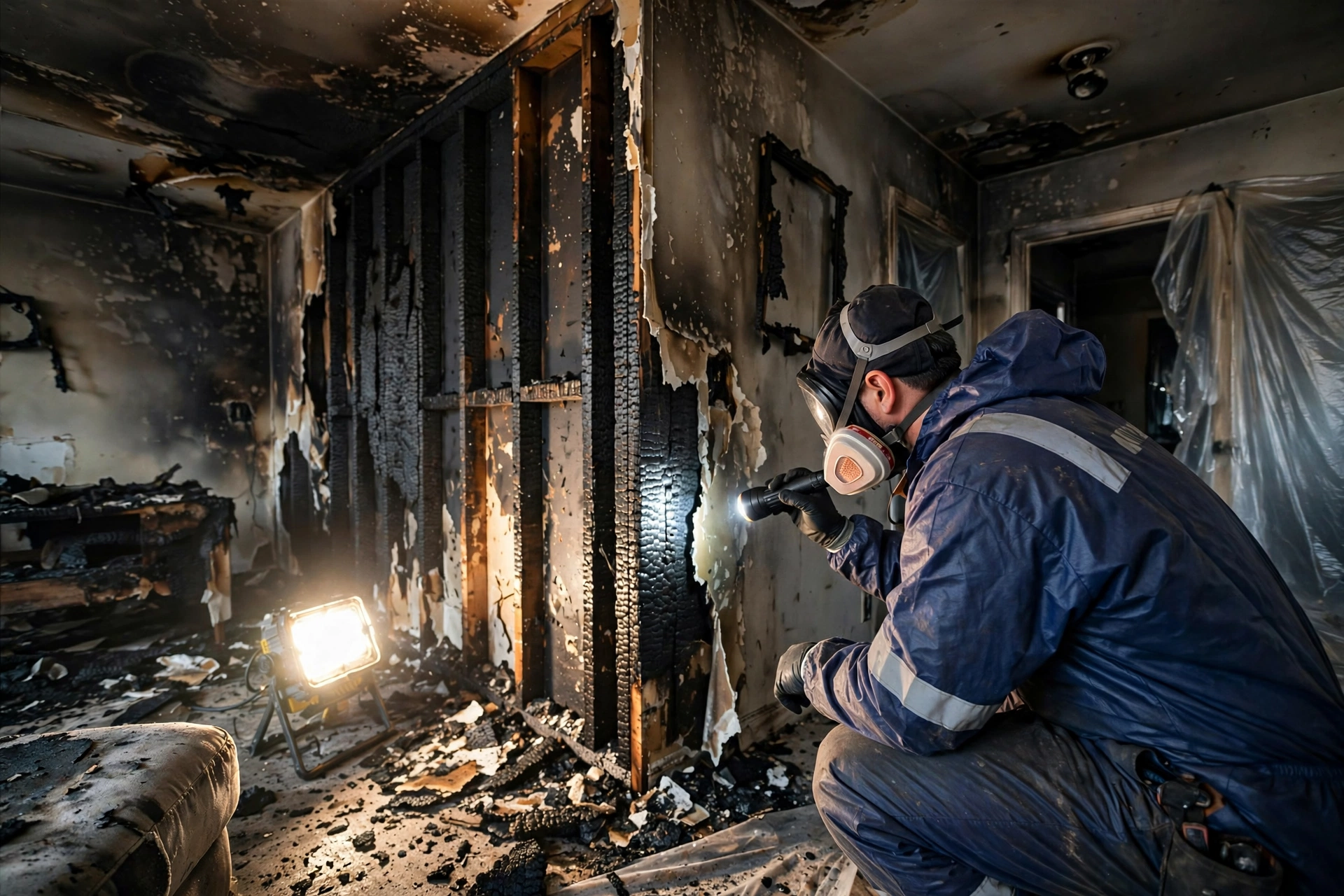
1. Flame and heat damage. Charred framing, melted materials, blistered paint, heat-warped surfaces — the most visible and obviously structural damage.
2. Soot and smoke damage. Soot is acidic and keeps corroding surfaces long after the fire is out — etching glass and staining anything porous. Dry soot from a fast-burning fire behaves differently than the sticky residue from a slow, smoldering fire, and each needs different cleaning chemistry. See our smoke damage cleanup guide for how professionals handle soot and odor removal.
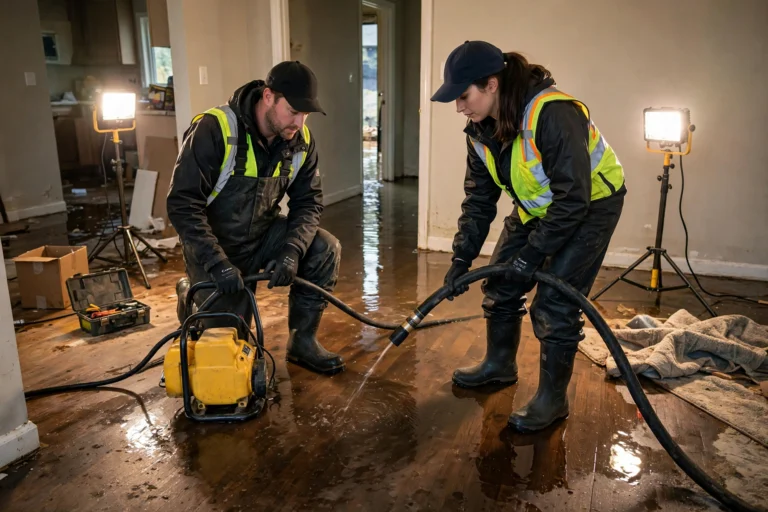
3. Water damage from suppression. Firefighters use a lot of water, and in many house fires it does as much damage as the flames — soaking drywall, flooring, and insulation, and creating the damp conditions mold needs to grow within days. That water needs extraction and drying like any flooding event, which is why water damage restoration is part of nearly every fire job.
Miss any one of the three and the “restored” home keeps deteriorating — mold behind the walls, soot corroding the fixtures, odor that never leaves.
What professional fire damage restoration actually involves
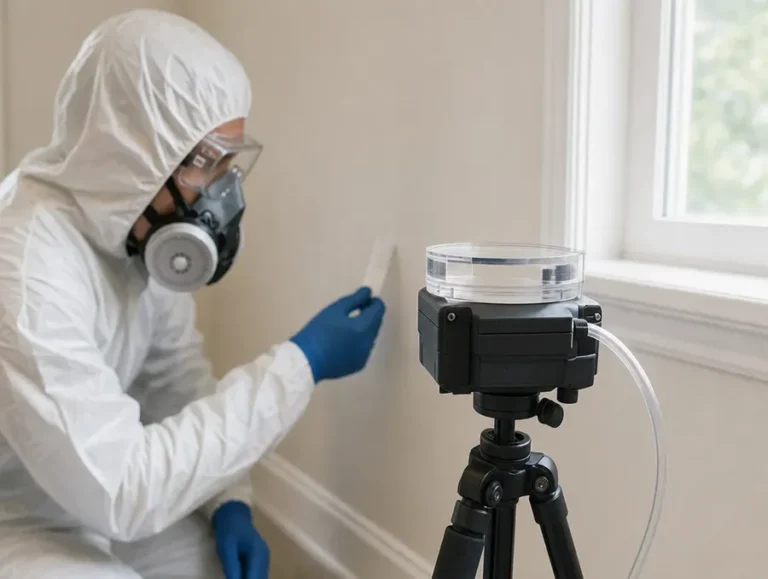
Assessment and documentation. The crew maps every affected area — including rooms that look untouched — identifies the soot type, checks structural integrity, and documents everything for your claim.
Emergency board-up. Openings get sealed the same day whenever possible: windows, doors, roof sections. This stops weather and trespassers from adding new damage to old.
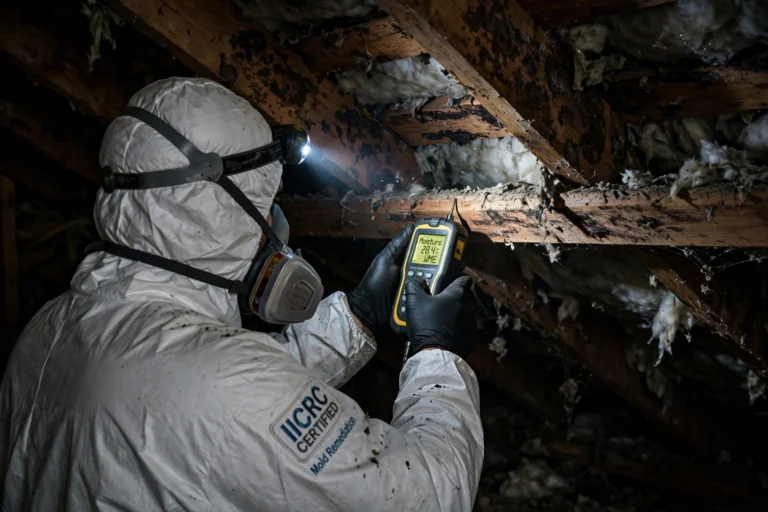
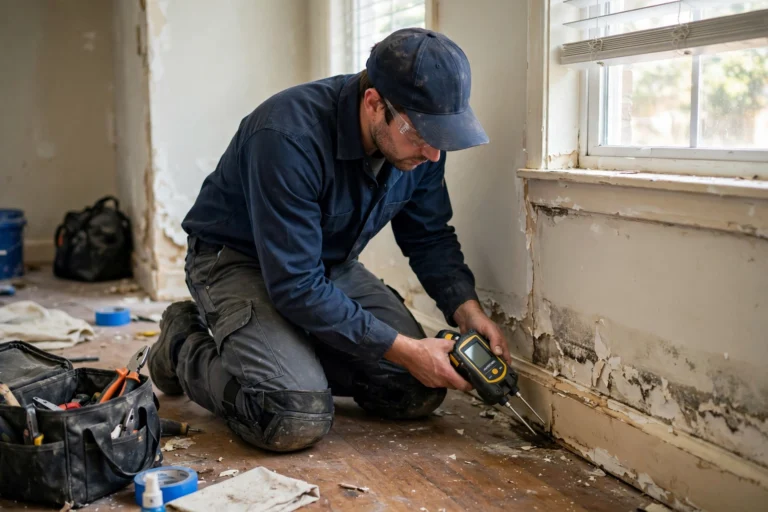
Water extraction and drying. Standing water comes out first, then industrial dehumidifiers and air movers dry the structure. Moisture readings confirm when framing and drywall are actually dry — not just dry to the touch.
Soot removal. Different soot types need different methods: dry sponging for light dry soot, wet cleaning agents for heavier deposits, abrasive methods for charred surfaces that will be sealed or replaced. The wrong method smears soot deeper into porous materials.
Odor treatment. Surface cleaning removes visible soot, but odor lives in porous materials and HVAC systems. Thermal fogging, ozone, or hydroxyl treatment neutralizes odor molecules rather than covering them up. If soot reached the ductwork, the system needs cleaning before it runs again — that’s where air duct cleaning comes in.
Contents cleaning and pack-out. Furniture, clothing, and personal items get cleaned off-site or disposed of based on condition. A good crew works with you on what can be saved, not just what’s economical.
Repairs and rebuild. Replacing drywall, flooring, paint, and fixtures that couldn’t be salvaged. The goal is a home that looks and smells like the fire never happened — not one that just looks patched.
Mistakes that make fire damage worse
Scrubbing soot with household cleaners. Most soot smears when wet. Wiping a soot-stained wall with an all-purpose spray drives residue deeper and makes professional removal harder. Dry soot should be lifted, not dissolved.
Painting over soot stains. Paint seals in the odor, and staining bleeds through within weeks. Soot-affected surfaces need proper cleaning and a stain-blocking primer made for smoke damage — or replacement.
Running the HVAC system. If soot entered the ductwork or air handler, running the system spreads it through every room. Keep it off until the ducts are inspected. And if you use your fireplace this season, run through the pre-season chimney sweep checklist first.
Waiting to deal with the water. Homeowners focus on the burned parts and forget the soaked parts — but mold grows within 24 to 48 hours in New Orleans humidity no matter where the water came from. Drying is urgent even when the fire damage feels like the bigger problem.
Throwing things away before documentation. Your adjuster needs to see what was lost and damaged. Bag and label what you must discard, photograph everything, and keep an inventory. Premature disposal is one of the most common reasons claims get reduced.
When to call a professional
Call as soon as the fire department clears the property — not after a weekend of DIY cleaning. Early assessment protects your claim, stops the clock on soot corrosion and mold growth, and gives you an honest picture of what the job involves.
For professional fire and smoke restoration in the Greater New Orleans area, our IICRC-certified team responds 24/7 — board-up, water extraction, soot removal, odor treatment, and rebuild, all documented for your insurance claim. Call (504) 520-4646 — on-site response targeted within 60 minutes.
FAQ
How long does fire damage restoration take?
A small contained fire with light smoke damage can take days; a fire that damaged structure, needed water extraction, and requires rebuild work takes weeks to months. The assessment gives you the realistic timeline for your situation.
Can I stay in my home during restoration?
Usually not for anything beyond very minor damage. Soot particles, odor-treatment processes, and drying equipment make most homes unlivable during active restoration. Your policy’s loss-of-use coverage may help with temporary housing costs.
Will my homeowners insurance cover fire damage restoration?
Fire is a standard covered peril in most homeowners policies, including the resulting smoke and water damage. Deductibles, limits, and loss-of-use provisions vary by policy — review yours and talk to your adjuster early.
Does smoke odor ever fully go away?
Yes, when the source is properly treated. Surface cleaning alone rarely finishes the job — odor hides in porous materials, insulation, and HVAC systems. Homes that still smell months later almost always had a step skipped.
Should I hire the same company for cleanup and repairs?
There’s a real advantage to one team handling the full sequence: the crew that documents the damage understands the claim, and the rebuild crew knows exactly what was cleaned versus replaced. Whoever you choose, make sure they’re experienced with insurance documentation.