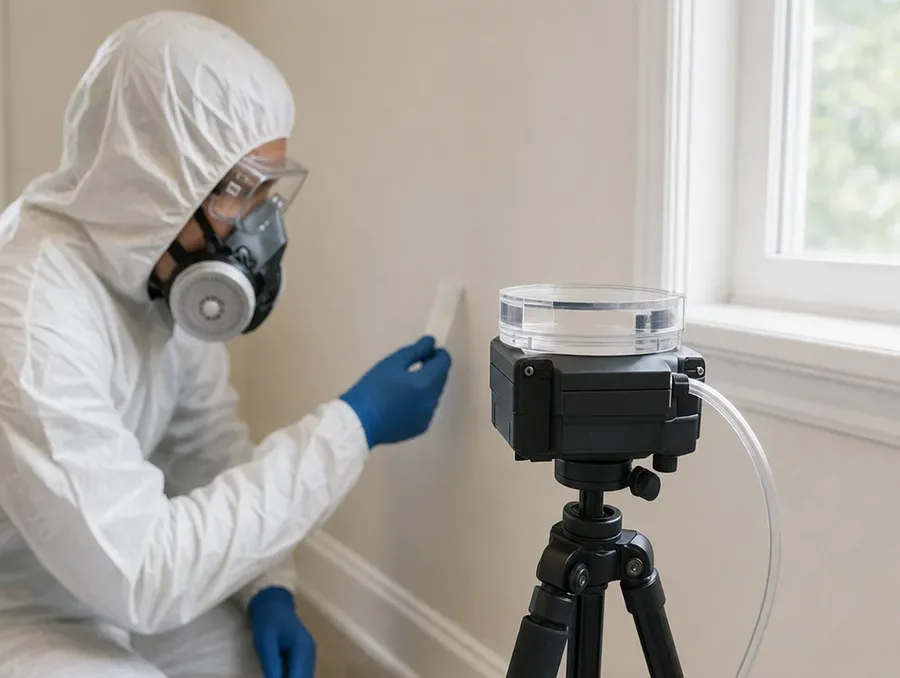
What happened
Last Sunday’s downpour (October 4, 2026) overwhelmed parts of Mid-City and the New Orleans metro, with rainfall nearing three inches an hour. Streets flooded, storm drains bubbled, and at least one downtown restaurant closed for safety. A local meteorologist warned of flash flooding as the heaviest bands moved through.
Friday night’s rain was light (about 10%), and the weekend stayed dry — but a Coastal Flood Advisory was in effect through Saturday evening, with minor coastal flooding possible in low-lying areas. Homes still damp from Sunday may have taken a second hit.
The risk is what you can’t see
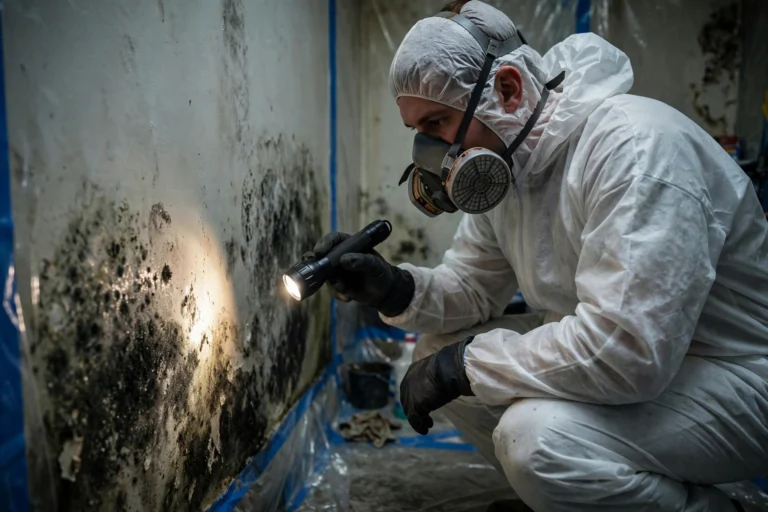
Street water drains away in hours. Water that got inside — under flooring, behind baseboards, into drywall and insulation — does not. Mold can start growing on damp building materials within 24 to 48 hours, and a week on, a musty smell or a soft spot in a wall is often the first sign anyone notices. Last Sunday’s flood was seven days ago. If your home took water, this is the window when hidden damage becomes a bigger problem than the flood itself.
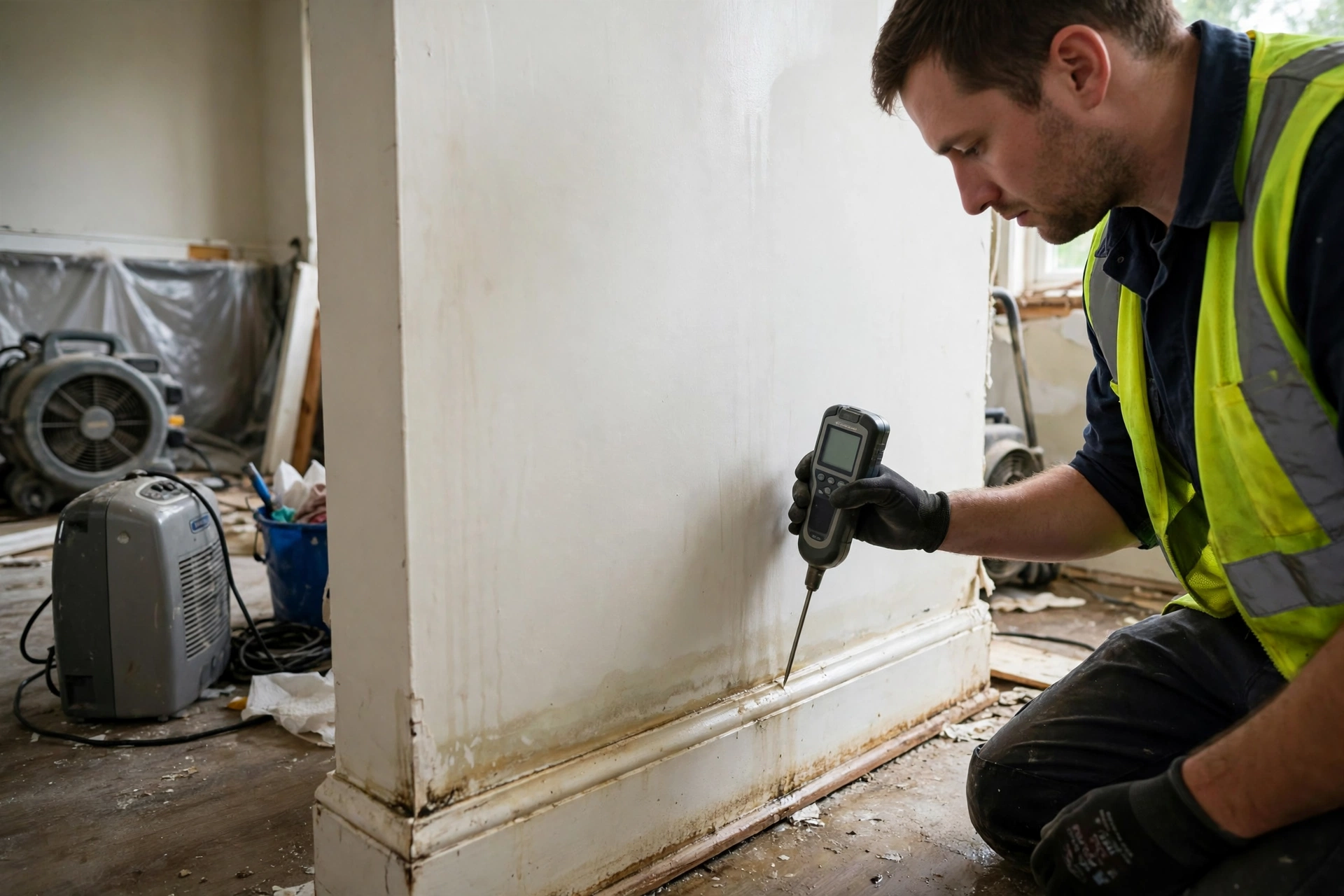
Check these spots today
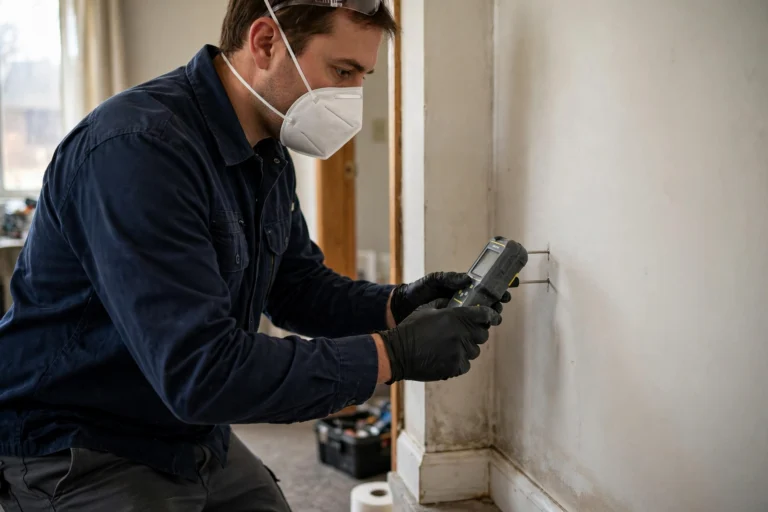
- Baseboards and lower drywall. Press along the bottom of ground-floor walls — softness, bubbling paint, or discoloration means water wicked upward.
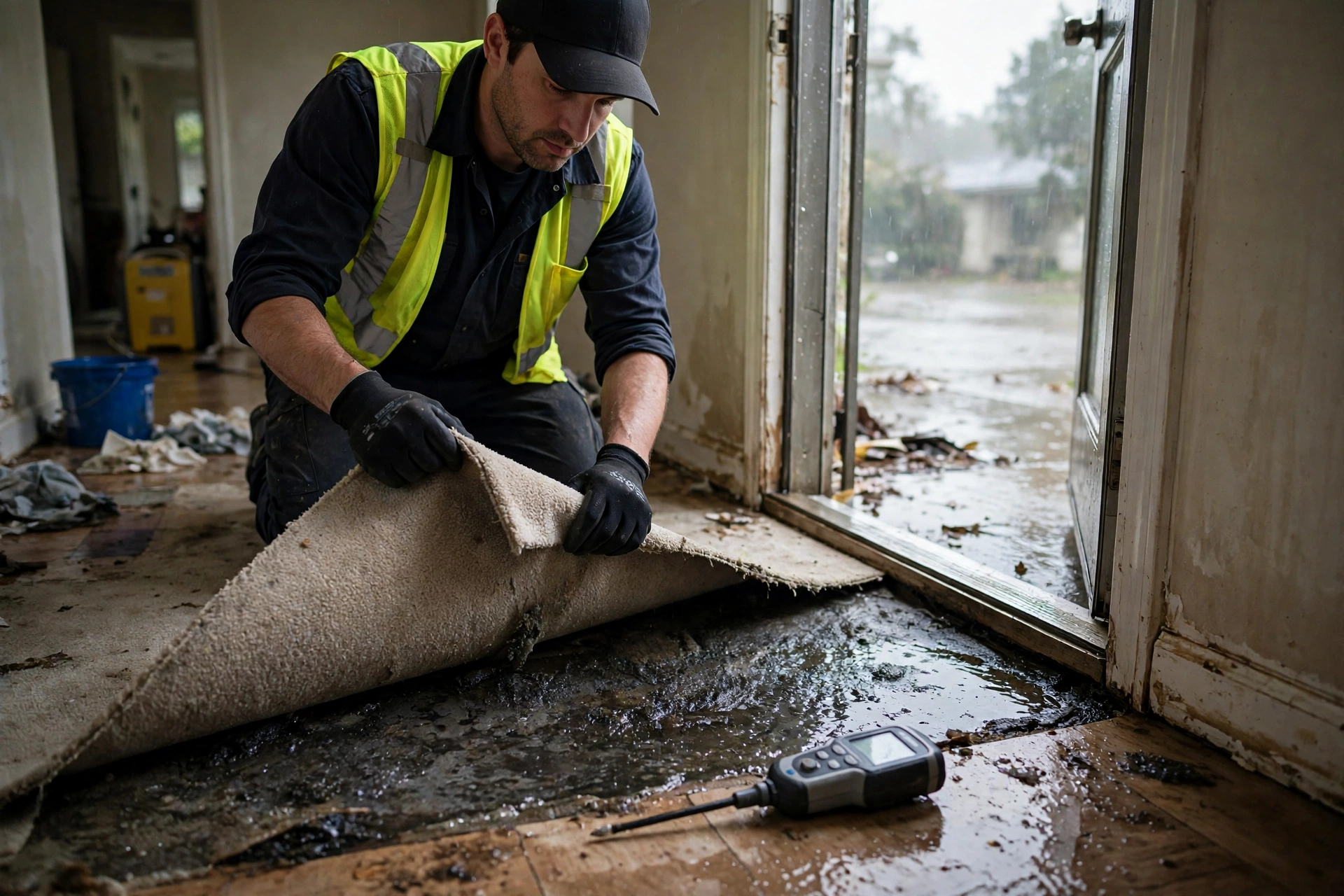
- Flooring edges. Lift a corner of carpet or check for cupping in hardwood near exterior doors and slab edges.
- Closets and storage rooms. These go unchecked longest and trap humidity — smell for mustiness.
- Under sinks and behind appliances. Floodwater finds low points; pull out the washer, check the water-heater pan, look under kitchen cabinets.
- Crawl spaces and garage thresholds. If you have a raised home, check the ground-level enclosure and any stored items.
- HVAC returns. If water reached a ground-floor return vent, moisture and contaminants are now in the ductwork.
If anything smells musty or feels damp, do not just run the AC harder and hope. Trapped moisture keeps feeding mold until it is extracted and dried with commercial equipment.
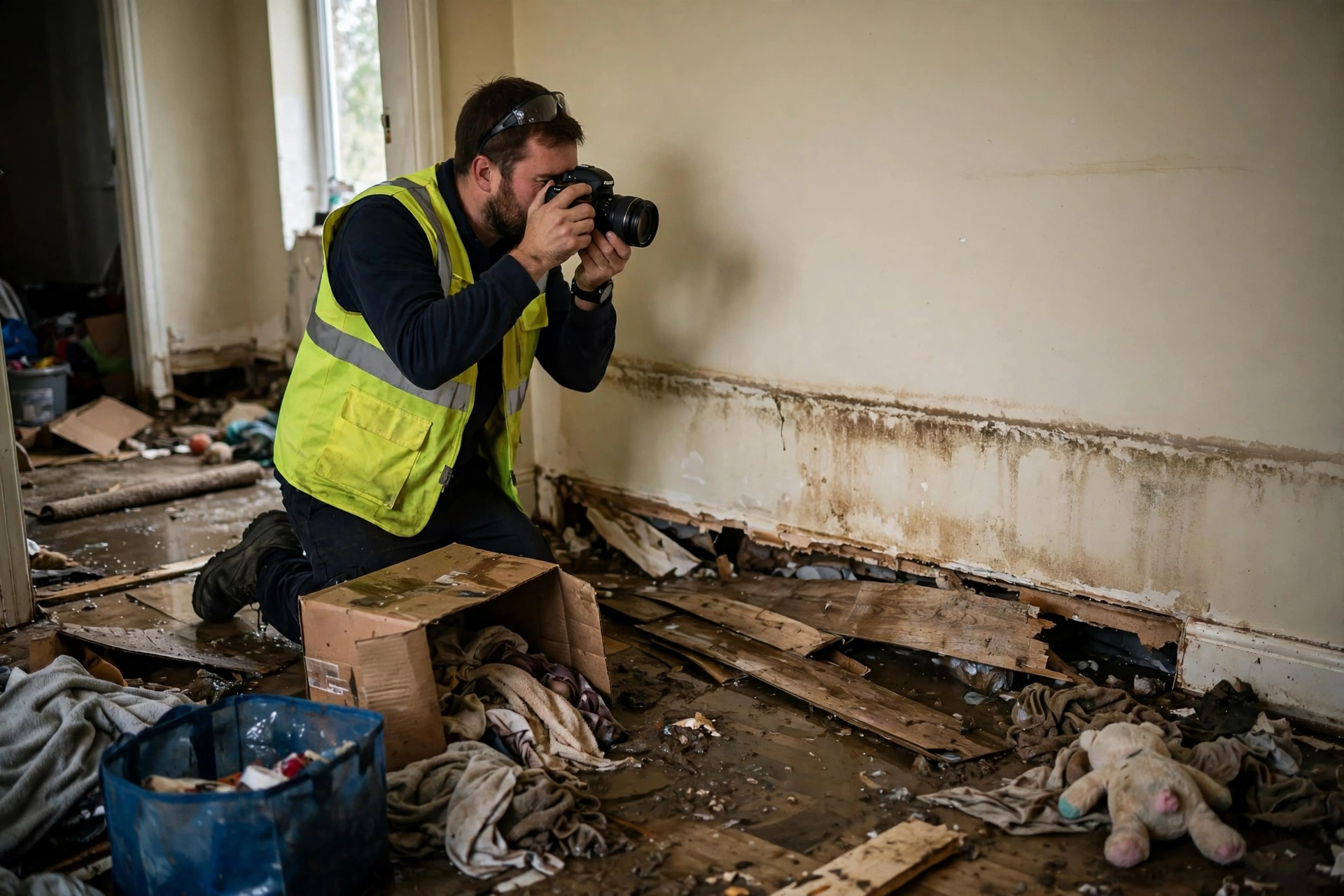
Document before you clean up
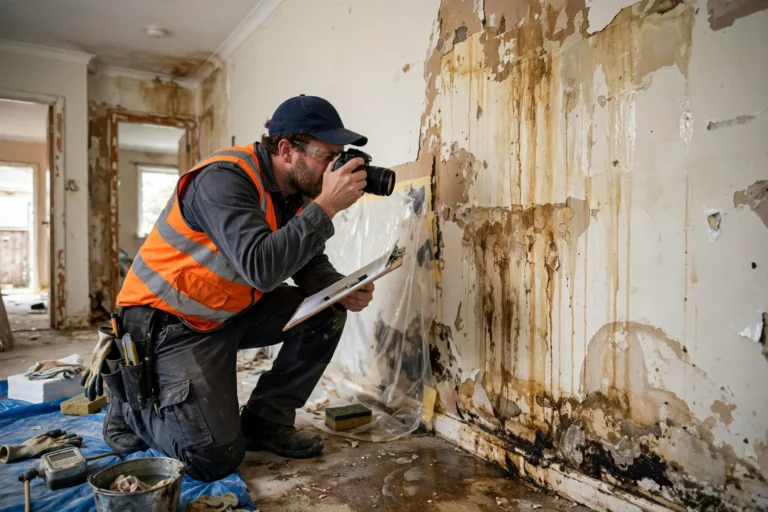
Photos of water lines, damaged flooring, and wet belongings are what insurers ask for first — take them before you move or discard anything. Our existing guide covers what adjusters look for: see the water damage claims walkthrough.
If you need help
Get Restoration New Orleans responds 24/7 with a 60-minute emergency arrival goal across Greater New Orleans. Call (504) 520-4646 — IICRC certified, licensed & insured. For full storm damage restoration, our team handles water extraction, drying, and mold remediation.
Frequently asked questions
How soon can mold start growing after a flash flood?
Mold can start growing on damp building materials within 24 to 48 hours. A week after the flood, a musty smell or a soft spot in a wall is often the first sign anyone notices.
What hidden spots should I check a week after a flood?
Check baseboards and lower drywall, flooring edges, closets and storage rooms, under sinks and behind appliances, crawl spaces and garage thresholds, and HVAC returns. These are the places water hides longest and humidity gets trapped.
Why is hidden moisture more dangerous than the floodwater itself?
Street water drains away in hours, but water that got inside — under flooring, behind baseboards, into drywall and insulation — does not. A week on, hidden damage can become a bigger problem than the flood itself.
Should I document damage before I clean up?
Yes. Photos of water lines, damaged flooring, and wet belongings are what insurers ask for first — take them before you move or discard anything.
What should I do if something smells musty or feels damp?
Do not just run the AC harder and hope. Trapped moisture keeps feeding mold until it is extracted and dried with commercial equipment. Get Restoration New Orleans responds 24/7 — call (504) 520-4646.