If your dryer needs two cycles to dry a normal load, the vent — not the dryer — is usually the problem. Lint builds up inside the vent line over time, restricting airflow, overheating the machine, and turning an everyday appliance into a genuine fire hazard. Restoration New Orleans recommends professional dryer vent cleaning about once a year for most homes — call (504) 520-4646 to schedule yours.
Key takeaways
- A clogged dryer vent traps heat and lint — the combination behind most dryer-related fire scares.
- Two-cycle drying, a hot laundry room, and a burning smell are the clearest warning signs.
- Dryer vent cleaning is a different job from air duct cleaning — it covers the dedicated vent line from your dryer to the exterior.
- Short, straight vent runs suit a DIY brush kit; long, twisted, or rooftop-terminating vents need professional equipment.
How Is Dryer Vent Cleaning Different From Air Duct Cleaning?
The two services clean entirely different systems. Air duct cleaning covers your home’s HVAC ductwork — the network that distributes heated and cooled air to every room. If you’re unsure whether your ducts are overdue, our duct cleaning signs guide walks through what to watch for.
Dryer vent cleaning covers one line only: the vent from your dryer to the outside. It carries hot exhaust and lint, runs hotter than any HVAC duct, and clogs faster because it’s fed lint directly. Both services matter, but a clogged dryer vent carries a more immediate safety risk — which is why we treat them as separate jobs with separate equipment.
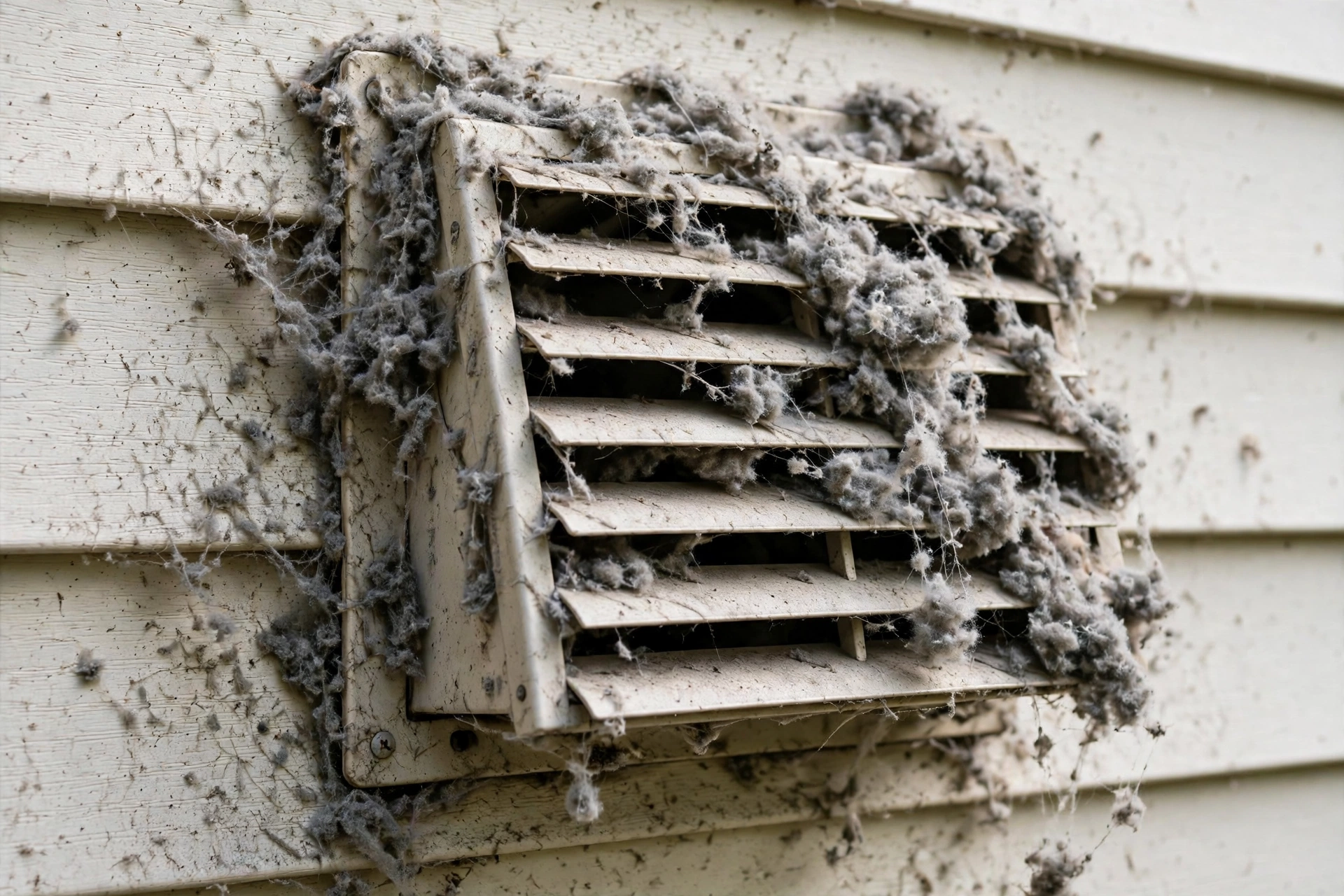
6 Signs Your Dryer Vent Is Clogged
- Clothes need two cycles to dry. Heat can’t escape, so the dryer keeps running to finish the job.
- The laundry room feels hot and humid. Moist air meant for the outdoors is backing up into the room instead.
- The dryer is hot to the touch. The cabinet feels much warmer than it used to — the machine is overheating.
- A burning smell during the cycle. That hot, dusty odor is lint baking inside the duct. Never ignore it.
- The outside vent hood barely flaps. Weak airflow at the exterior hood while the dryer runs means air isn’t getting through.
- It’s been over a year. If you can’t remember the last time the vent was cleaned, it is overdue.
Two or more of these at once means the vent is significantly restricted. Keep running the dryer in that state and you are drying with trapped heat and fuel-grade lint sitting in a hot duct.
Can a Clogged Dryer Vent Really Start a Fire?
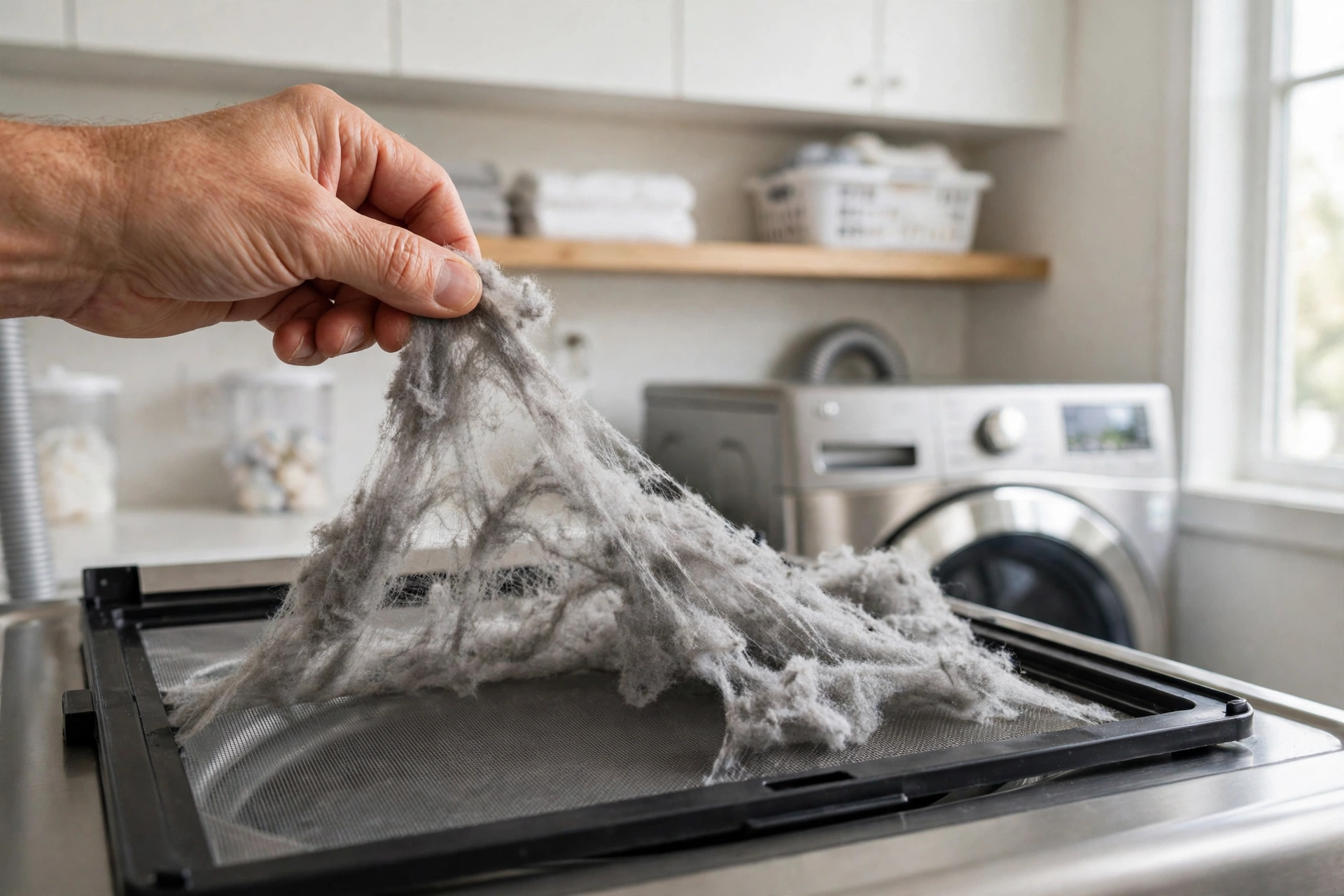
Yes — and this is why vent cleaning is a safety service, not just an efficiency one. Lint is extremely flammable: it’s the same material used in some fire starters. Inside a clogged vent, it sits inches from heating elements and hot exhaust air. As airflow drops, temperatures inside the duct climb, and sustained overheating can ignite the lint.
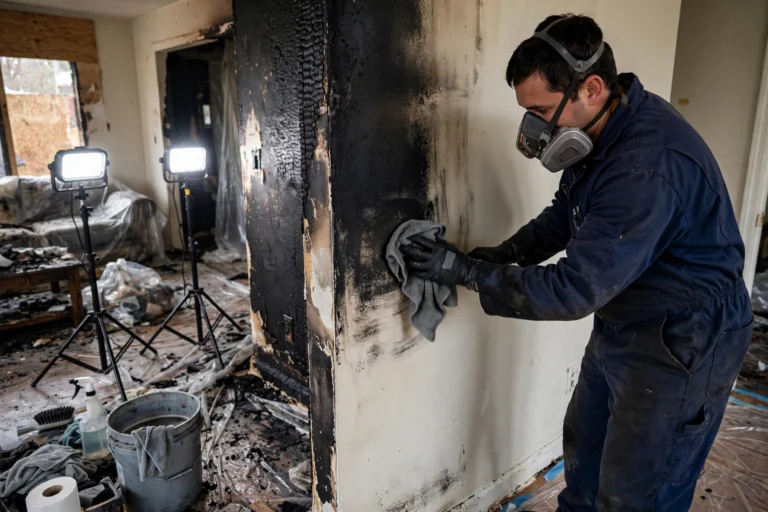
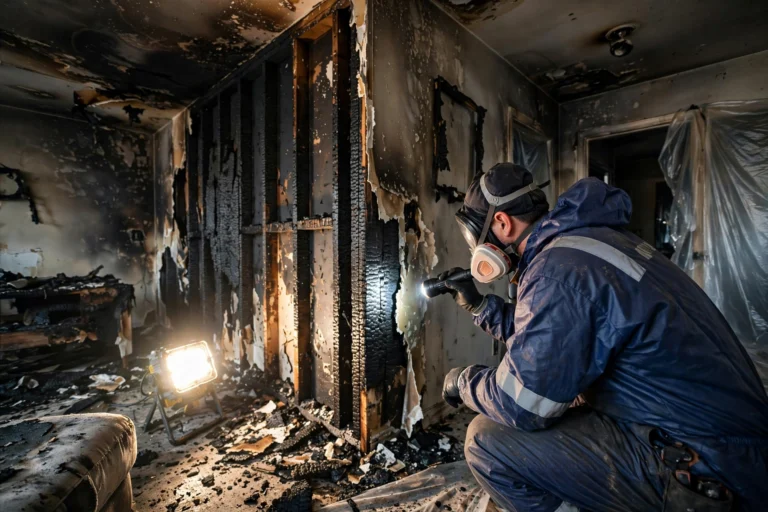
Most dryer vent fires start quietly, inside the wall or behind the machine, and spread before anyone notices. After a fire of any size, professional fire damage restoration is needed to remove soot, smoke residue, and the water damage left by extinguishing it. Keeping the vent clear is one of the simplest ways to keep that chain of events from starting.
How Often Should You Clean It in New Orleans?
Once a year is the right rhythm for most New Orleans homes, for three local reasons: dryers run hard here, with warm humid weather most of the year meaning more loads and more moisture through the vent; older homes often have long, winding vent runs with several bends that collect lint faster; and large households that run the dryer daily generate more lint per month — a six-month check suits them. Quick rule: if any of the six signs above have appeared since the last cleaning, the schedule doesn’t matter — clean it now.
What Happens During a Professional Cleaning?
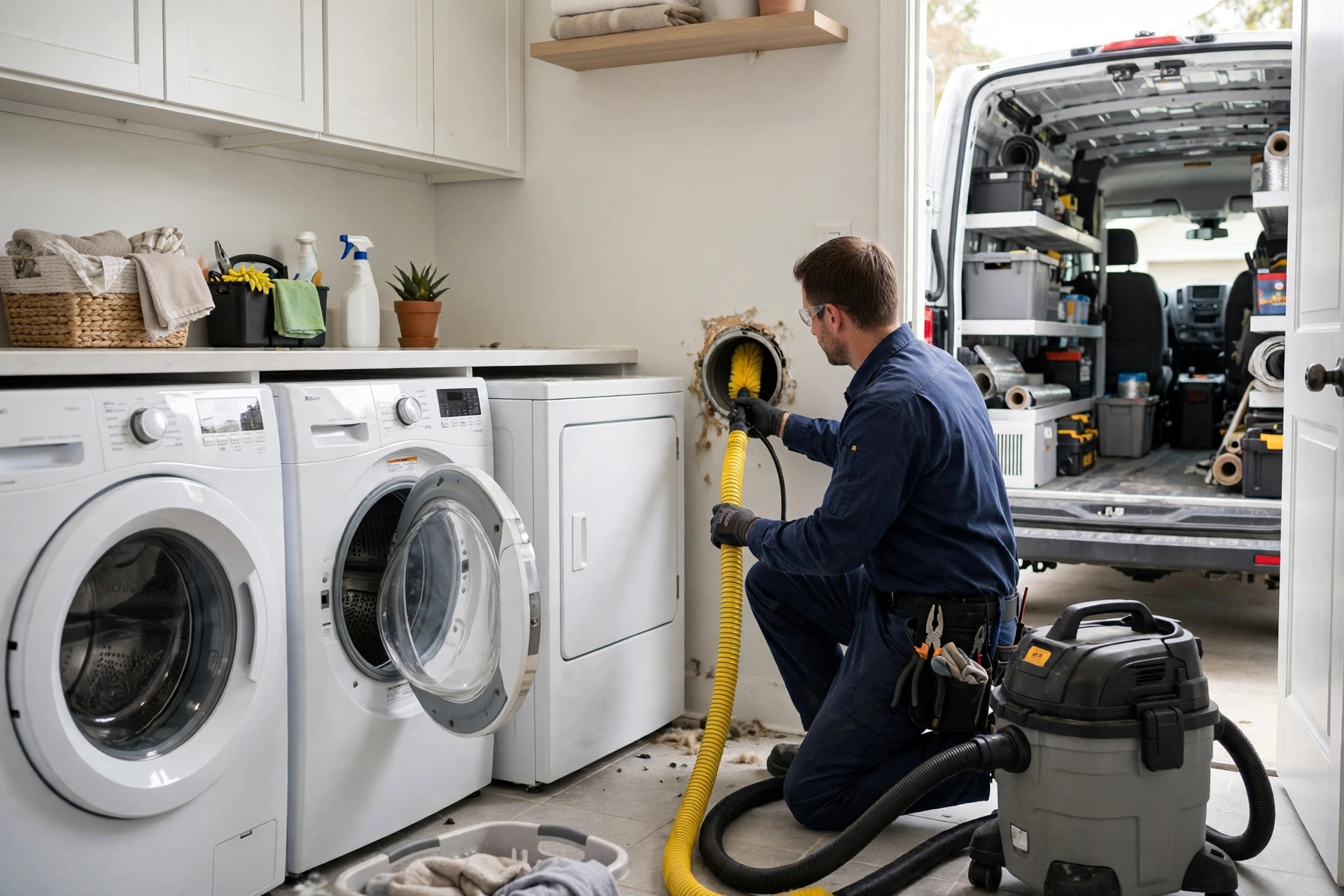
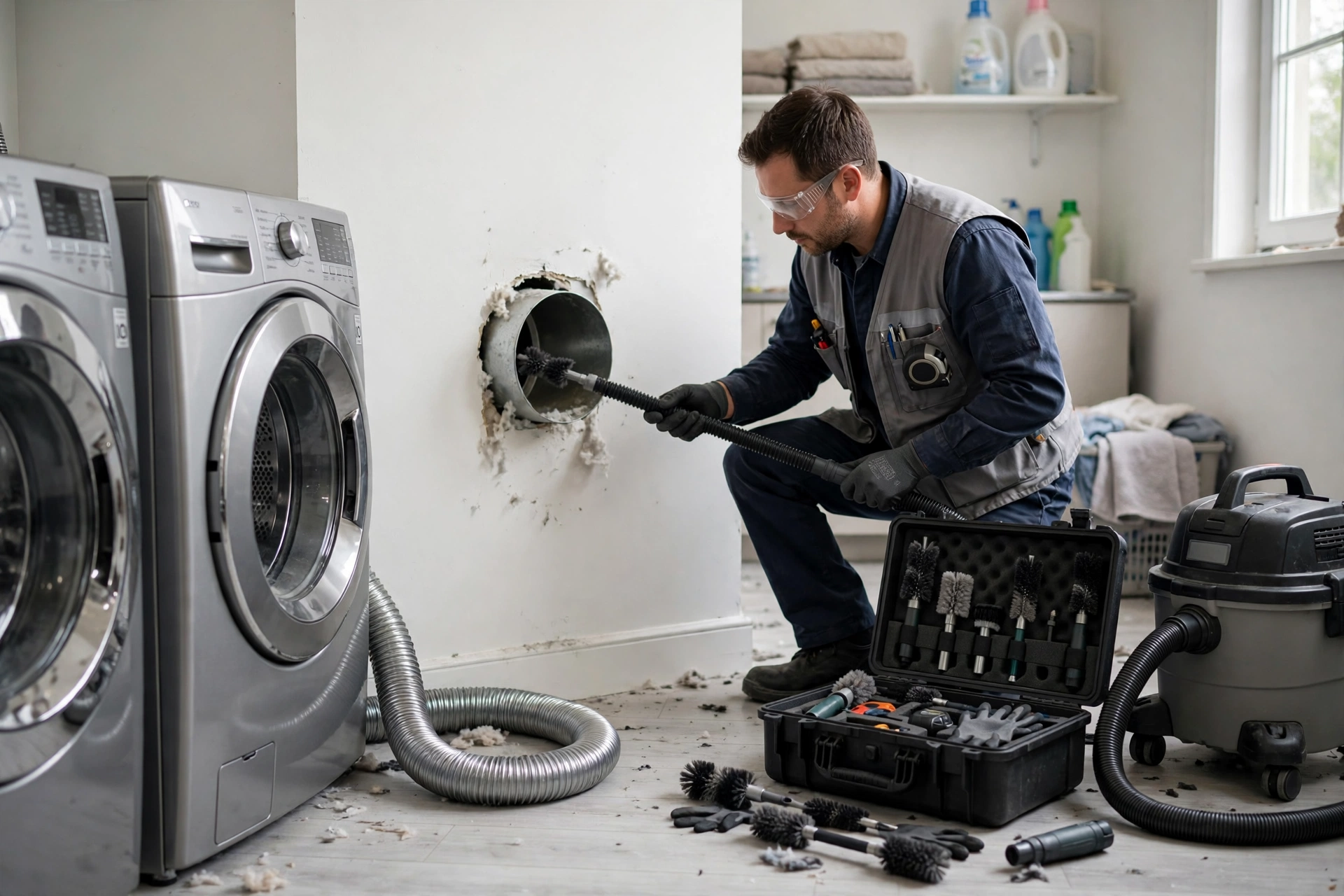
The technician inspects the full vent path — behind the dryer, through walls or ceilings, to the exterior hood — looking for damage, disconnections, and crushed sections alongside the lint. The dryer is pulled out and disconnected, a high-powered vacuum is attached at one end to catch everything that comes loose, and a flexible rotary brush is fed through the entire vent length to scrub the duct walls clean. The exterior hood is cleared of lint, nests, and debris, the flap is checked, and airflow is measured at the hood after reassembly to confirm the vent is breathing properly again. The whole job is usually finished in a single visit.
Can You Clean It Yourself?
For short, straight, ground-floor vents, yes — with the right kit. A vent brush set and a shop vacuum can clear a run of a few feet that you can see end to end: disconnect the dryer, brush from both ends, vacuum everything out, and check the exterior hood.
DIY has real limits, though. Long or twisted runs can’t be reached with consumer brushes — and pushing lint deeper makes the clog worse. Rooftop terminations need ladder and roof work, a fall risk that isn’t worth it. Foil or plastic vent tubing tears easily and should be replaced with rigid metal, which is a job for someone who does it daily. And you can’t inspect what you can’t see: a professional spots crushed sections, disconnected joints, and bird nests that a brush kit just pushes past. If your vent runs more than about 25 feet, turns multiple corners, or exits through the roof, book a professional instead of buying a brush kit.
When Should You Call a Professional?
Call when the DIY limits above apply — or right away if you smell burning during a cycle, the dryer shuts itself off mid-load, or the vent hasn’t been cleaned in years. Those are not maintenance tasks anymore; they are active hazards.
Restoration New Orleans provides professional dryer vent cleaning across Greater New Orleans — Metairie, Kenner, Slidell, Chalmette, and surrounding parishes. One visit, full-length cleaning, airflow verified before we leave. Call (504) 520-4646 to schedule.
Frequently Asked Questions
How often should dryer vents be cleaned in New Orleans?
Once a year works for most homes. Households that run the dryer daily, homes with long or winding vent runs, and older properties with rooftop terminations may need it more often — roughly every six months. If you notice slower drying or a hot laundry room, clean it regardless of the schedule.
How do I know if my dryer vent is clogged?
The clearest signs are clothes needing two cycles to dry, a laundry room that feels hot and humid, a dryer cabinet that’s hot to the touch, a burning smell during the cycle, and weak airflow at the exterior vent hood while the dryer runs. Any one of these means restricted airflow; two or more means the vent is significantly clogged.
Can I clean my dryer vent myself?
Short, straight, ground-floor vents can be cleaned with a consumer brush kit and a shop vacuum. Long runs over about 25 feet, vents with multiple bends, rooftop terminations, and any vent you can’t see end to end should be left to a professional with rotary equipment and inspection tools.
Is dryer vent cleaning the same as air duct cleaning?
No. Dryer vent cleaning covers only the dedicated vent line from your dryer to the exterior — it carries hot exhaust and lint. Air duct cleaning covers your HVAC system’s supply and return ducts throughout the house. They use different equipment and address different risks, though many homeowners sensibly schedule both.
What does professional dryer vent cleaning cost?
It depends on the vent’s length, whether it terminates at ground level or the roof, how much buildup is inside, and whether damaged sections need repair or replacement. We provide a clear written estimate before any work begins — call (504) 520-4646 for yours.