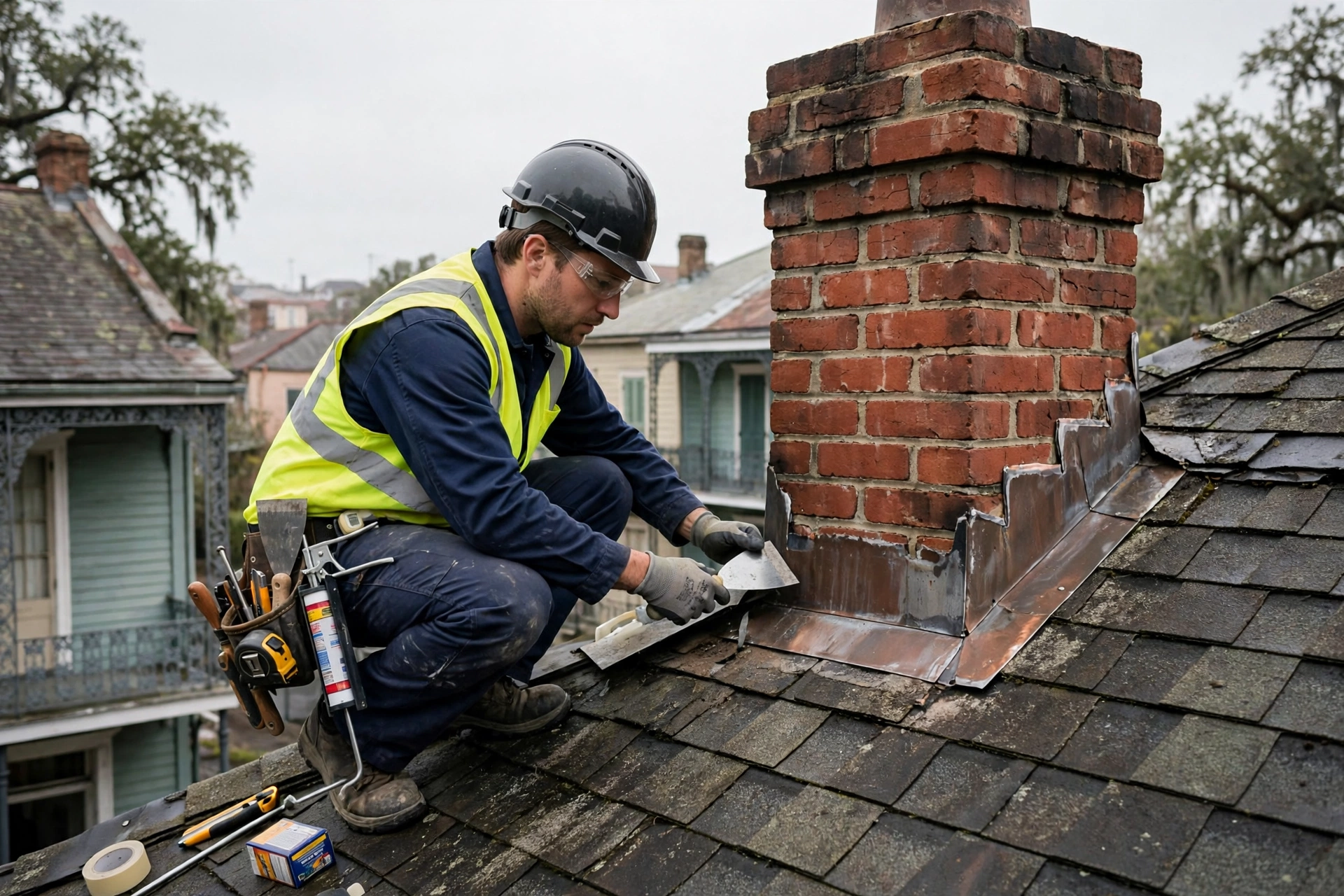
A chimney leak in New Orleans usually means rain is getting in through failed flashing, a cracked crown, or a missing cap. Watch for drips in the firebox, a stain near the chimney, or a musty smell from the fireplace. Close the damper, do not light a fire, and call Property Restoration New Orleans at (504) 520-4646.
Key takeaways
- Most chimney leaks come from the flashing, crown, cap, or mortar — not from the firebox itself.
- The stain rarely sits directly below the entry point: water travels along framing before it shows.
- Never light a fire in a leaking chimney until it has been inspected — a cracked flue liner is a fire and carbon monoxide risk.
- Damp framing and brick grow mold fast in New Orleans humidity, so drying matters as much as the repair.
- Rain is forecast for Tuesday night and Wednesday this week — check the fireplace and the ceiling near the chimney after the storm.
What are the signs of a chimney leak?
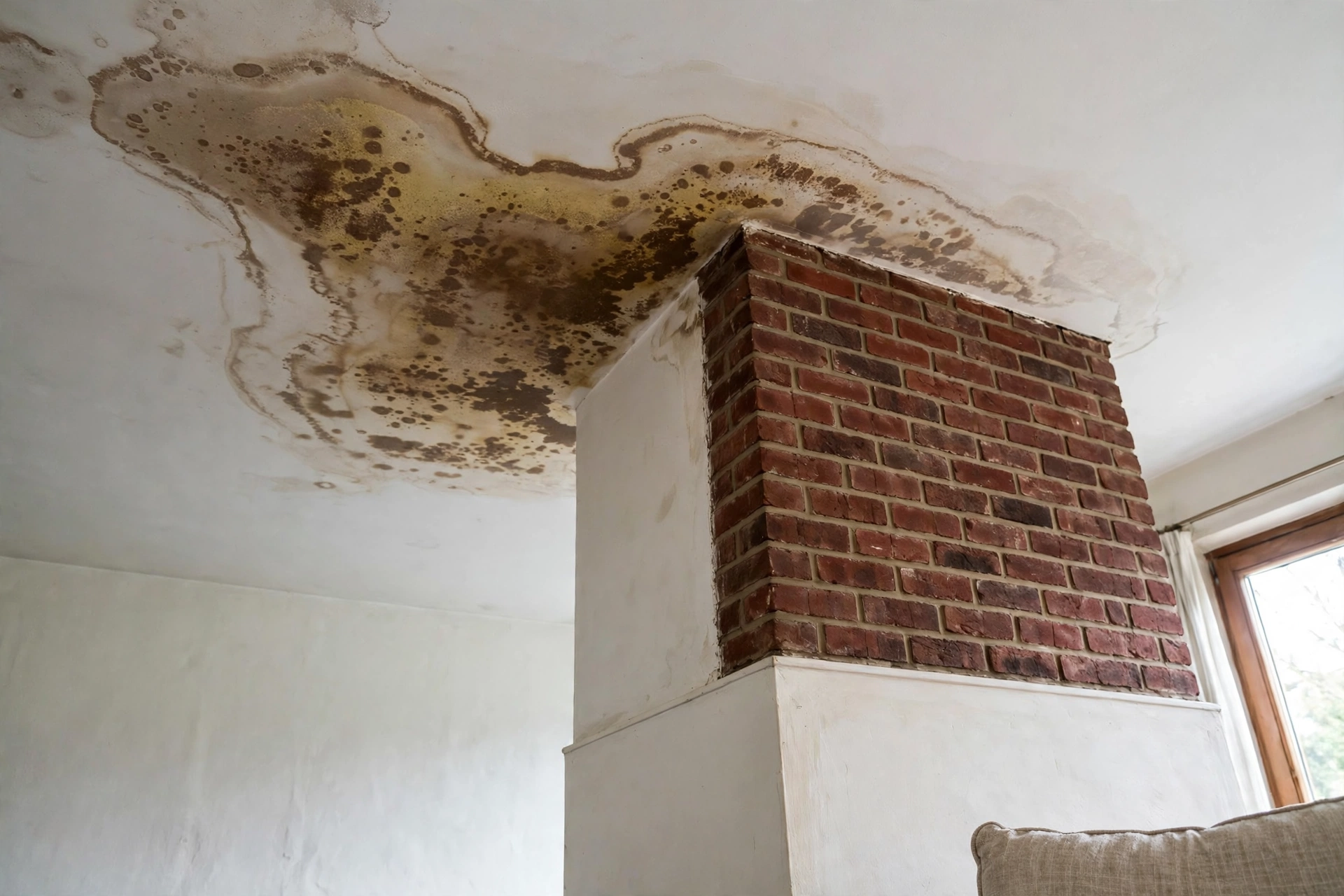
The clearest sign is water dripping into the firebox or onto the hearth after rain. You may also see a brown or yellow stain on the ceiling or the wall beside the chimney breast, or notice a damp, musty smell coming from the fireplace even a day or two after the rain stopped. Rust on the damper or the firebox doors is another clue, because it means water has been reaching metal parts again and again. On the outside of the house, look for white, chalky deposits on the brick — called efflorescence — and for paint peeling or drywall going soft near the chimney.
One warning: a stain near the chimney does not prove the chimney is the source. A roof leak can show up in the same place, because water runs along rafters and framing before it drips through the ceiling. The stain tells you water is getting in; finding where it enters takes a closer look at the chimney top, the roof joint, and the attic around the chimney.
What causes a chimney to leak when it rains?
Failed flashing is the most common cause. Flashing is the metal strips that seal the joint where the chimney meets the roof. Sealant dries out, the metal corrodes, or the flashing was never seated into the mortar properly in the first place. New Orleans gets more than 60 inches of rain a year, and every storm tests that joint.
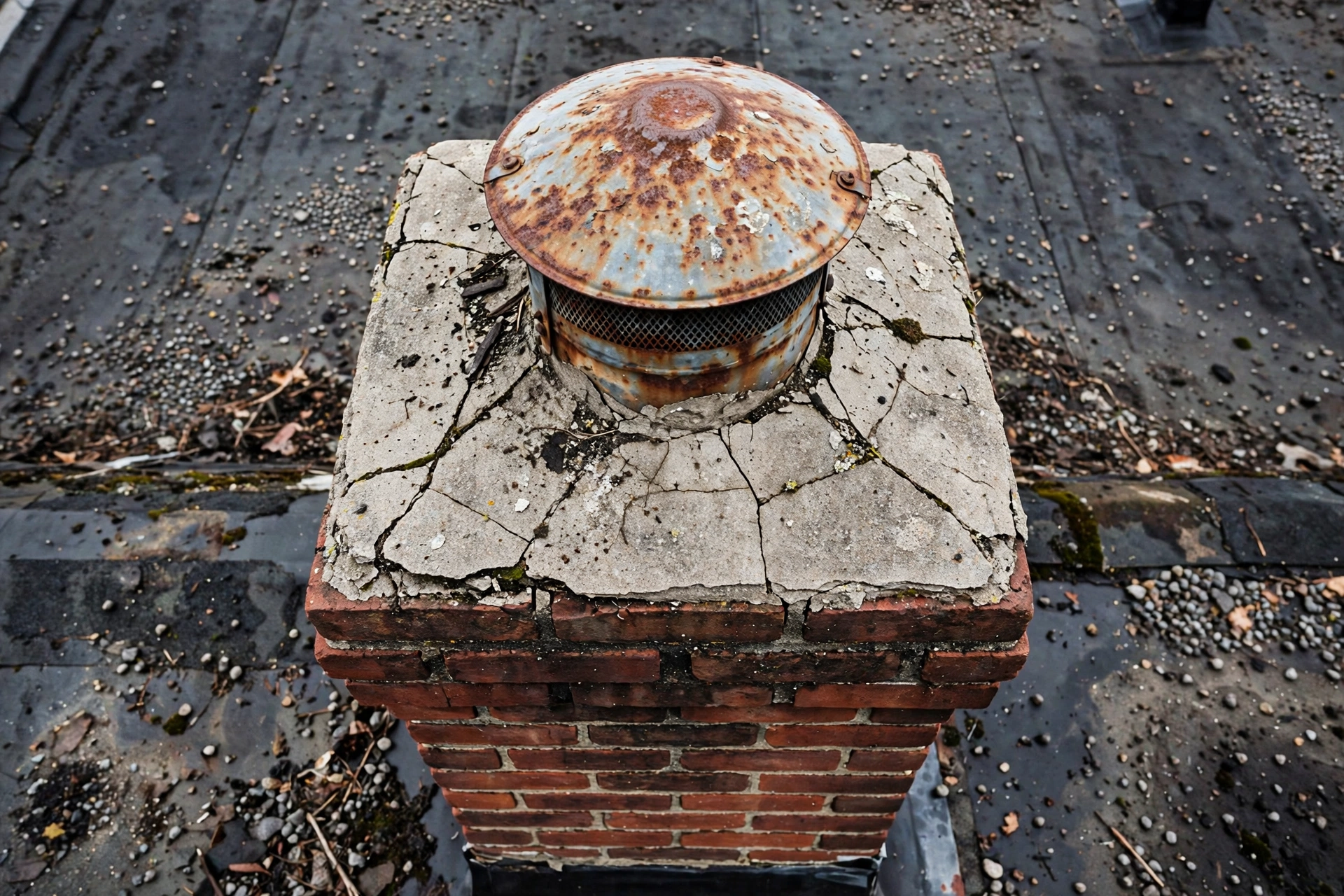
A cracked chimney crown comes next. The crown is the concrete slab on top of the chimney, and it should slope so rain runs off. Hairline cracks let water soak into the masonry below, and once water is inside the brick it works its way down to the firebox and the ceiling below.
A missing or damaged cap lets rain fall straight down the flue. Caps get knocked loose in summer storms, and a cap that is rusted through or the wrong size leaves the flue open to every shower. If the water shows up in the firebox itself, with no ceiling stain, the cap is the first thing to check.
Worn mortar and porous brick absorb rain like a sponge. Old mortar joints crumble, and bare brick soaks up water during long, heavy rain. In this climate the brick often stays damp for days after a storm, which is why a leak can keep dripping after the rain has stopped.
Condensation inside the flue is a winter cause. Warm air from the house meets a cold flue and water runs down the inside of the chimney. With a cold snap arriving this week, this is worth keeping in mind if the dampness appears without a stain on the ceiling.
A wide chimney with no cricket can pool water. A cricket is a small peaked flashing on the uphill side of a wide chimney that sends water around it instead of letting it sit against the brick. Without one, water collects at the back of the chimney and finds its way in.
What should you do first when you find a chimney leak?
Do not light a fire. A wet flue and a cracked liner are a bad combination, and you cannot tell from the living room whether the liner is sound. Close the damper to slow the water coming in, then put towels or a shallow pan in the firebox and move rugs and furniture away from the hearth.
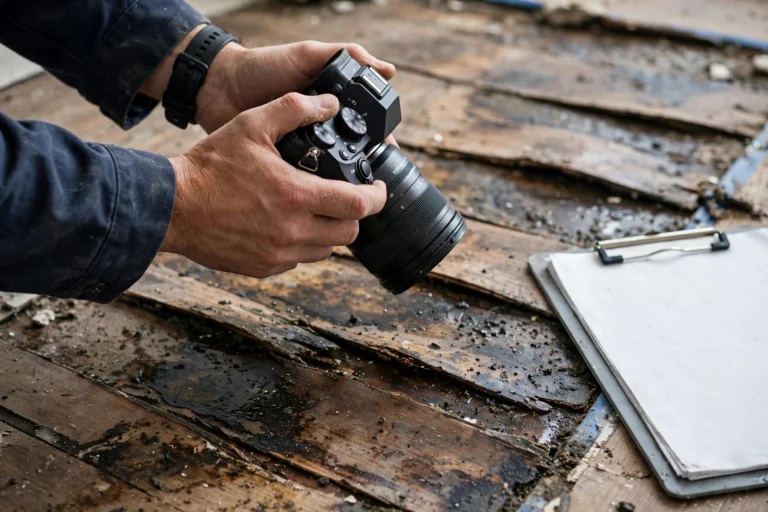
Take photos of every stain, drip, and rusty part before you touch anything. Your insurer will want them, and the photos also help whoever diagnoses the leak. Our guide to a water damage insurance claim explains what to document and what to leave alone.
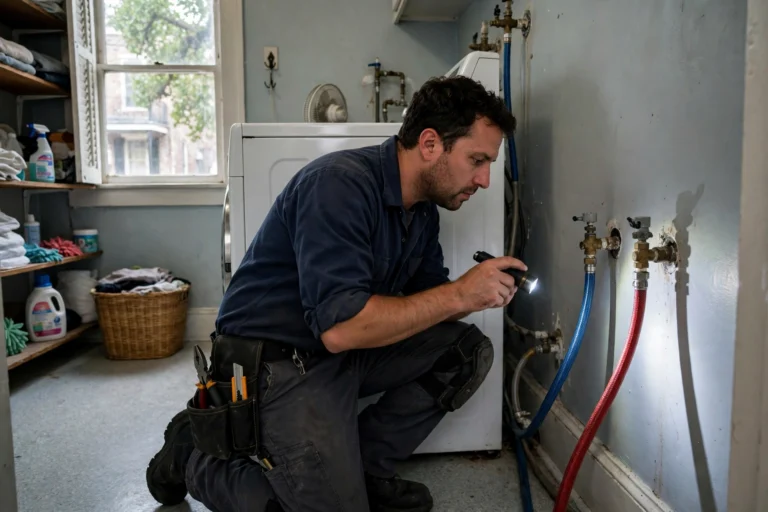
Check the attic around the chimney if you can get there safely, with a flashlight, and look for wet insulation or stained rafters. Write down when the leak happens: every rain, or only long, heavy rain? That detail helps whoever traces the source, because flashing leaks usually show in any rain while saturated-brick leaks show only after a long soak.
If the ceiling or wall feels soft, or the leak keeps coming back after every storm, call for help rather than waiting for the next rain. Water that keeps reaching the framing does more damage every time it comes in.
When does a chimney leak need professional help?
A stain that returns after every rain, or keeps growing, is past the point of watching and waiting. So is a ceiling that sags, drywall that feels soft, or paint that keeps bubbling near the chimney — that means the framing or the ceiling material is already wet through.
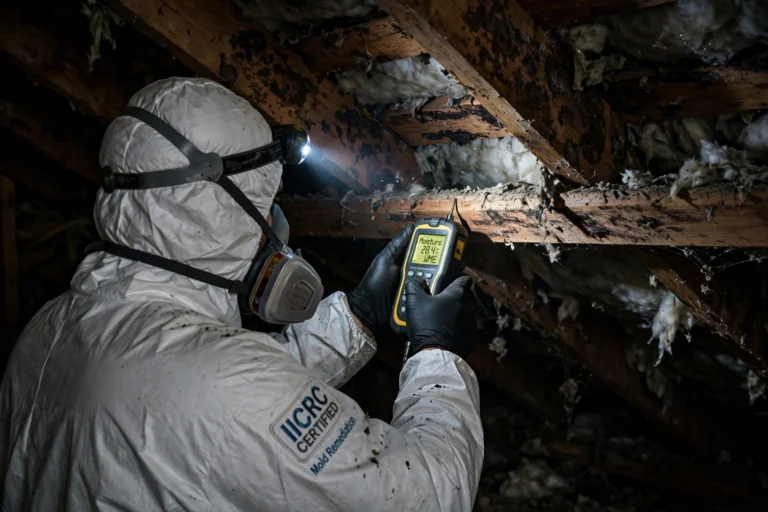
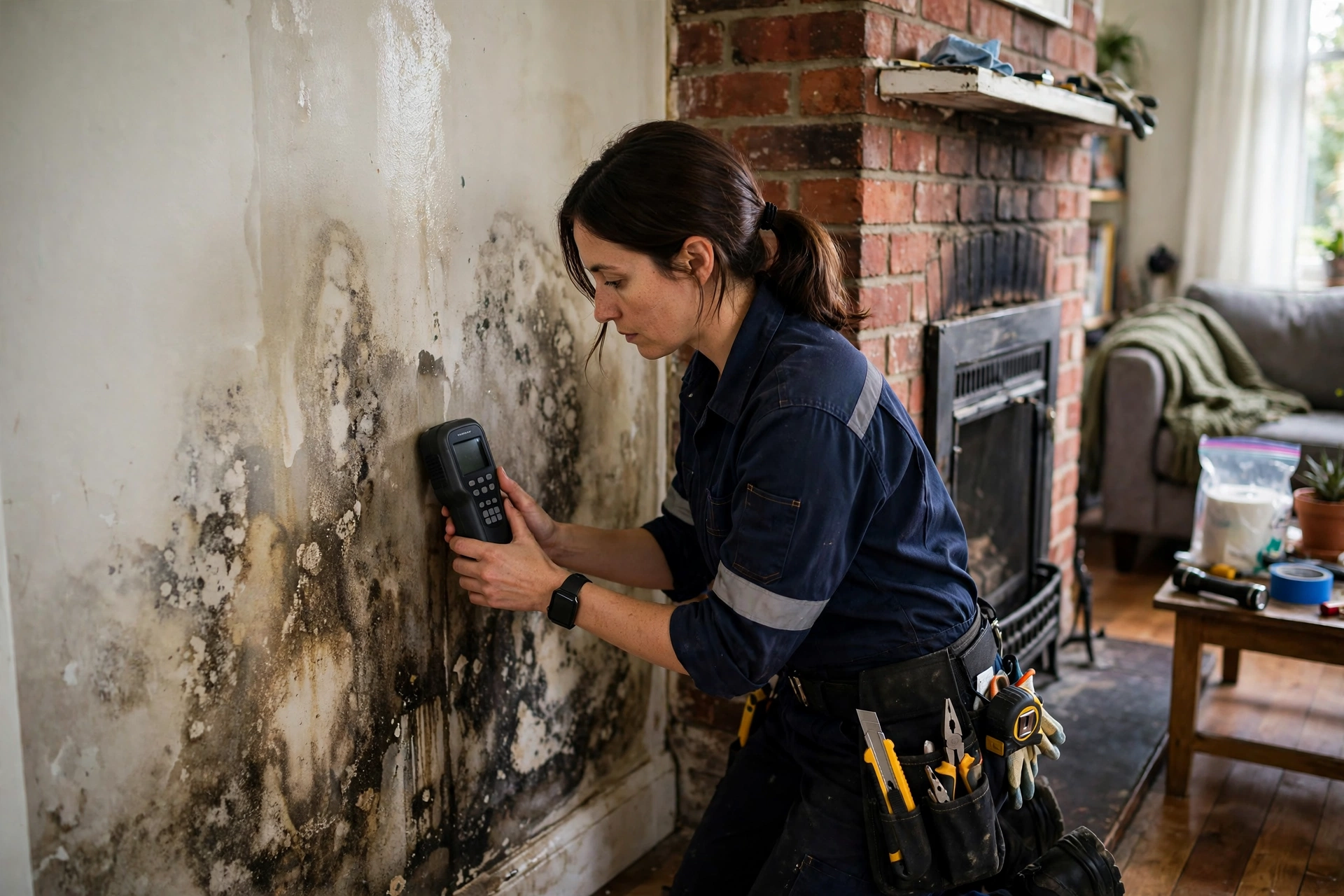
A musty smell that will not go away is another reason to call. Damp framing and insulation grow mold quickly in New Orleans humidity, and the longer the wall stays wet the bigger the job becomes. Our mold remediation team can test the area and dry it properly.
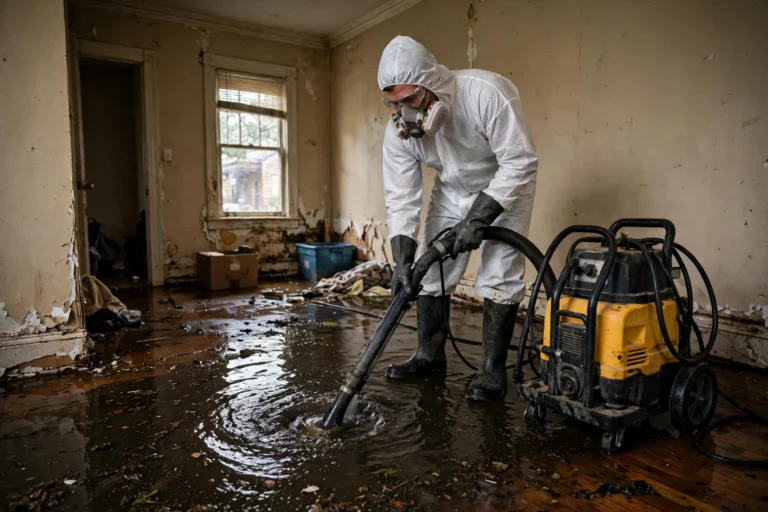
A rusted damper, a cracked flue liner, or water reaching the floors and the framing below needs a professional too. A damaged liner is a fire and carbon monoxide risk, not just a water problem. If the water has spread beyond the chimney — wet floors, soaked baseboards, damp walls in the next room — our water damage restoration team can dry the structure and trace how far the water travelled.
If you cannot see the chimney top or the roof joint safely from the ground, do not climb up to look. A chimney repair inspection covers the cap, crown, flashing, mortar, and flue liner in one visit, and it will tell you which of them is actually letting the water in.
How can you prevent the next chimney leak?
Get an annual inspection before fireplace season. A chimney sweep visit checks the cap, crown, flashing, and liner, and catches the small failures before they become leaks.
Replace a rusted or loose cap promptly, and make sure the new one is the right size for the flue. Seal hairline crown cracks with a flexible crown sealer, and rebuild a crown that is badly cracked or crumbling. Have the flashing checked after any big storm, and re-seal it before hurricane season rather than after the first leak.
A breathable masonry water repellent on the brick helps too. It lets moisture escape from inside the brick while keeping rain out. Paint does the opposite: it traps moisture inside, which is why painted brick peels and spalls in this climate. Keep the gutters clear as well, so roof water does not back up against the chimney base.
Rain is coming on Tuesday night and Wednesday this week, and the cold snap behind it means fireplaces will be lit. Check the cap from the yard, look at the ceiling near the chimney after the storm, and act on the first stain rather than the tenth.
If a chimney leak has already left your home damp, call Property Restoration New Orleans at (504) 520-4646. We dry the structure, trace the water to its source, and work with your chimney repair so the leak does not come back with the next storm.
Frequently asked questions
Why does my chimney only leak when it rains hard?
Light rain usually runs off the crown and the flashing before it can get in. Heavy rain overwhelms a failing joint, and wind-driven rain hits the side of the chimney that the flashing protects least. A leak that only shows in long, heavy rain can also mean the brick itself is saturated: the masonry absorbs water for hours before it starts dripping inside.
Can a chimney leak cause mold?
Yes. Damp framing, insulation, and brick stay wet for days in New Orleans humidity, and mold can start growing in that time. The musty smell from the firebox is often the first warning. Drying the area matters as much as fixing the leak, because mold keeps growing in wet material even after the rain stops.
Is a chimney leak covered by homeowners insurance?
Sudden, accidental damage — such as flashing torn loose in a storm — is often covered, while slow wear, poor maintenance, and long-term neglect usually are not. The difference is in the documentation: photos of the stain, the date of the storm, and a record of when the leak first appeared all help a claim. Check your policy and talk to your insurer before you start repairs.
How do I tell a chimney leak from a roof leak?
A chimney leak usually shows near the chimney breast, in the firebox, or on the ceiling beside the chimney. A roof leak usually shows elsewhere and follows the roof slope. The tricky part is that water travels: a stain can sit several feet from where the water got in. A moisture meter reading around the chimney and in the attic is the quickest way to tell which one it is.
Can I fix a chimney leak myself?
Small jobs are doable: sealing a hairline crown crack with the right product, or replacing a loose cap if you can reach it safely from the ground. Flashing work, a crown rebuild, and anything involving the flue liner belong to a professional, and roof work is not a do-it-yourself job. If you are not sure which part is leaking, an inspection costs less than fixing the wrong part.