
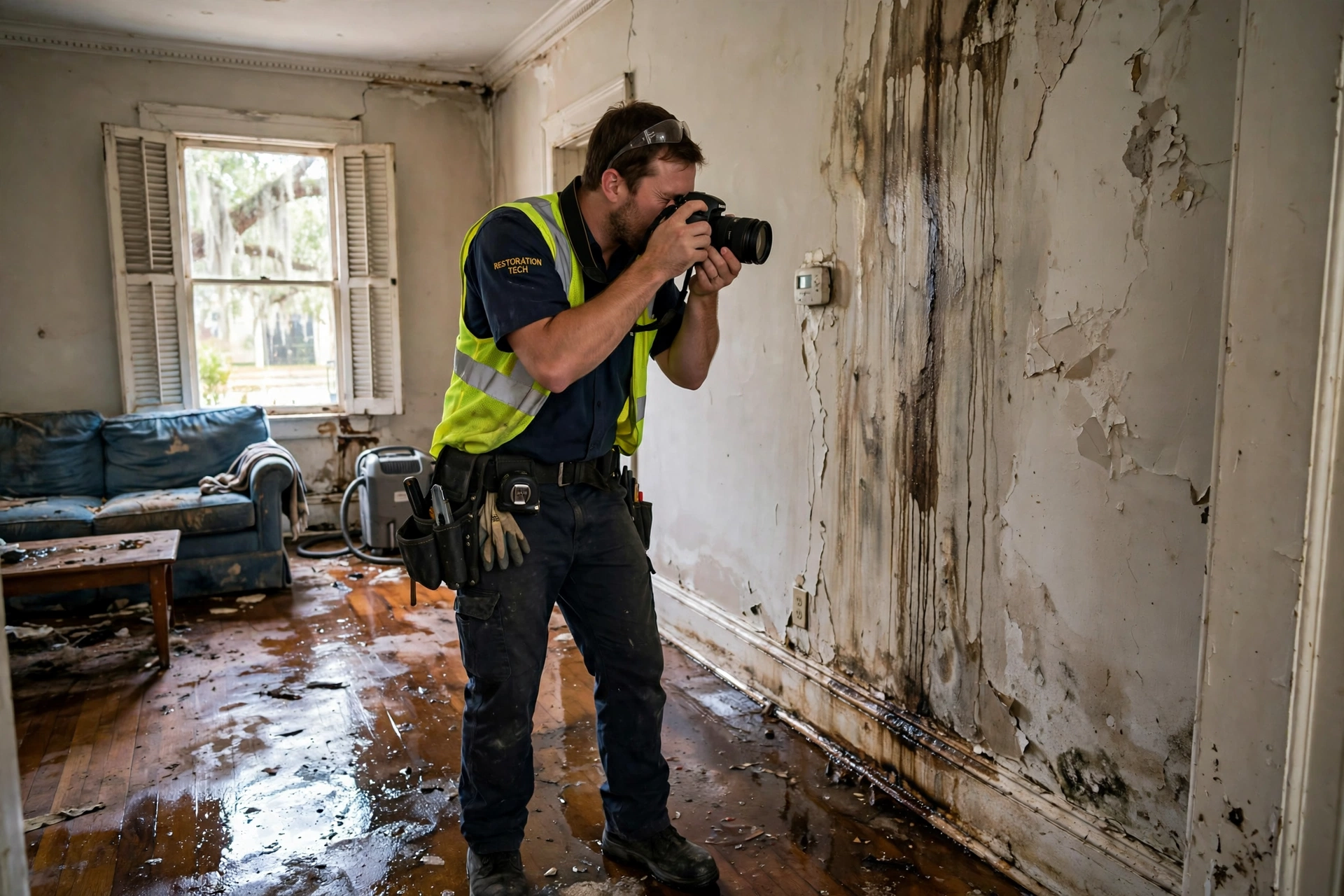
If your New Orleans home has water damage and you plan to file an insurance claim, document everything before cleanup begins: photograph each wet room, list damaged items, and keep receipts for emergency work. Get Restoration New Orleans responds 24/7 at (504) 520-4646, and a clear record from day one makes the claim process smoother for everyone involved.
Key takeaways
- Photograph and video damage before moving or throwing anything away, where it is safe to do so.
- Sudden damage, such as a burst pipe, is treated very differently from a slow leak or rising floodwater.
- Keep damaged items, receipts, and drying records until your adjuster has seen them.
- Flood damage from rising water outside the home usually needs a separate flood policy.
- Mitigation — stopping further damage — is your job from the start, and it protects your claim.
What should I do first after water damage?
Start with safety. Turn off water at the source if you can do so safely, keep people and pets away from standing water near outlets or appliances, and do not enter a room where the ceiling is sagging or the floor feels soft. Then call your insurer to report the loss, and call a restoration team to stop the water spreading. Early action matters twice over: it limits the damage to your home, and it shows the insurer that you took reasonable steps to prevent further loss.
Photograph the source of the water, the rooms it reached, and the contents it touched. A short walk-through video, narrated room by room, is often more useful than disconnected photos. Note the date and time you found the damage, and write down what happened while it is fresh.
What should I document for the claim?
Think of your documentation as the claim itself. Insurers decide on evidence, not memory, so build a simple file as you go:
- Photos and video of every affected room, taken before cleanup where safe.
- A room-by-room list of damaged items, with approximate age and purchase details where you know them.
- Photos of damaged belongings before they are moved or discarded — see our guide to water-damaged belongings.
- Receipts for emergency work, temporary repairs, and any hotel or meal costs if you had to leave the home.
- Moisture and drying records from your restoration company, which show what was wet and when it dried.

Keep this file in one place, and send copies rather than originals whenever you can. If you replace something urgently — a water heater, for example — photograph it first and keep the old part or a clear photo of it until the adjuster confirms it is no longer needed. Our earlier guide to a water heater leak covers the first steps when that appliance is the source.
Is sudden water damage covered differently from a slow leak?
Yes, and this distinction decides many claims. A sudden, accidental event — a pipe that bursts, a washing machine hose that fails, a water heater that ruptures — is the kind of loss a standard homeowners policy is designed to cover, subject to your policy’s terms. A slow leak that has been dripping for weeks or months, seeping groundwater, or long-term condensation is usually treated as maintenance, not an accident, and is often excluded.
That is why the timeline matters. If you noticed a stain, a musty smell, or a damp patch and left it, an insurer may argue the damage was gradual. If you act promptly, report the loss, and keep records of the work done, you give your claim its best footing. Read your own policy rather than relying on general advice: deductibles, limits, and endorsements vary, and the wording of your policy is what governs.
Does homeowners insurance cover flood damage?
Not usually. Standard homeowners policies generally exclude damage from rising water outside the home — storm surge, overflowing waterways, and groundwater rising into the house. That kind of loss usually falls under a separate flood policy, such as one through the National Flood Insurance Program or a private flood insurer. Sewer backup is another grey area: some policies exclude it entirely, while others cover it only with a specific endorsement, so check before you assume.
This matters in New Orleans, where a storm can bring both wind-driven rain through a damaged roof (often a homeowners claim) and rising water from outside (usually a flood claim) in the same event. Keep the two kinds of damage documented separately — different photos, different notes — so each claim goes to the right policy.
What does mitigation mean, and why does it matter?
Mitigation means taking reasonable steps to stop the damage getting worse: shutting off the water, moving dry belongings out of the way, and getting professional drying started. Policies generally expect it, and a delay can turn a straightforward drying job into a larger repair involving removed drywall, flooring, and mold remediation. If wet materials stay wet, mold can establish quickly in New Orleans humidity, which complicates both the repair and the claim.

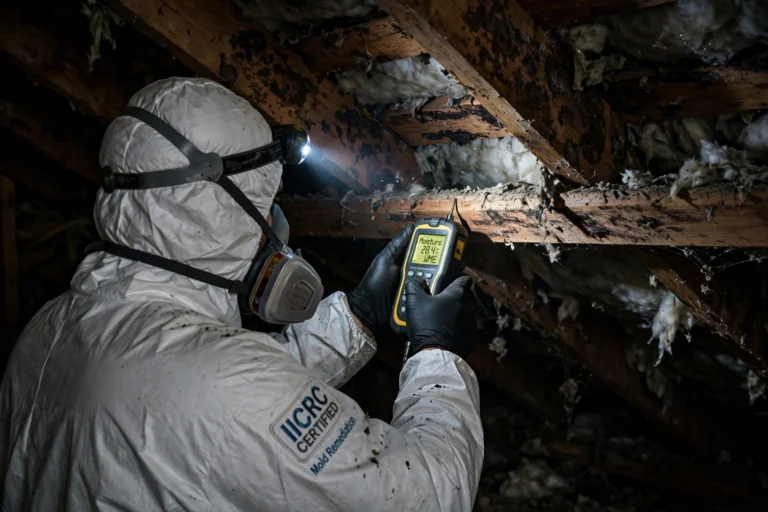
Professional water damage restoration includes moisture readings and drying logs. Ask for copies. They show the insurer exactly what was wet, what equipment ran, and when readings returned to normal — a far stronger record than a verbal account.
How do I work with the adjuster?
Expect the adjuster to inspect the home, review your photos and list, and ask how and when the damage happened. Be factual and consistent with your notes. Walk them through the same rooms you photographed, point out hidden damage — inside a wall cavity, under flooring, above a ceiling — and share your drying records and receipts. If a contractor’s scope differs from the adjuster’s, ask for the difference in writing. Keep every letter, email, and estimate, and note the date of each conversation. If part of the claim is denied, ask for the reason in writing and the policy wording it relies on.
What mistakes should I avoid?
The most common mistakes are easy to avoid once you know them. Do not throw damaged items away before the adjuster has had a chance to see them, unless they are a health hazard — in that case, photograph them thoroughly first and note why they were removed. Do not start permanent repairs before the inspection, beyond emergency work to stop further damage. Do not rely on memory for the item list; write it down room by room. And do not assume flood, sewer backup, or mold is covered — check the policy and any endorsements, and ask your insurer directly if you are unsure.

A claim file is also a repair file: the same photos, lists, and drying logs help your restoration team plan the work and help you check, at the end, that everything listed was dried, repaired, or replaced. Keep the file until the claim is closed and repairs are complete. If water damage has hit your New Orleans home, call Get Restoration New Orleans at (504) 520-4646 — our team responds around the clock and documents the damage as part of the job.
Frequently asked questions
Should I file a claim before or after cleanup starts?
Report the loss to your insurer first, then begin emergency mitigation — stopping the water and starting drying. Photograph everything before cleanup where it is safe to do so, and keep receipts for all emergency work.
What if I already threw away damaged items?
Tell your adjuster honestly, and share any photos, purchase records, or receipts you still have. A room-by-room list written from photos and memory is better than no list, but items the adjuster never sees are harder to claim.
Does homeowners insurance cover mold after water damage?
It depends on the cause. Mold that follows a covered, sudden water loss is often treated as part of that claim, subject to policy limits. Mold from a long-term leak, neglect, or flooding is often excluded or limited. Check your policy wording and any mold limits or endorsements.
Is sewer backup covered by a standard policy?
Not always. Some policies exclude sewer backup entirely, while others cover it only with an added endorsement. Check your policy before assuming, and document a backup with photos and a note of when it happened.
How long should I keep claim documents?
Keep photos, lists, receipts, drying logs, estimates, and all insurer correspondence until the claim is fully closed and repairs are complete. If a dispute arises later, that file is your evidence.
—


5 Comments