
Keep your Christmas tree safe in New Orleans by buying a fresh tree, watering it every day, keeping it at least three feet from fireplaces, heaters and candles, and checking every light strand for damage before it goes on the tree. Turn the lights off when you leave the house or go to bed. If a tree catches fire, get everyone out and call 911 — do not try to fight it yourself. Get Restoration New Orleans responds 24/7 at (504) 520-4646 if fire or smoke damages your home.
Key takeaways
- A fresh, well-watered tree is much harder to ignite than a dry one — water it daily and check the stand.
- Lights and wiring are involved in nearly half of Christmas tree fires, so inspect every strand before hanging it.
- Keep the tree at least three feet from fireplaces, radiators, space heaters, heat vents and candles.
- Turn tree lights off when you leave the house or go to sleep, and never overload an outlet.
- Take the tree down after Christmas, or as soon as the needles start dropping — a dried-out tree is a fire hazard.
- If a fire starts, get out, close the door behind you and call 911 from outside.
Why do Christmas trees catch fire?
Christmas tree fires are rare, but when they happen they spread fast. A dry evergreen is mostly resin and thin needles, and once it ignites it can be fully involved in under a minute. That is why the fire services treat a Christmas tree as a fuel load, not just a decoration.
The National Fire Protection Association reports that US fire departments respond to an average of about 160 home fires a year that start with a Christmas tree. Electrical distribution and lighting equipment is involved in 44% of them. A heat source placed too close to the tree causes about one in five. Three-quarters of these fires happen in December or January, and the risk climbs the longer a natural tree stays up after Christmas, because it keeps drying out.
New Orleans adds its own twist. Many homes here are older, with fireplaces that see their first real use of the season in December, and space heaters running on cold nights — the cold front moving through this weekend brings Sunday morning lows in the 40s, the coldest in a couple of weeks. A tree squeezed next to a fireplace or a heater in a small living room is exactly the setup that causes trouble.
How do you pick a safe Christmas tree?
Start at the lot, not at home. A fresh tree is your first line of defence, because a fresh tree holds moisture and resists ignition far better than one that has been drying for weeks.
Run your hand along a branch: the needles should be hard to pull off and should bend without snapping. Shake the tree gently — a few loose brown needles are normal, but a shower of dry needles means the tree is already too dry. Look for a trunk that is sticky with sap at the cut end, which is a sign it was cut recently.
Before the tree goes into its stand, cut a few inches off the bottom of the trunk. A fresh cut lets the tree drink properly. Then set it in a sturdy stand that holds plenty of water and cannot tip over — a tree that falls can knock ornaments and lights into a heat source, and a dry tree on its side is a worse hazard still.
If you use an artificial tree, check the label for “fire resistant” rather than “fireproof” — no tree is fireproof. An artificial tree does not dry out, which removes one risk, but its lights and wiring carry the same electrical risk as a real tree, so the checks below still apply.

How do you check Christmas lights before hanging them?
The lights from last year’s box are the likeliest thing to start a tree fire, so check them first — on the floor, before you climb a ladder or wrap the tree.
Plug in every strand on the floor first. Dead sections and flicker are easy to spot at ground level and hard to see once the strand is buried in branches. Then inspect the whole wire. Throw out any strand with frayed or pinched wires, a cracked socket, a loose connection or bare copper showing through. The US Fire Administration advises checking lights every year and discarding damaged strands rather than trying to repair them.
Read the label on each string. A green holographic UL label means indoor use only; a red label means indoor or outdoor. Only use indoor-rated strings on a tree inside the house, and only outdoor-rated strings outside. Do not connect more strands end to end than the maker allows — the limit is printed on the package or the plug tag. If you cannot find it, use one strand per outlet.
Use a power strip with surge protection, or better still a timer that switches the lights off automatically. Keep the tree’s lights on their own outlet where possible, and never run a light string under a rug or through a doorway where it can be pinched.
Where should you put the tree?
Place the tree at least three feet from every heat source: the fireplace, radiators, space heaters, heat vents and candles. That three-foot rule is the single most repeated piece of advice in fire safety guidance, because a heat source too close to the tree is behind about one in five tree fires.
Do not let the tree block an exit. In a fire you need a clear path out of the room, and a tree in front of a door or window is an obstacle at the worst possible moment. Keep it away from high-traffic spots where it can be knocked over, and away from the path to the stairs.
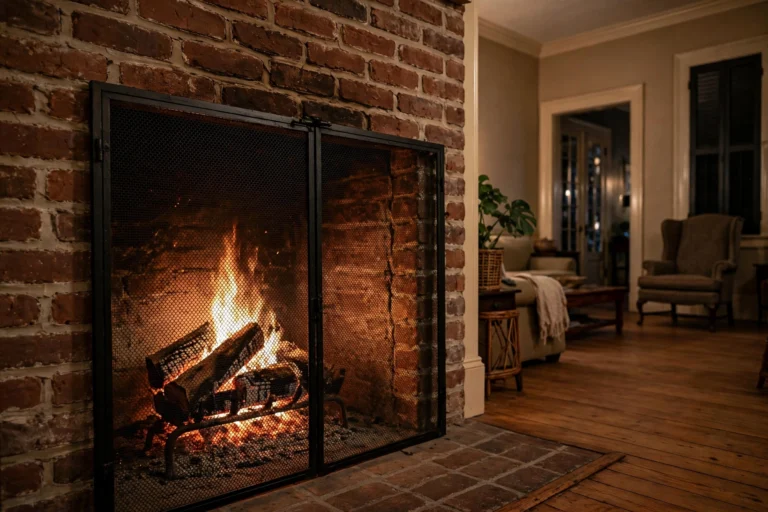
If you have a working fireplace, keep the tree well away from it and use a screen in front of the fire. Embers and sparks can travel further than people expect. Our guide to a chimney sweep explains why a clean flue matters before the first fire of the season, and our space heater safety guide covers the same three-foot rule for heaters.
How do you keep a real tree from drying out?
Water the tree every day, and check the stand morning and night in the first week. Top up the stand so the base of the trunk stays submerged at all times. A fresh tree can drink a surprising amount of water in its first days indoors, especially in a heated room.
Watch the needles. When they start dropping in large numbers, or the branches feel brittle and dry, the tree has passed its safe life. Take it down as soon as the holidays end, or sooner if it dries out. The longer a natural tree stays up into January, the higher the risk — and a tree left up until it is tinder-dry is the one that burns fastest.
Keep the room from getting too hot and dry around the tree. Do not place it directly under a heating vent or next to a radiator, and avoid putting it in front of a sunny south-facing window where the afternoon sun bakes it.

What about candles and other decorations?
Candles start about 45% of home decoration fires in December, according to US Fire Administration data. Keep real candles at least 12 inches from anything that can burn, use sturdy holders where they will not be knocked over, and never leave a lit candle unattended. Battery-operated flameless candles give the same warm glow with none of the risk, and they are the safer choice near a tree and on a mantel.
Keep paper decorations, tinsel and dried wreaths away from lights and candles, and do not hang anything flammable directly above a heat source. If you use a tree topper with lights, make sure its wiring is in good condition and it is not pinching the top branches.
On big cooking days, the kitchen carries its own fire risk — our Thanksgiving kitchen fire safety guide covers grease fires, oven safety and what to do if a pan catches fire.
What should you do if the tree catches fire?
Get everyone out of the house at once, close the door behind you if you can, and call 911 from outside. A Christmas tree fire spreads through dry branches in seconds, so do not stop to grab gifts and do not try to fight it with a pot of water from the kitchen. Water will not stop a tree fire once it has taken hold.
Before the holidays, check that your smoke alarms work and that everyone in the house knows the escape route and the meeting spot outside. Test the alarms monthly and change the batteries at least once a year. A working alarm is the difference between a close call and a tragedy, and December is the right month to test both the alarms and the escape plan.
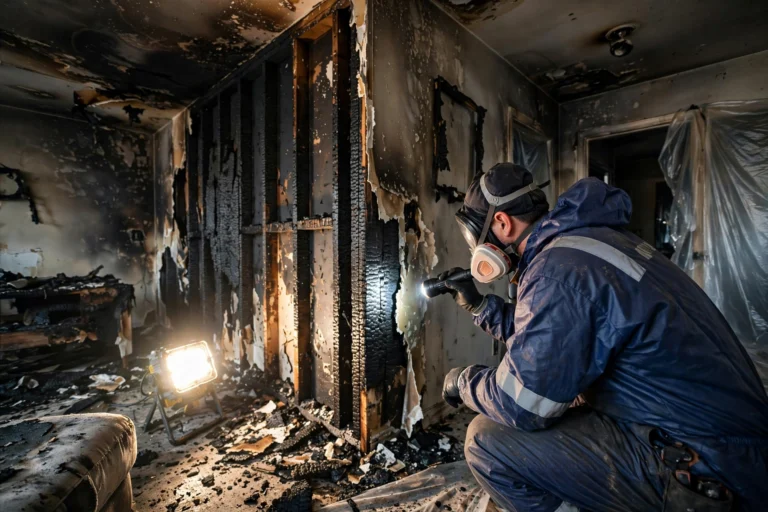
After a fire, even a small one, the smoke and soot damage can reach far beyond the room where it started. Our fire and smoke damage restoration page explains how professional cleanup works, and our guide to smoke damage cleanup sets out what to do — and what not to touch — in the first hours after a fire.

A safer holiday checklist
A fresh tree, daily water, checked lights, three feet of clear space and lights off at night — those five habits cover almost every Christmas tree fire. Put the tree up with care, take it down on time, and keep candles and heaters at a distance. If fire or smoke does damage your home this holiday season, call Get Restoration New Orleans at (504) 520-4646. The team responds 24/7 across Greater New Orleans.
FAQs
How often should I water my Christmas tree?
Every day. Check the stand morning and night in the first week and top it up so the base of the trunk stays submerged. A fresh tree drinks a lot of water in its first days indoors, and a tree that runs dry becomes a fire risk quickly.
How far should a Christmas tree be from a fireplace?
At least three feet from the fireplace, and the same distance from radiators, space heaters, heat vents and candles. A heat source too close to the tree causes about one in five Christmas tree fires, so distance is the simplest protection.
Can I leave Christmas tree lights on overnight?
No. Turn the tree lights off when you leave the house or go to bed. Lights and wiring are involved in nearly half of Christmas tree fires, and an unattended fault has no one around to catch it. A timer that switches the lights off automatically is a good safeguard.
Are artificial Christmas trees safer than real ones?
An artificial tree does not dry out, which removes one risk, but it is not fireproof — look for a “fire resistant” label. Its lights and wiring carry the same electrical risk as a real tree, so the same checks apply: inspect every strand and do not overload outlets.
How do I know if my Christmas lights are unsafe?
Throw out any strand with frayed or pinched wires, a cracked socket, a loose connection or bare copper showing. Plug each strand in on the floor before hanging it, and discard any with dead sections or flicker. Only use indoor-rated strings on a tree inside the house.
What should I do if my Christmas tree catches fire?
Get everyone out of the house at once, close the door behind you if you can, and call 911 from outside. Do not try to fight a tree fire with water — it spreads through dry branches in seconds. After the fire, call Get Restoration New Orleans at (504) 520-4646 for fire and smoke damage cleanup.