
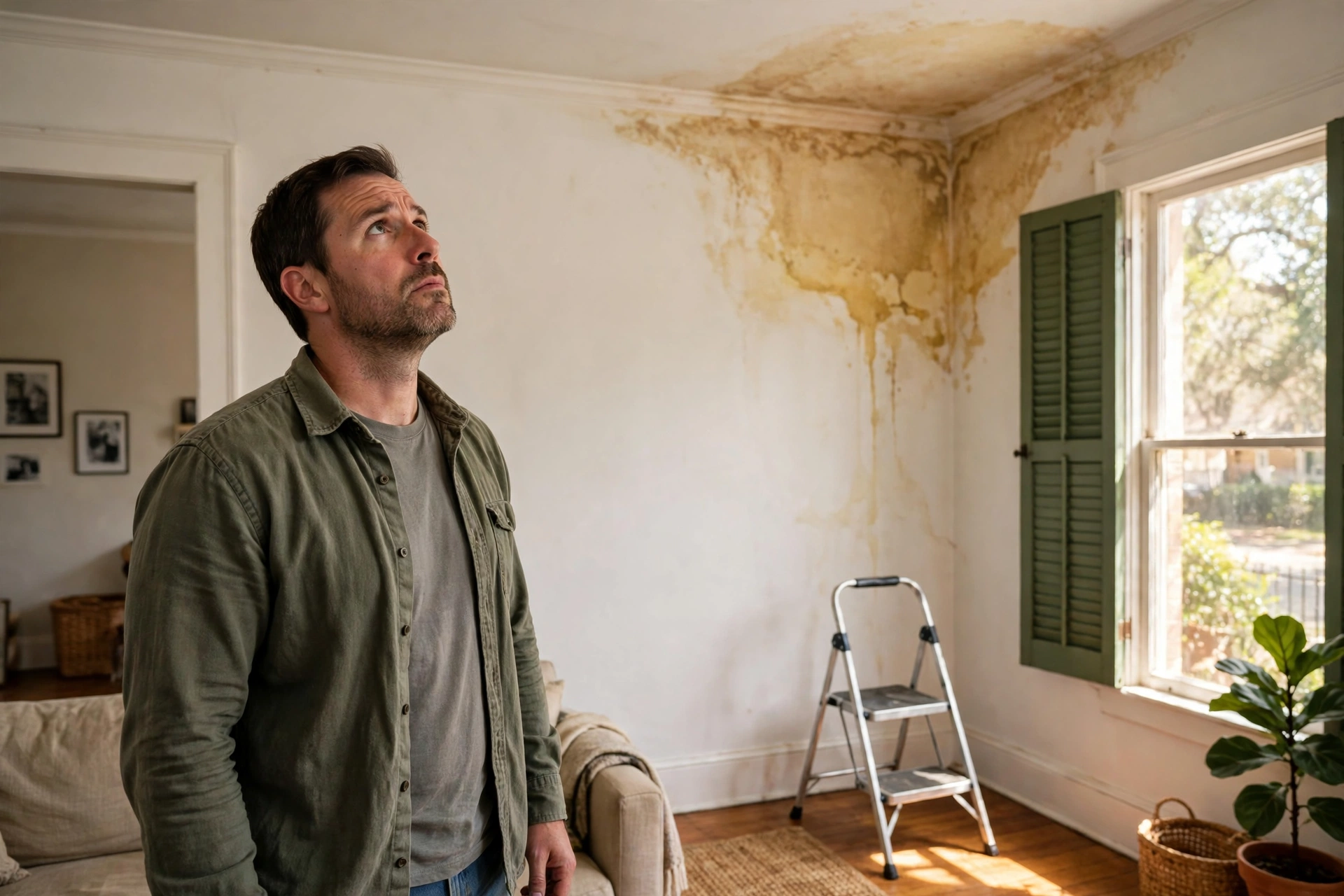
Water hiding inside a wall in a New Orleans home usually shows itself as a yellow or brown stain, paint that bubbles or peels, a soft spot in the drywall, or a musty smell that will not go away. A water bill that jumps for no clear reason, or the sound of running water when every tap is off, points the same way. Act fast: mold can start growing on wet materials within 24 to 48 hours. Get Restoration New Orleans responds 24/7 at (504) 520-4646.
Key takeaways
- A yellow or brown stain that keeps growing is the clearest early sign — it means water is still getting in.
- Paint that bubbles or peels, or drywall that feels soft, means moisture has already soaked through from behind.
- A musty smell with no visible water often means mold is growing inside the wall cavity.
- A water bill that jumps with no change in use is worth a two-hour meter test.
- Never paint over a stain — find the source first, photograph everything, and get the wall dry as soon as you can.
What are the early signs of water damage in walls?
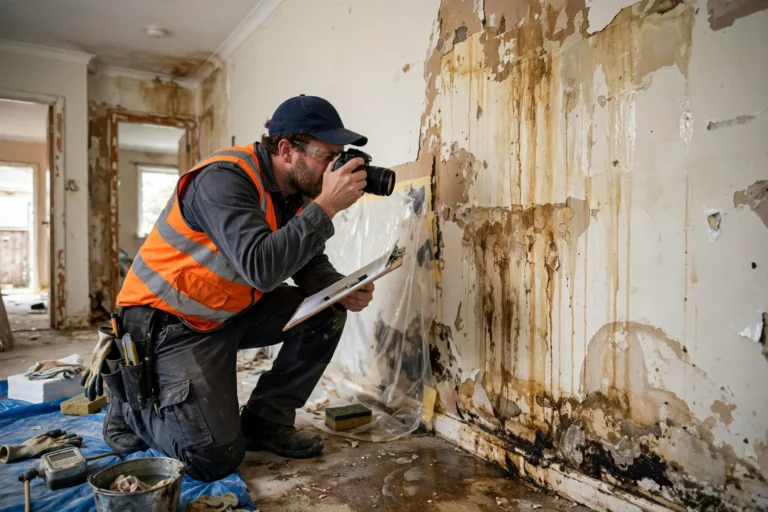
The most common first sign is a stain. Water leaves yellow, brown or copper-coloured marks on drywall and plaster, often in rings or uneven patches. A stain that stays the same size for weeks may be from an old, fixed leak. A stain that grows, darkens or returns after you clean it means water is still getting in, and that is the one to act on.
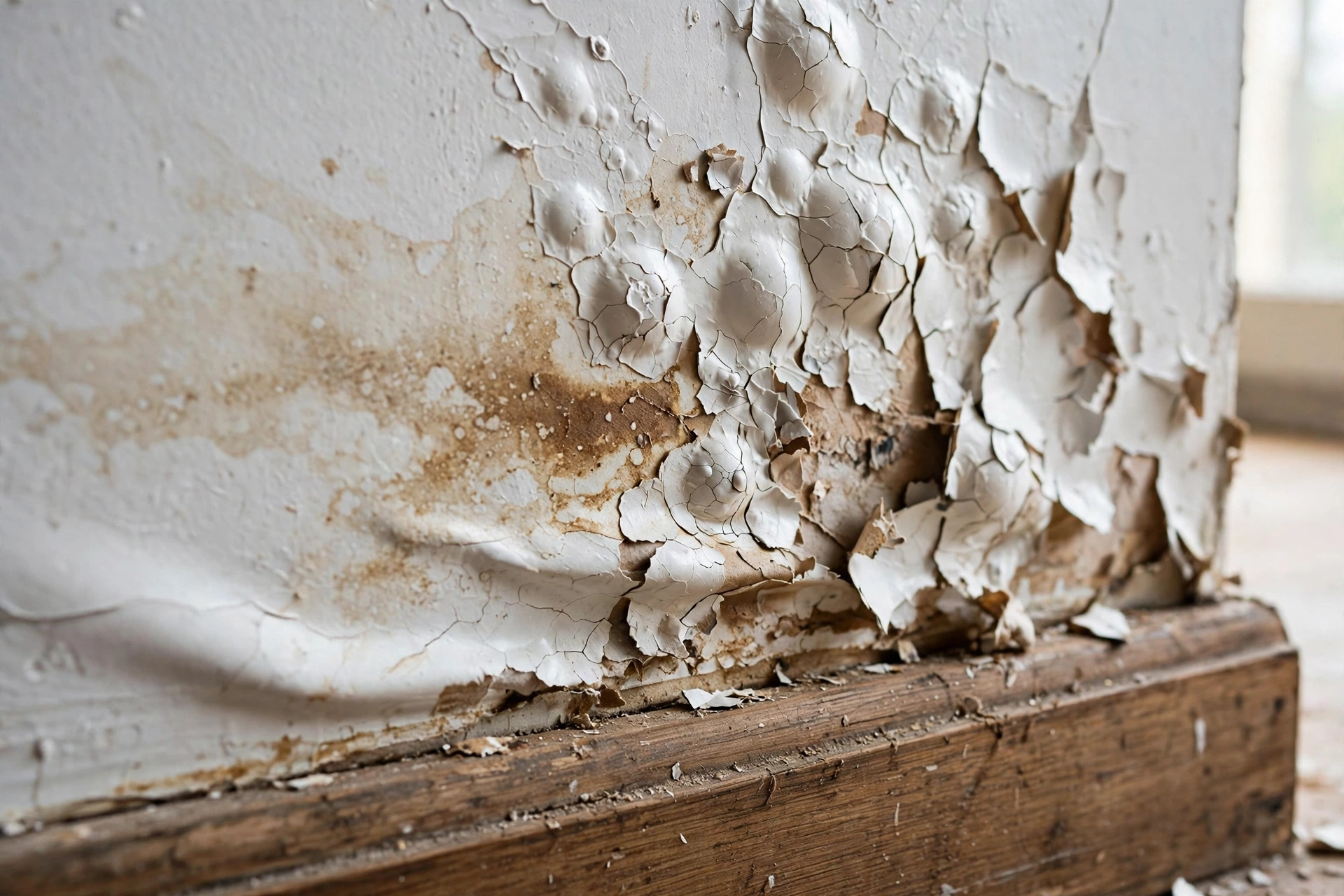
Paint and wallpaper tell the same story in a different way. When moisture builds up behind a surface, the bond breaks. Paint bubbles, blisters or flakes away. Wallpaper lifts at the seams and corners. In older New Orleans homes with plaster walls, the signs can be subtler — a hairline crack that spreads, or a patch of plaster that feels cool and damp to the touch.
Touch the wall. Drywall that has absorbed water feels soft or spongy when you press it, and it may sag or bow outward. Baseboards can warp or pull away from the wall, and doors in the same area may start to stick. A persistent musty or earthy smell in a room, closet or hallway is another strong clue — it usually means moisture is sitting inside the wall and feeding mold growth, even if nothing looks wet yet. Small dark spots of mold in corners, or around the edges of a stain, mean the wall has been wet for a while.
What other clues point to a hidden leak?
Not every warning sign is on the wall itself. A sudden jump in your water bill, with no change in how your household uses water, can point to a leak feeding straight into a wall or under the floor. The US Environmental Protection Agency notes that the average household loses nearly 10,000 gallons of water a year to leaks, and about one home in ten loses 90 gallons or more every day — most of it from leaks the owners never see.
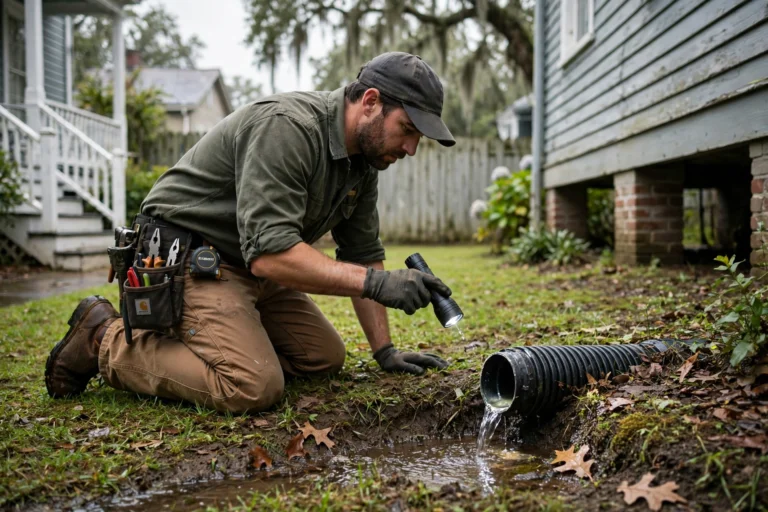
Listen when the house is quiet. If all taps and water-using appliances are off and you still hear hissing, dripping or running water, something is leaking behind a surface. A warm spot on the floor can mean a hot-water line is leaking underneath. Outside, a soggy patch in the yard during dry weather, or one strip of grass that grows far faster than the rest, can point to a supply line leaking underground.
New Orleans adds its own twist. Many homes here sit raised on piers, with supply lines running through the crawl space below. A leak there can soak the subfloor and the bottom of the walls for weeks before anything shows inside. High humidity also means wet walls dry slowly, so a small leak does more damage here than it would in a drier climate.
How can you test for a hidden leak without opening the wall?
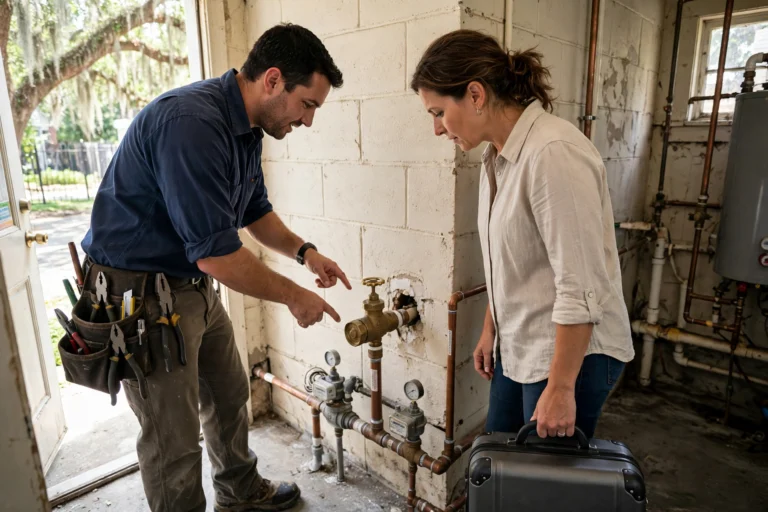
The simplest test uses your water meter. Turn off every tap and water-using appliance, including the washing machine, dishwasher and ice maker. Write down the meter reading, then use no water at all for two hours. Read the meter again. If the number has moved, water is going somewhere you cannot see, and the leak is real.
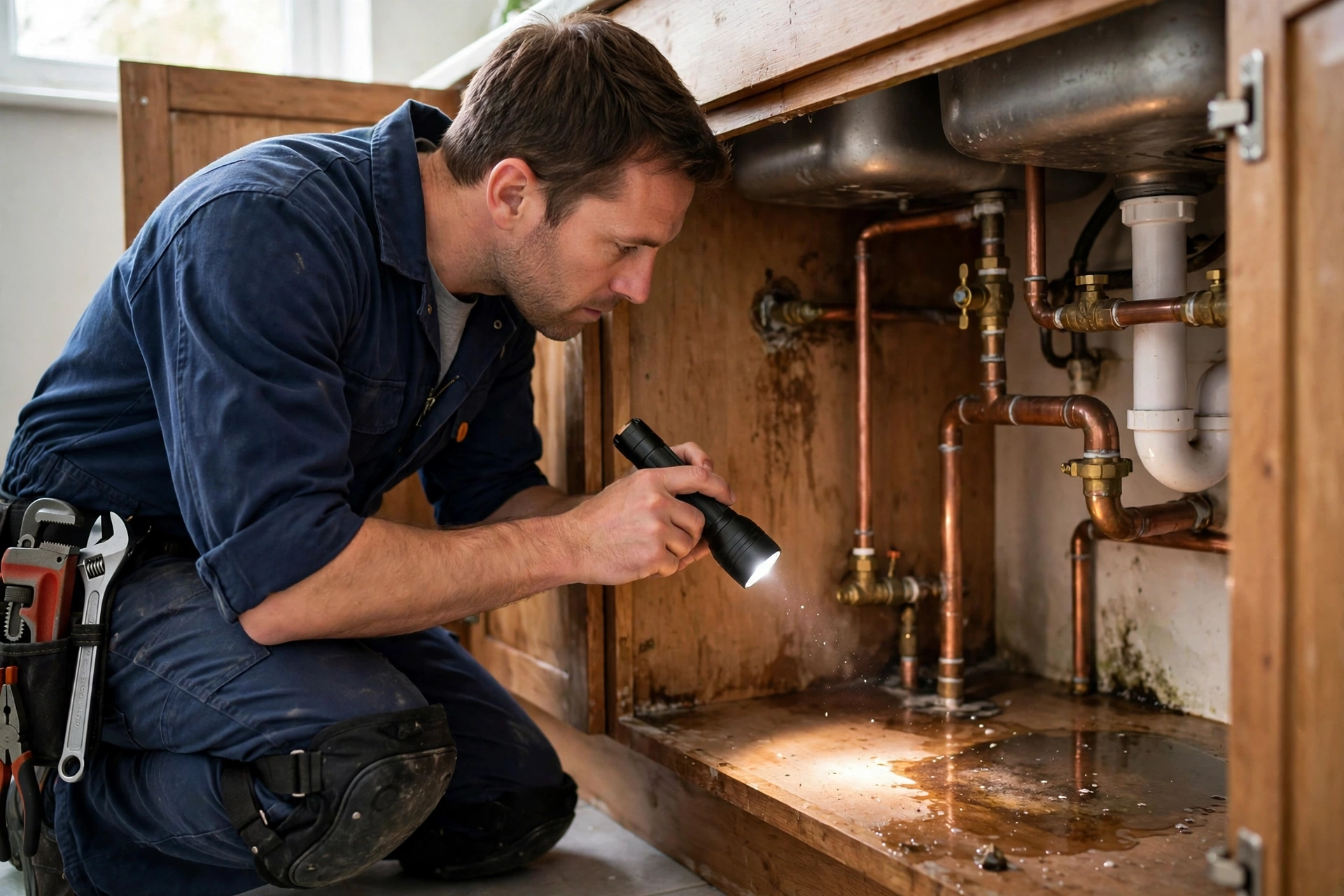
While you wait, check the usual suspects by hand. Open the cabinet under every sink and look for dampness, staining or a musty smell. Run a dry tissue along pipe joints and supply lines — even a slow drip will show. Look at the base of each toilet and around the water heater. Our guide to a water heater leak covers what to check in the heater closet, where a slow leak often hides for months.
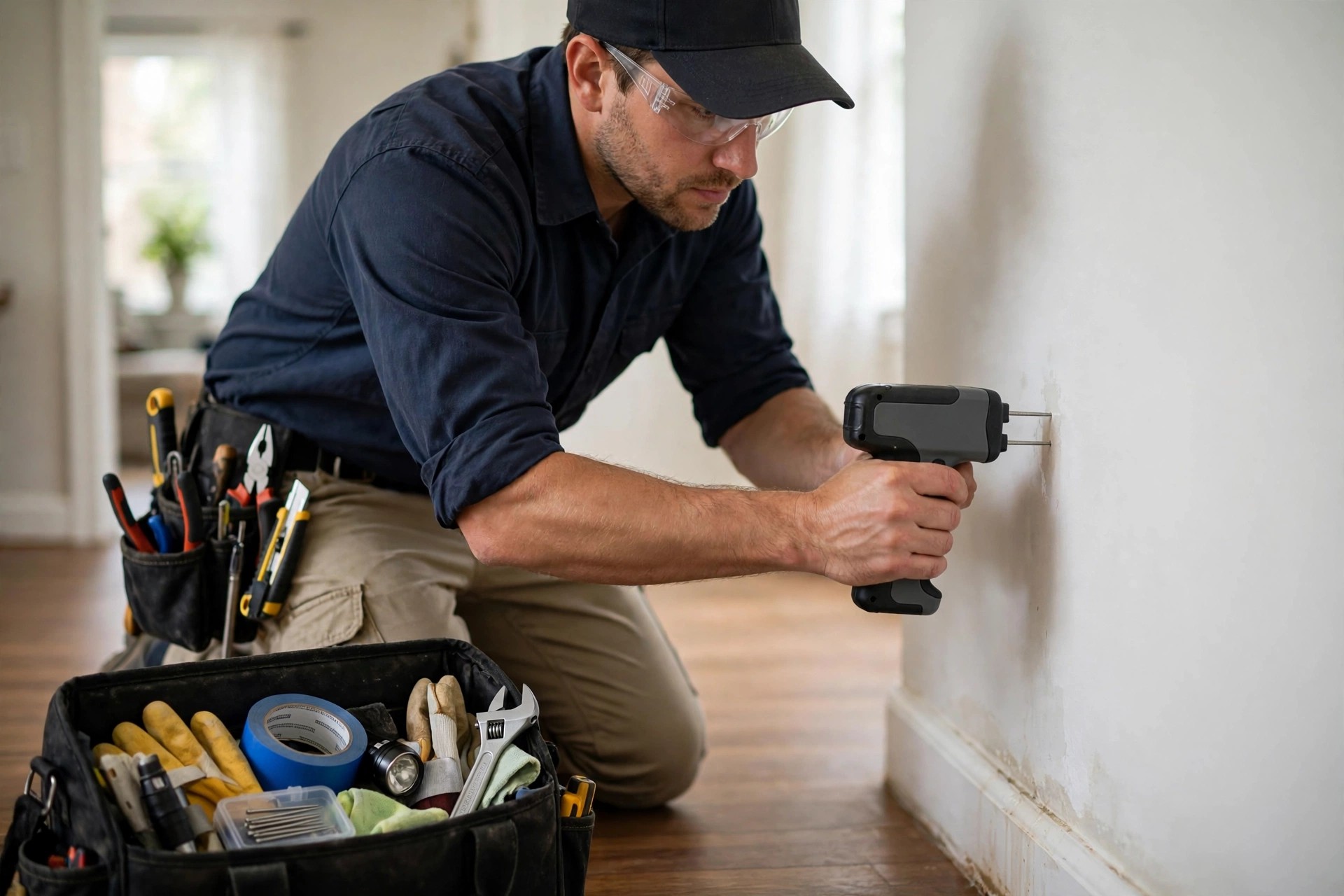
If the meter test points to a leak, a professional can find it without tearing the wall open. Restoration crews use pin moisture meters and thermal cameras to map exactly which parts of the wall are wet — the same moisture mapping that starts every water damage restoration job. Knowing the wet area before anyone cuts drywall keeps the repair small.
Where do hidden leaks usually start in a New Orleans home?
Bathrooms are the most common source. Shower grout and tile cracks let water behind the wall a little at a time. A worn toilet wax seal leaks at the base, often into the floor below. A tub overflow or a loose faucet connection can run for months behind a wall before the stain appears on the other side.
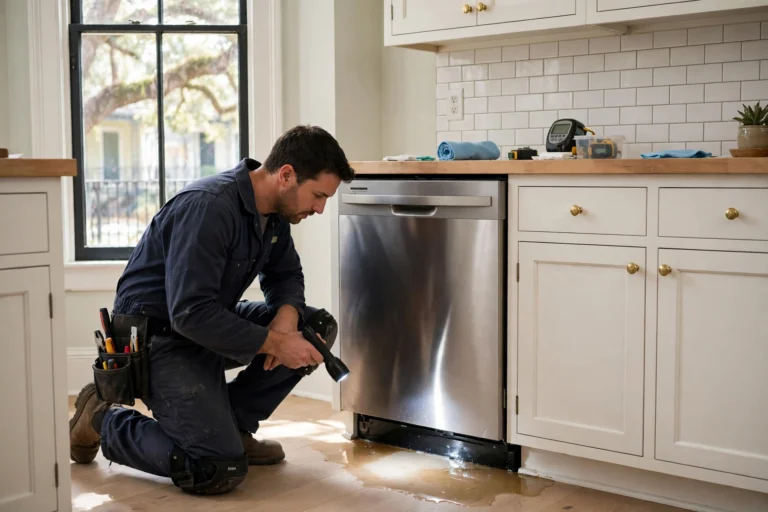
Kitchens come next. Supply lines to the sink and dishwasher, and the drain connections under the sink, all sit out of sight inside a cabinet. A slow drip there soaks the cabinet floor first, then the wall behind it and the floor below.
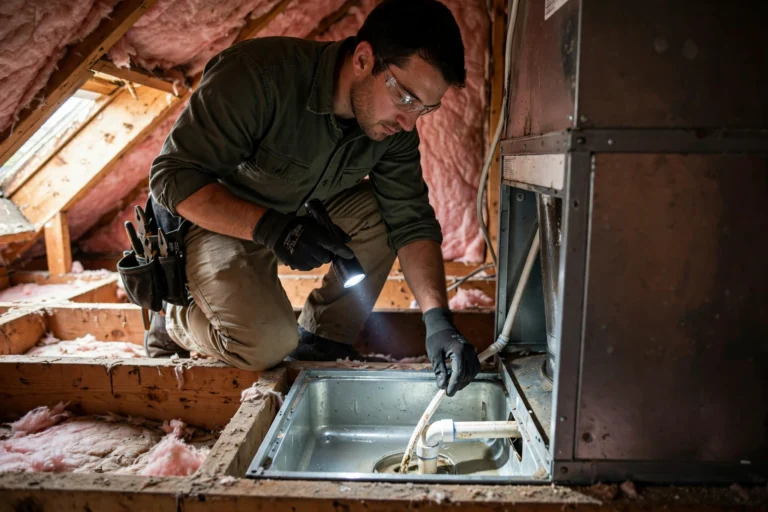
Air conditioning is a New Orleans speciality. Systems here run most of the year, and the condensate drain line carries water away from the indoor unit day after day. When that line clogs with algae or debris, the water backs up — into the wall cavity, the ceiling below, or the air handler closet. If the stain is on the ceiling under the AC closet, the drain line is the first thing to check.
Roof leaks are the hardest to trace, because water travels. It runs along rafters and decking before it finds a way in, so the stain on your wall is rarely below the point where the water entered. Our guide to a roof leak explains how to track one back to its source after heavy rain.
The timing matters this week. Tuesday 10 November is dry and mild in New Orleans, with a high near 79°F, but a strong cold front arrives Thursday and the National Weather Service expects the first freeze of the season for some areas by Saturday morning, with lows in the 30s north of the lake. A slow leak in an exposed pipe can freeze and split when the cold arrives — so a stain you find today is worth checking before the front, not after it. Our guides to prevent frozen pipes and a burst pipe cover what to do if the cold catches a weak pipe.
What should you do when you spot a sign?
First, photograph the stain or damage, with the date, before you touch anything. Those photos matter for an insurance claim — our guide to a water damage insurance claim explains what adjusters want to see.
Second, do not paint over it. Paint hides the warning, not the water. The stain will bleed back through, and the leak will keep soaking the framing behind it.
Third, try to find the source. Check the room above or on the other side of the wall, and look under the nearest sink or around the nearest fixture. If water is actively running or the wall is bulging, shut off the main water valve and move anything valuable away from the area. If the wall feels soft or sagging, do not lean on it — wet drywall can give way.
Fourth, call a licensed plumber to fix the source of the leak. Then deal with the wet wall itself: drying matters as much as the repair. Our guide on drying out a house sets out how long professional drying usually takes, and our guide to water-damaged belongings explains what can be saved and what should go.
When should you call a restoration company?
Call when the problem is bigger than a single fixed leak. That means a stain that keeps growing after the plumber has been, a wall that feels soft or is sagging, visible mold, a musty smell that stays after the leak is repaired, or damage across more than one room. Water that has reached wiring, flooring or the framing needs more than a patch — it needs the wet area mapped, dried with air movers and dehumidifiers, and checked for mold before the wall is closed up again.
That is the point where a restoration crew takes over from the plumber. If water has brought mold with it, our mold remediation team handles the containment and removal in the same job. A stain on the wall is a small job when it is caught early. Left alone, it becomes a wall opened up, framing replaced, and a much larger bill. If you have found a sign you are unsure about, call Get Restoration New Orleans at (504) 520-4646. The team responds 24/7 across Greater New Orleans and can check the wall with a moisture meter before the damage spreads.
FAQs
What is the first sign of water damage in a wall?
Usually a yellow or brown stain, or paint that bubbles, blisters or peels. A stain that grows or returns after cleaning means water is still getting in. A musty smell or a soft spot in the drywall can appear before any stain shows.
Can a wall be wet inside without any visible stain?
Yes. Water can soak insulation and framing for weeks before it marks the surface, especially in older plaster walls. Clues include a musty smell, a rising water bill, the sound of running water with all taps off, and a wall that feels cool or damp to the touch.
How do I check my water meter for a hidden leak?
Turn off all taps and water-using appliances, write down the meter reading, then use no water at all for two hours. Read the meter again. If the reading has moved, water is leaking somewhere in the system — even if you cannot see it.
Does homeowners insurance cover water damage inside walls?
It depends on the cause. Sudden, accidental leaks — such as a burst pipe — are often covered, while slow leaks left unrepaired for weeks or months often are not. Check your policy, photograph the damage, and report it promptly. Keep records of the repair and the drying.
How long can a leak hide inside a wall before it causes serious damage?
Weeks or even months. Mold can start growing on wet drywall within 24 to 48 hours, wood framing can begin to rot over weeks, and a slow leak can soak insulation and subfloors long before a stain appears. The sooner a leak is found, the smaller the repair.
Should I paint over a water stain on my wall?
No. Paint hides the stain, not the leak. The stain will bleed back through the new paint, and the water will keep damaging the framing behind the wall. Find and fix the source of the leak, dry the wall fully, and only then repair and repaint.
5 Comments