An AC drain pan overflows when the condensate drain line clogs — usually with algae and slime — and the water has nowhere to go, so it spills into the ceiling or floor below. Turn the AC off at the thermostat, contain the water, and check the pan. Property Restoration New Orleans handles the drying and repair when ceilings or walls get wet. Call (504) 520-4646.
Key takeaways
- A drain pan overflows when the condensate line clogs with algae, mold, or debris.
- The first signs are ceiling stains, a musty smell when the AC runs, and the AC shutting itself off.
- Turn the system off, contain the water, and never stand under a sagging ceiling.
- Flush the drain line every 2 to 3 months during cooling season to prevent clogs.
- Wet drywall and insulation should be dried within 24 to 48 hours.
How does an AC drain pan overflow?
An air conditioner does two jobs: it cools the air, and it pulls water out of it. In New Orleans, the second job is most of the work. Humid air crosses a cold evaporator coil, moisture condenses on it the way it does on a glass of iced tea, and the water drips into a pan, then leaves through a narrow PVC pipe called the condensate drain line.
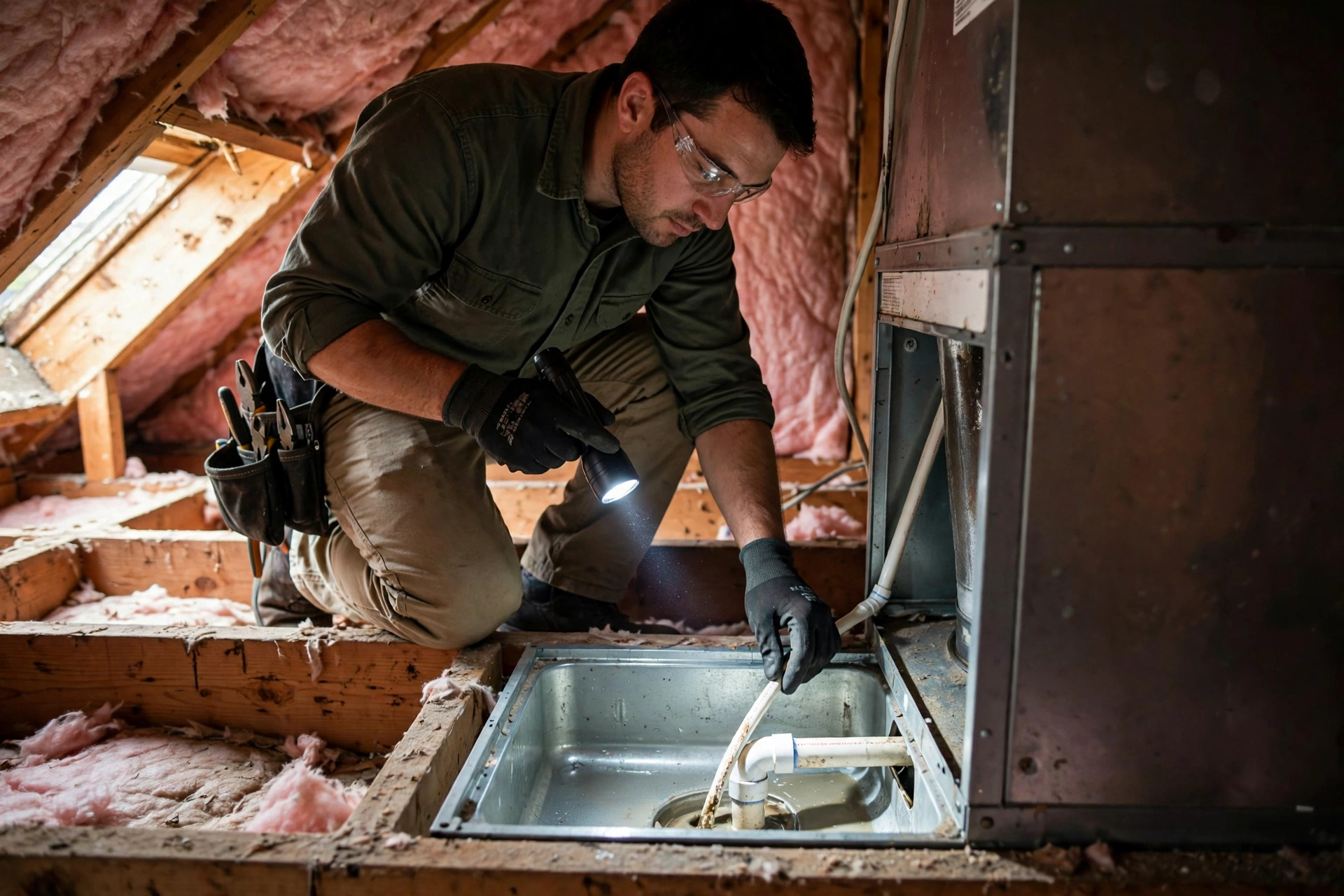
That line is cold, wet, and dark, and the air crossing the coil carries dust and pollen. Over time, algae and slime build up inside the pipe until water can no longer pass. The pan fills, overflows, and water drips into the ceiling, walls, or flooring below. A cracked or rusted drain pan can leak the same way even when the line is clear, which is common in older air handlers with metal pans.
Many New Orleans homes place the air handler in a hot attic or an upstairs closet, directly above finished ceilings. A leak there can soak insulation and ceiling drywall for days before any stain appears below. That is why this small, invisible part causes so much ceiling damage.
A float switch, also called a condensate overflow switch, is a small safety device that shuts the AC off when the drain pan fills too high. If your unit has one and it is working, it stops the overflow before it starts — and the sudden shut-off is itself a warning sign.
What are the signs of an AC drain pan overflow?
AC leaks often start small and hidden. Catching these early signs can save you from a ruined ceiling or a mold problem.
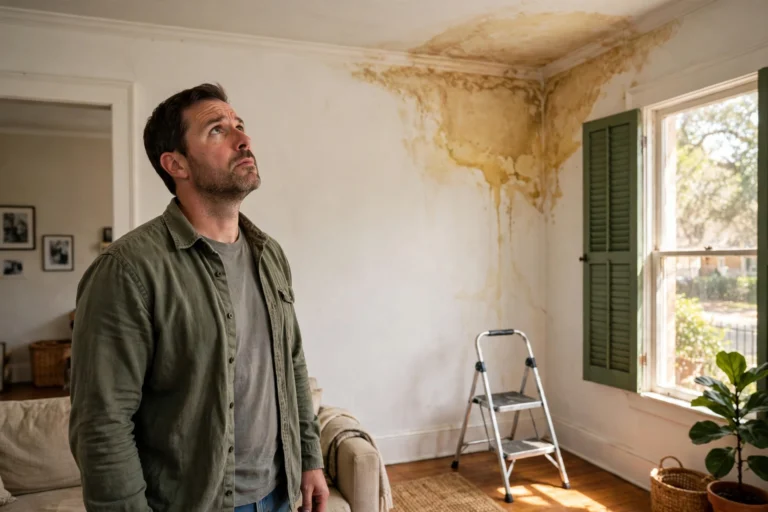
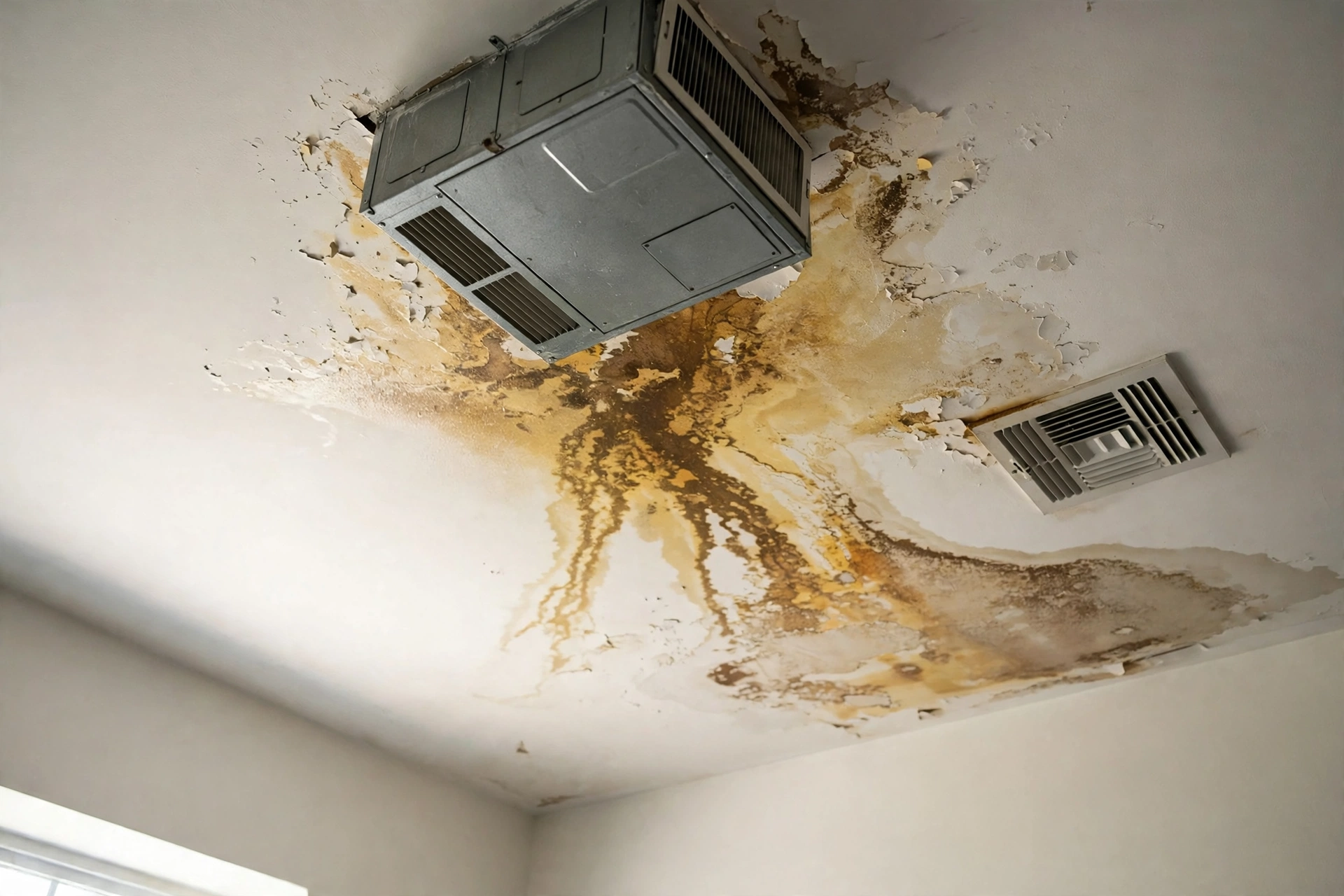
- Water stains on ceilings or walls. Yellowish or brownish rings, especially below an attic air handler or near a closet housing the indoor unit, are the classic sign. Stains often appear on the ceiling of the room directly beneath the air handler, and usually at the ceiling-wall joint first. The stain is almost always smaller than the wet area, because water runs along joists and across the back of the drywall before it shows.
- A musty or damp smell when the AC runs. Algae and microbial growth in the pan and line produce a sour smell that gets distributed through the ducts. The smell often appears before visible damage, which makes it an early warning.
- The AC shuts off unexpectedly. If your unit has a float switch, it is doing its job by killing the system before overflow. Do not just reset it; clear the clog first.
- Standing water in the drain pan. Peek at the secondary pan under the unit. A small amount of water is normal, but standing water means the primary drain is already restricted.
- Dripping sounds inside walls or ceilings. In quiet moments you may hear intermittent dripping when the system cycles — a sign water is falling where it should not.
- Visible mold or mildew near vents or the air handler. Dark spotting on vent covers, return grilles, or the closet walls around the unit points to chronic moisture.
What should you do first if your AC drain pan overflows?
If you find water coming from your AC, work through these steps in order. If water is near electrical components, shut off power at the breaker before you touch anything wet, and never stand in water while switching anything electrical.
- Turn the system off at the thermostat. A running system keeps making condensate, so stopping it stops the flow of new water.
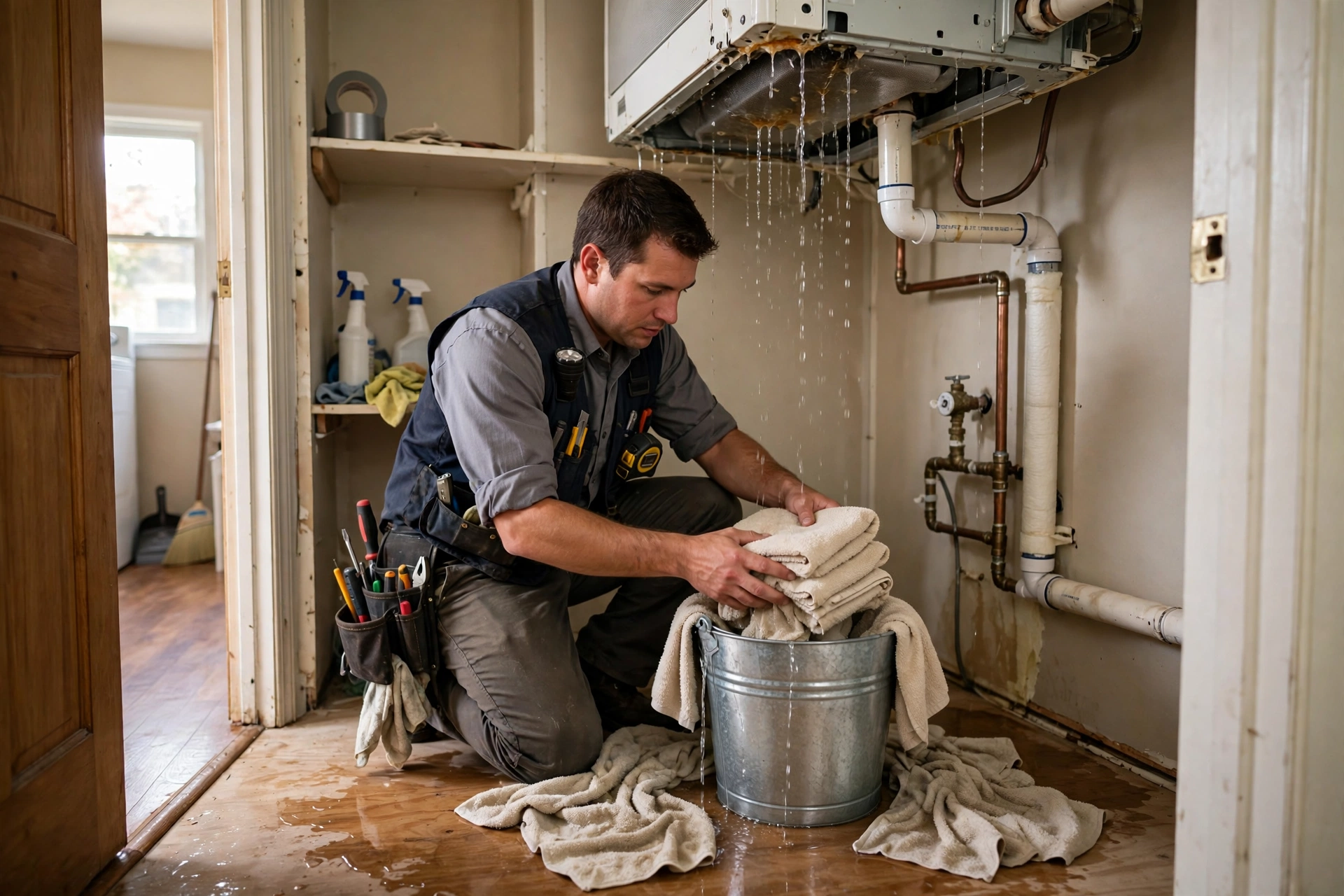
- Contain the drip. Put towels or a bucket under it, and move furniture, electronics, and valuables out of the way.
- Check the drain pan. If the secondary pan holds standing water, the primary drain is clogged. Do not ignore it and restart the system.
- Do not poke a bulging ceiling. A ceiling that is sagging or holding a bubble of water is carrying real weight. A controlled release by a professional avoids a collapse and limits the spread.
- Call for help if ceilings or walls are wet. Surface water is only part of the problem — insulation and drywall above the ceiling hold water for days. Our team provides water damage restoration across New Orleans, including drying, moisture checks, and repair. Call (504) 520-4646.
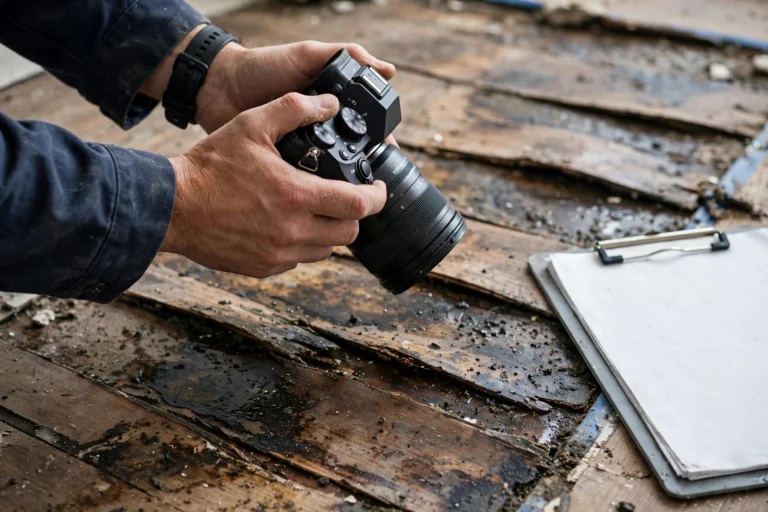
Once the visible water is handled, check whether ceilings or walls feel soft or stained, since hidden damage is common. The signs of water damage in walls are worth knowing, because a small AC leak can wet framing you cannot see from the room below.
How can you stop it happening again?
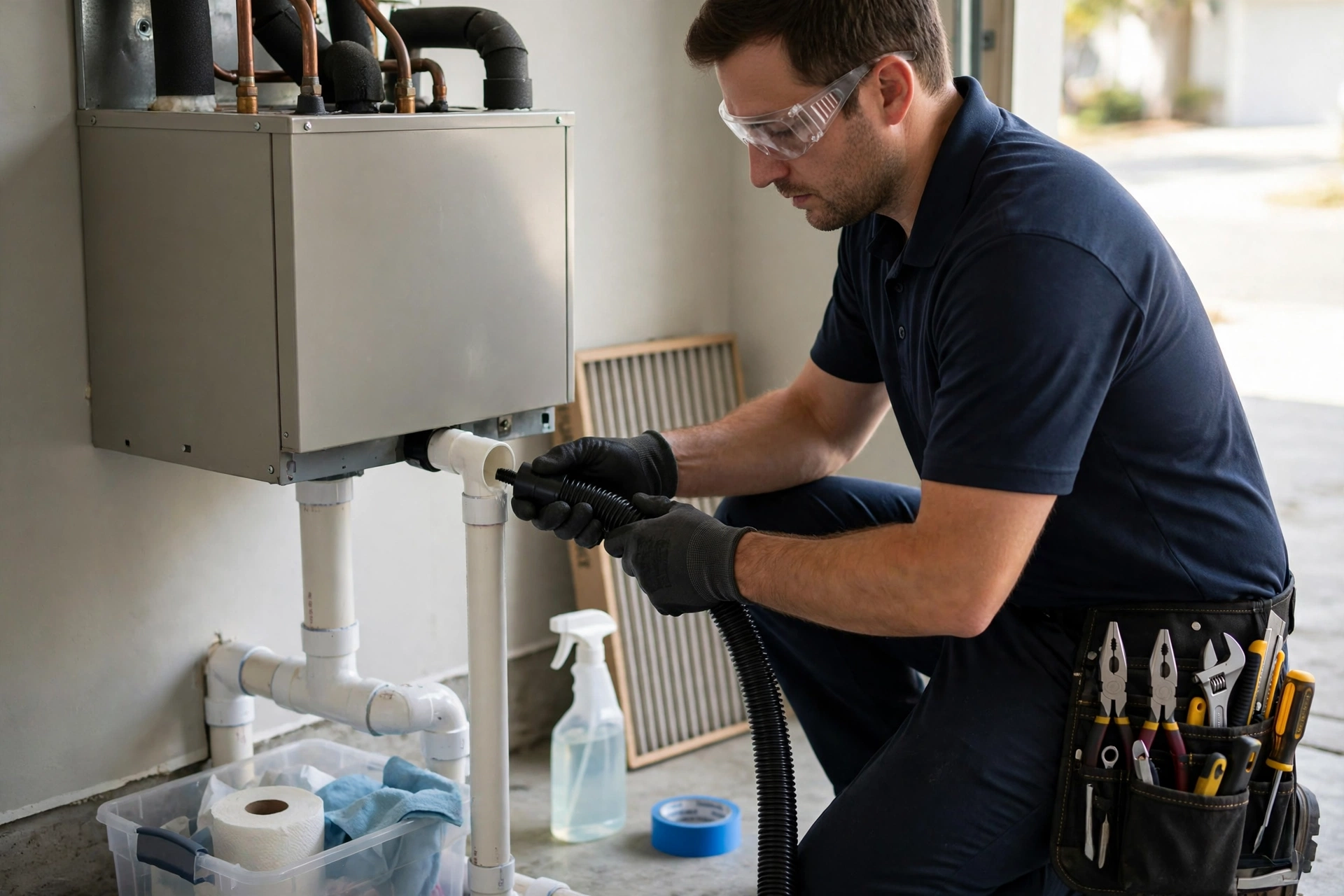
Prevention is simple, and it takes minutes. Flush the drain line every 2 to 3 months during cooling season, and make sure your unit has a working float switch. With the system running, look at where the drain line terminates outside — it should be dripping. A dry stub on a hot, humid afternoon means the water is not leaving the building.
Inspect the drain pan at least twice a year, ideally in spring before cooling season begins and again in mid-summer during peak use. Look for rust or corrosion around the air handler cabinet, standing water in the pan, and visible algae or slime at the drain line’s outdoor exit. If you can see growth at the end, the middle is worse. Because the drain line runs through the system, it is also worth keeping the air ducts cleaned so moisture and growth do not build up through the rest of the system.
When should you call a restoration company?
Call a professional when the ceiling is sagging or bulging, when stains keep spreading after the line is cleared, when the musty smell does not go away, when you can see mold, or when water has reached the walls. In New Orleans humidity, damp drywall and insulation can begin growing mold within a day or two, so drying should not wait. General guidance is to dry wet materials within 24 to 48 hours. If a pipe rather than the AC is the problem, the steps in what to do when a pipe bursts apply instead. For an overflowing drain pan that has already wet your ceiling, call Property Restoration New Orleans at (504) 520-4646 — we are available 24/7.
Frequently asked questions
Why does my AC keep shutting itself off?
Your float switch is doing its job. It cuts power when the drain pan fills too high, which stops an overflow. Do not just reset it and restart the system — clear the clog in the drain line first, confirm the switch resets, and check the pan is draining.
Is a little water in the drain pan normal?
Yes, a small amount of standing water — less than a quarter inch — is normal in a drain pan. Water beyond that level indicates a clog in the condensate line, improper drain pitch, or a blocked line termination point outside.
Can I unclog the drain line myself?
A basic flush of the line is routine maintenance that many homeowners do during cooling season. If water is already in the ceiling, if the clog will not clear, or if the pan is cracked or rusted, call a professional instead of forcing the line.
How fast can mold grow after an AC leak?
In humid climates like New Orleans, damp drywall and insulation can begin growing mold within a day or two. U.S. EPA guidance notes that materials dried within 24 to 48 hours will in most cases not grow mold, which is why fast drying matters more than fast cleanup of the visible water.
Does homeowners insurance cover AC drain pan overflow?
It depends on your policy. Sudden and accidental water damage is often covered, while slow leaks and maintenance problems often are not. Document everything with photos, keep receipts, and check your policy or ask your insurer before assuming either way.