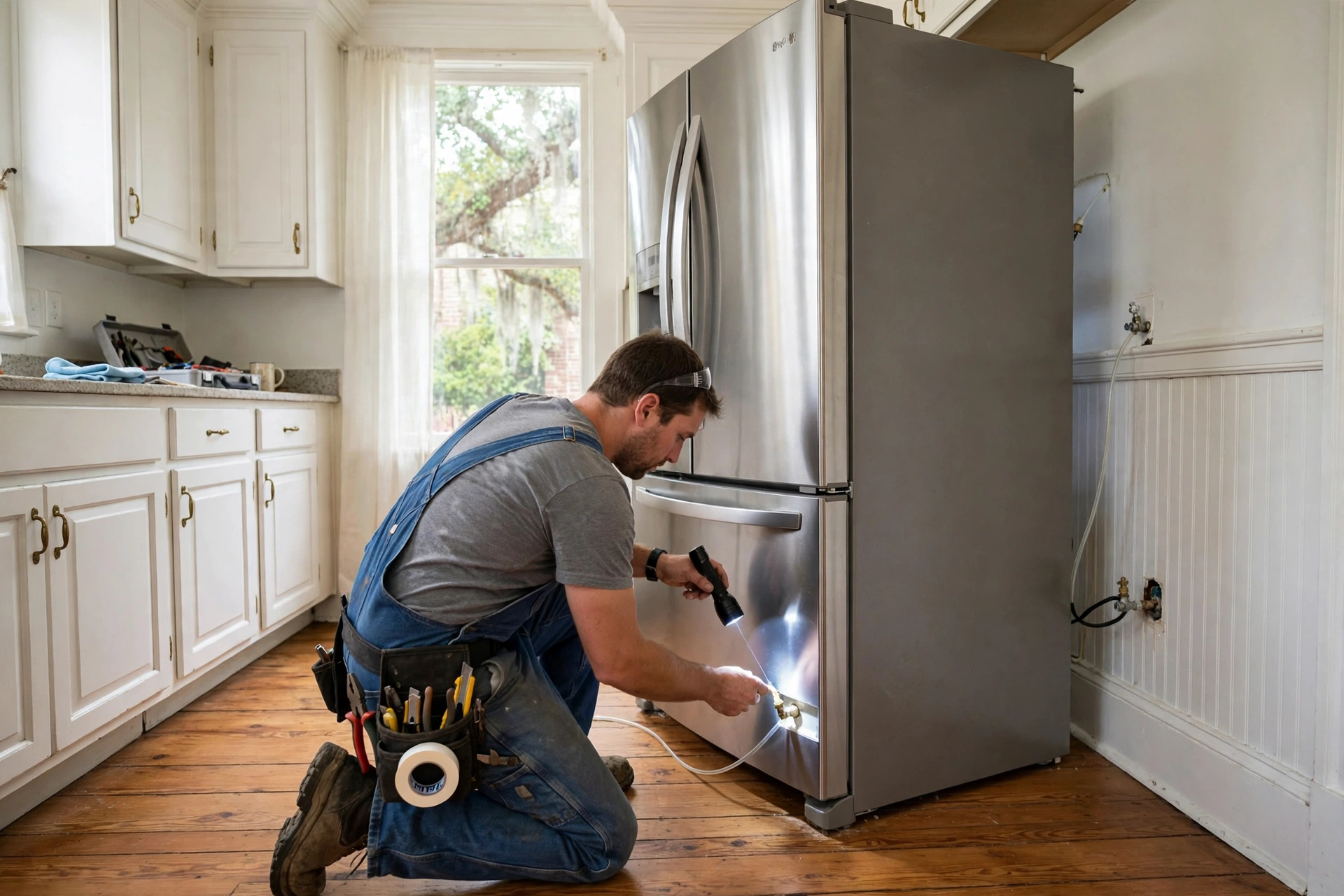
A refrigerator water line leak in New Orleans usually comes from a cracked plastic supply line or a loose fitting behind the fridge. Shut off the valve, pull the fridge out carefully, and dry the floor. If the floor feels soft or the leak has been running for days, call Property Restoration New Orleans at (504) 520-4646.
Key takeaways
- The leak hides behind the fridge, so check the floor and the wall behind it, not just the front.
- A puddle that keeps coming back after you mop it is a leak, not a spill.
- Shut off the water at the valve before you pull the fridge out, or you can tear the line.
- A slow leak can soak the subfloor and cabinet bases for weeks before the damage shows.
- Take photos before you clean up: a sudden leak and a slow leak are treated very differently by insurers.
How can you tell if your refrigerator water line is leaking?
Start with the floor. Pull the fridge out a little and look at the floor behind it and along the wall. A small puddle, a damp patch, or a dark stain on the floor behind the fridge is the clearest sign. Check the base of the cabinets on either side too, because water runs along the floor and soaks into the cabinet bases first.
Watch the fridge itself. An ice maker that has slowed down or stopped making ice, a water dispenser with weak flow, or ice cubes that come out small and hollow can all mean the line is losing pressure through a crack or a loose fitting. A hissing or dripping sound from behind the fridge when the house is quiet is another warning.
Trust your nose and your feet. A musty smell near the fridge, vinyl or laminate lifting at the seams, and a floor that feels soft or springy underfoot all point to water that has been there a while. In New Orleans homes, where many kitchens sit over a raised crawl space, also check underneath the house: a wet patch on the ground below the kitchen, or a drip you can hear from below, means the leak has already travelled through the floor.

What usually causes a refrigerator water line to leak?
The most common cause is the plastic supply line itself. Many fridges are connected with a thin plastic tube, and it turns brittle with age and heat from the fridge motor. A brittle line cracks at a bend or where it rubs against the wall, and the crack can start as a pinhole drip that nobody notices.
Loose fittings are next. The line connects to the house water supply with a compression fitting, often at a small saddle valve clamped onto a cold water pipe under the sink, or at a dedicated valve behind the fridge. Fittings work loose over time, and saddle valves are a known weak point: the clamp can weep around the seal, and the valve can fail to shut off fully when you need it most.
A kinked line is the third cause. When the fridge is pushed back against the wall, the line can fold or get pinched between the fridge and the wall. The kink weakens the tube, and the next time the ice maker calls for water, the pressure finds the weak spot. A fridge that was recently moved, or a kitchen that was remodelled, is the usual story behind this one.
The last two causes sit inside the fridge: a cracked water filter housing and a failed ice maker inlet valve. If the puddle is inside the fridge or under the crisper drawers, the filter housing or the internal lines are the likely source, and that is a job for an appliance technician rather than a plumber.

What should you do right now?
First, stop the water. Find the shutoff valve for the fridge line: it is usually under the kitchen sink, behind the fridge, or on the cold water pipe in a nearby cabinet. Turn it clockwise. If the valve is a saddle valve and it will not close fully, use the main shutoff for the house. Do not pull the fridge out before the water is off: dragging it can tear a weakened line and turn a drip into a flood.
Second, pull the fridge out slowly and carefully, with a second person if you can. Go straight back, not at an angle, and stop as soon as you can see the line. Mop up the standing water and put towels along the base of the cabinets.
Third, find the source. Dry the line, the fittings, and the floor with a towel, then watch where new water appears first. A drip at a fitting points to a loose connection. A drip along the tube points to a cracked line. Water coming from inside the fridge points to the filter housing or the ice maker valve.
Fourth, take photos before you clean up properly: the puddle, the line, the fitting, the floor, and the cabinet bases. Our guide to a water damage insurance claim explains why those photos matter. Then dry the area with fans and keep the fridge pulled out until the floor is dry. Do not use the ice maker or the water dispenser again until the line is repaired or replaced.
Thanksgiving week is the worst time for this leak to start, because the ice maker and the dispenser are working harder than usual with a house full of guests, and nobody is looking behind the fridge. A quick check of the floor behind the fridge before the holiday cooking starts costs two minutes and can save a floor.
What floor and cabinet damage should you look for?
A fridge line leak is slow, and slow leaks do the most harm because nobody sees them. Water that escapes behind the fridge soaks into the subfloor, where it rots wood, loosens flooring, and feeds mold. By the time the damage shows at the front of the fridge, the floor underneath has often been wet for weeks.
Press the floor around the fridge with your foot. If it feels soft, spongy, or springy compared with the floor a few feet away, the wood below is wet. Look for vinyl lifting at the seams, laminate boards cupping or swelling at the edges, grout gone dark, and cabinet bases swollen or pulling away from the wall. A damp, musty smell that will not go away is another warning, because mold grows in the dark, warm space behind the fridge.
A moisture reading tells the real answer. We check the floor under and around the fridge, the base of the cabinets, and the wall behind it with meters, because water often spreads farther than the visible damage suggests. If the floor is damaged, our water damage restoration team can dry the subfloor and check for mold before the floor is rebuilt. The signs of water damage in walls guide lists the other quiet warnings to watch for around the house.

What should you never do?
Do not mop up a puddle behind the fridge and forget about it. If the water comes back, the line is still leaking, and every day it runs soaks the floor a little more. Do not push the fridge back against the wall over a wet floor either: it traps the damp underneath and hides the next puddle.
Do not try to fix a cracked plastic line with tape or sealant. The line stays under pressure all day and night, and a taped crack will open again, usually when nobody is home. The right fix is to replace the damaged section or the whole line, ideally with a braided steel line, which resists kinking and cracking far better than plastic. The same lesson applies to the washing machine hose behind your washer: supply lines fail quietly, and the cheap plastic ones fail first.
Do not keep running the ice maker or the water dispenser while the line is damaged. Every cycle pushes more water through the crack. And do not ignore a musty smell near the fridge: it usually means mold is already growing behind the fridge or under the floor.
When should you call a professional?
Call a plumber the same day if the shutoff valve will not close, the fitting is leaking at the wall connection, the line needs replacing, or the leak is coming from inside the fridge and needs an appliance technician. A plumber can fit a proper shutoff valve, replace a plastic line with braided steel, and check the saddle valve that caused the trouble.
Call us at Property Restoration New Orleans on (504) 520-4646 if the floor feels soft or spongy, the cabinets are swollen, water has reached the room below, the leak has been running for days, or a damp smell has settled into the kitchen. A slow fridge leak often leaves mold behind the cabinets and under the floor, and our mold remediation team can check those hidden spots. The dishwasher leak guide covers the other kitchen appliance that soaks floors the same quiet way.
A refrigerator water line leak is a small problem while the floor is still solid. Find the source with the dry-and-watch test, stop the water, and replace the line before the floor underneath pays for the delay.
Frequently asked questions
How do I know if my fridge water line is leaking or if it is just condensation?
Condensation dries up and does not come back once you wipe it. A leak keeps coming back after you mop, leaves a damp patch or stain on the floor behind the fridge, and often comes with a slow ice maker or weak dispenser flow. If the water returns, treat it as a leak.
Can a leaking refrigerator water line damage my floor?
Yes. A slow leak soaks the subfloor under the fridge, where it rots wood, lifts vinyl, cups laminate, swells cabinet bases, and feeds mold. Because the leak hides behind the fridge, the damage is often weeks old by the time it shows at the front.
Where is the shutoff valve for a refrigerator water line?
It is usually under the kitchen sink, behind the fridge, or on a cold water pipe in a nearby cabinet. Many older installations use a small saddle valve clamped onto a cold water pipe. If that valve will not close fully, use the main shutoff for the house.
Does homeowners insurance cover a refrigerator water line leak?
It depends on the policy and on how the leak started. A sudden, accidental leak is usually covered, while a slow leak that ran for weeks or months is often not, because it counts as gradual damage. Policies vary, so photograph everything, keep the damaged line, and check your own policy or ask your insurer before you throw anything away.
How often should I replace a refrigerator water line?
Check the line once a year when you pull the fridge out to clean behind it. Replace a plastic line at the first sign of brittleness, discoloration, cracking, or a kink, and consider a braided steel line as the replacement, because it resists kinking and cracking far better than plastic.