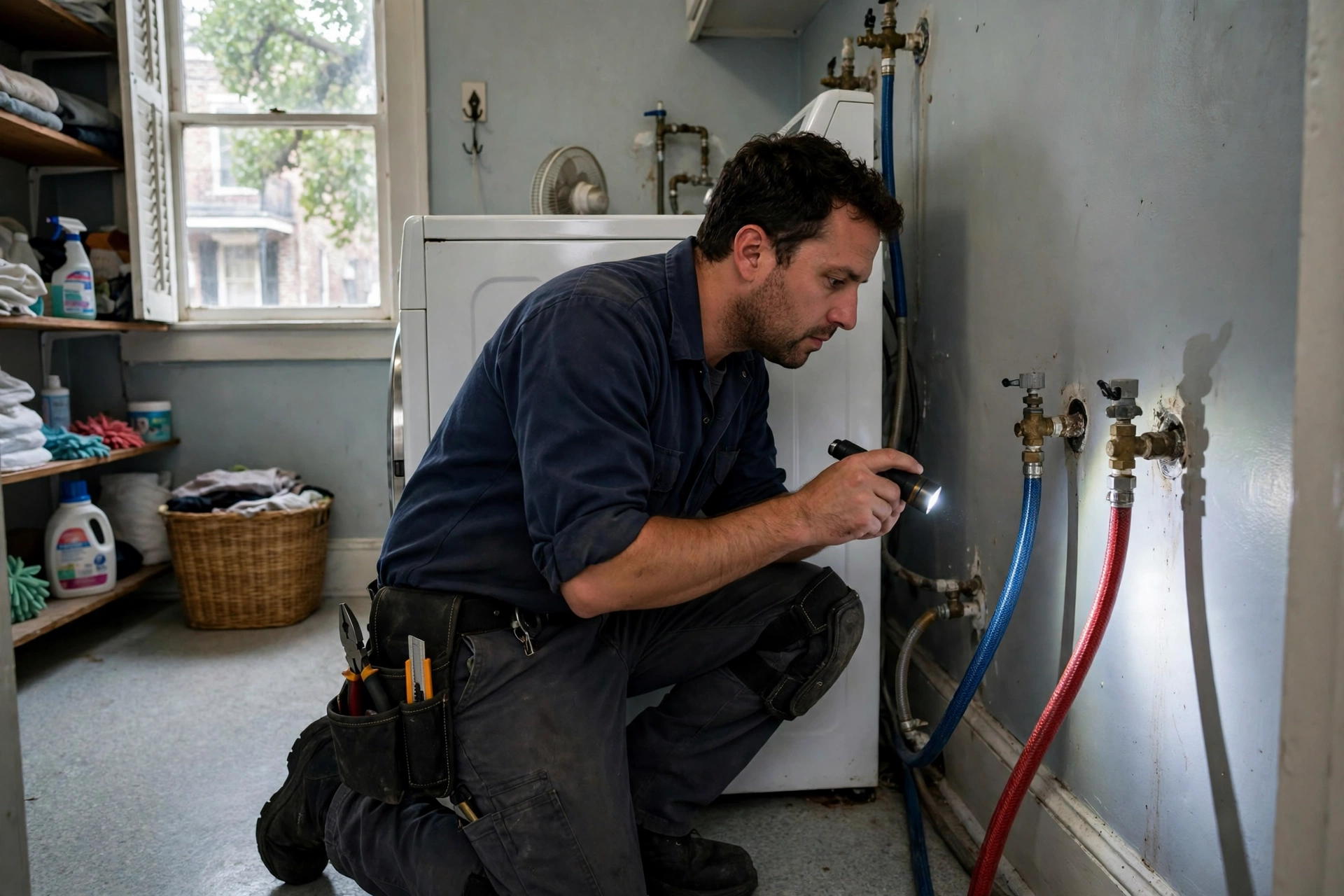
A washing machine hose burst means one of the rubber supply hoses behind your washer splits open under pressure, and water can flood your laundry room in minutes. The warning signs are cracks, bulges, or dampness around the fittings. If a hose bursts, shut off the water valves behind the machine, then call Property Restoration New Orleans at (504) 520-4646 for help with the water damage.
Key takeaways
- A burst supply hose can release hundreds of gallons of water in an hour, often while nobody is home.
- Rubber hoses wear out from the inside, so replace them every 3 to 5 years even if they look fine.
- Check for cracks, bulges, stiffness, rust on fittings, and dampness behind the machine.
- Shut off both hot and cold valves behind the washer when a hose bursts, and never run the machine unattended.
- Braided stainless steel hoses and a water leak alarm are the two cheapest protections you can add.
Why do washing machine hoses burst?
Your washing machine connects to the hot and cold water supply with two hoses, and unlike most pipes in your home, those hoses sit under full water pressure all the time — even when the machine is off. Most standard rubber hoses are rated for about five years of service. After that, the rubber starts breaking down from the inside, even when the outside still looks fine.
New Orleans conditions make it worse. Heat and humidity age rubber faster, and hard water leaves mineral deposits that corrode the fittings at both ends. A sharp cold snap adds stress too: the cold front that moved through on 12 November, with the coldest weekend of the season so far, is exactly the kind of temperature swing that tests older hoses. High household water pressure, a kink where the hose bends sharply behind the machine, or a hose that was overtightened at installation can all push a weakened hose over the edge. The failure itself gives no warning — the hose simply splits, and the water runs until someone shuts it off.
What are the warning signs of a failing washing machine hose?
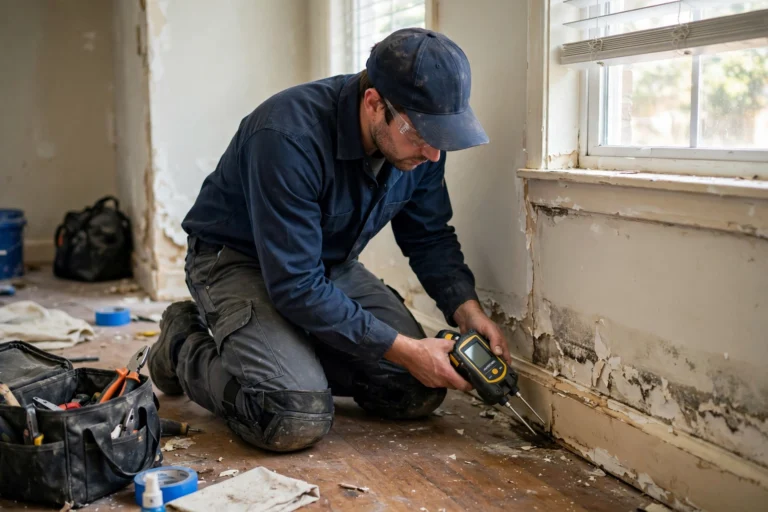
Most failing hoses show signs before they burst, but only if you look behind the machine. Pull the washer away from the wall every few months and check both hoses.

- Visible cracks or dry rot. Hairline cracks, splits, or rubber that looks dried out and brittle mean replacement is overdue.
- Bulging or blistering. A bulge means the inner layers have weakened and water pressure is pushing the outer layer out. A bulging hose can burst at any moment — turn off the water supply to the machine straight away.
- Stiffness instead of flexibility. A healthy hose bends easily. If it feels stiff or brittle, the rubber has aged past its safe life.
- Corrosion on the fittings. Green or white mineral deposits, rust, or pitted brass fittings show that water has been seeping past the connection.
- Dampness or water stains. Moisture, drips, or brown stains on the wall or floor behind the machine point to a slow leak that will only get worse.
- A musty smell in the laundry room. A persistent musty smell between laundry days can mean moisture is collecting behind the machine, even when you cannot see water. The signs of water damage in walls often show up near a laundry room for the same reason.
- Age over five years. If the hoses are more than five years old, replace them regardless of how they look. Rubber deteriorates from the inside out, so a hose that looks fine on the outside can be weak inside.
What should you do first if a washing machine hose bursts?
Act fast — every minute of running water adds to the damage. Stay calm and work through these steps in order.

- Turn off both water valves. The hot and cold shutoff valves sit on the wall behind the machine. Turn both off completely. If the machine has no individual shutoff valves, shut off water to the whole house at the main valve.
- Switch off the machine and unplug it. Turn the washer off and unplug it, but only if you can do so without standing in water. Never touch an electrical plug while standing in pooled water.
- Stop the spread. Mop up standing water and move boxes, clothes, and anything else off the floor. Towels and a wet vacuum help, but they cannot keep up with a burst hose — the valves are the priority.
- Move water away from walls and doorways. Water spreads fast across hard floors and under baseboards. Block doorways with towels to keep it in the laundry room while you work.
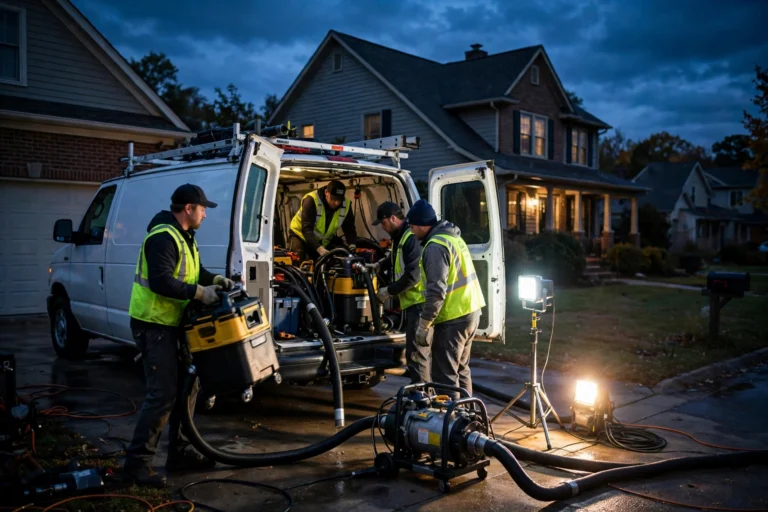
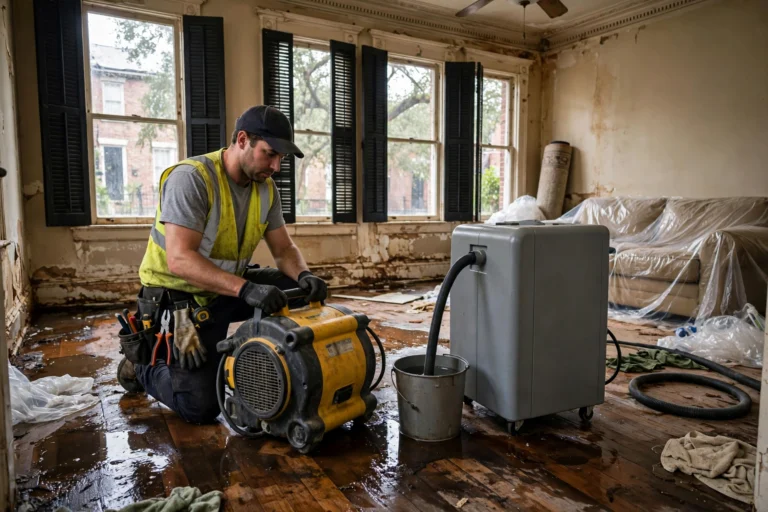
- Call for help with the water damage. Once the water is off, the wet flooring, walls, and belongings still need proper drying. Our team provides water damage restoration across New Orleans, including moisture checks and drying. Call (504) 520-4646 — we are available 24/7.
- Check for mould early. Dampness left for more than a day or two can feed mould growth under flooring and inside wall bases, often before you can see it. If the room still smells musty after drying, ask about mold remediation alongside the drying work.
A slow leak is not always a hose problem. A hidden pipe leak under the concrete can look very similar — the slab leak signs to check include a rising water bill and warm spots on the floor. If the hoses are dry but the floor is wet, the water may be coming from somewhere else entirely.
How can you prevent a washing machine hose burst?
Most hose bursts are preventable. The hose fails quietly, hidden behind the machine, for months — and nobody discovers it is worn out until it floods the room. A short routine stops that happening.

- Replace rubber hoses every 3 to 5 years. Set a reminder. This is the single most effective prevention step, and it costs far less than a flood.
- Upgrade to braided stainless steel hoses. They cost more than rubber hoses but last far longer and resist bursting much better. The braided outer layer holds the rubber core together even if it weakens.
- Turn off the water when the machine is not running. Closing both valves after each wash removes the constant pressure from the hoses. This is the simplest habit that prevents most bursts.
- Never leave the machine running unattended. If a hose bursts while you are home, you can shut off the water immediately and limit the damage. If it happens while you are at work or on holiday, you could come home to a flooded house. Run the machine only when someone is home.
- Fit a water leak alarm. A small sensor on the floor near the machine sounds an alarm when water touches it, and smart detectors can send a phone alert or shut off the water supply automatically.
- Use a washing machine drain pan. A pan under the machine catches small leaks and minor hose failures and directs the water to a drain. It will not stop a burst hose, but it contains smaller failures.
- Leave a gap behind the machine. Push the washer back gently and leave enough space that the hoses are not kinked or pressed hard against the wall. A sharp bend is a weak point.
Will homeowners insurance cover a burst washing machine hose?
It depends on your policy. Damage from a sudden, accidental hose burst is often covered, but the hose replacement itself, and damage from wear, neglect, or a hose that was already failing, commonly are not. Photograph everything, keep your receipts, and check your policy or ask your insurer before work starts rather than assuming either way. A sump pump failure follows the same pattern: sudden failure is often covered, long-term neglect usually is not.
Frequently asked questions
How often should washing machine hoses be replaced?
Every 3 to 5 years for standard rubber hoses, even if they look fine from the outside. Rubber deteriorates from the inside out, so age is a better guide than appearance. Braided stainless steel hoses last longer, but check them on the same schedule.
How much water can a burst washing machine hose release?
A burst supply hose can release hundreds of gallons of water in an hour, because the hose sits under full water pressure. That is why a burst discovered after a day away from home can flood several rooms, not just the laundry room.
Should I turn off the water to my washing machine after each wash?
Yes, if you can reach the valves easily. Closing both valves after each wash removes the constant pressure from the hoses and is the simplest way to prevent a burst. At minimum, turn the water off before leaving the house for a trip.
Are braided stainless steel hoses worth it?
Yes. They cost more than rubber hoses, but they last far longer and resist bursting much better, because the braided outer layer holds the rubber core together. For a hose that sits under constant pressure, the upgrade is one of the cheapest protections you can buy.
Can a washing machine hose leak cause mould?
Yes. A slow leak behind the machine keeps the wall and floor damp, and mould can start growing within a day or two in that dampness. If the laundry room smells musty or the wall behind the machine is stained, the dampness has already been there a while — get it checked and dried properly.


One Comment