
Most New Orleans homes need three to five days of professional drying after water damage, though a full return to normal — including repairs — often takes one to three weeks. Get Restoration New Orleans responds 24/7 at (504) 520-4646, and the drying clock starts with water extraction, not with the day the fans arrive.
Key takeaways
- Professional structural drying usually takes three to five days; repairs add one to three weeks.
- A wall or floor can feel dry while the cavity or subfloor underneath is still wet.
- Drying is done when moisture readings reach the dry standard, not when a set number of days passes.
- New Orleans humidity, older plaster walls, and water under a raised house can all stretch the timeline.
- Soaked insulation and swollen particleboard are usually removed, not dried.
What does a typical drying timeline look like?
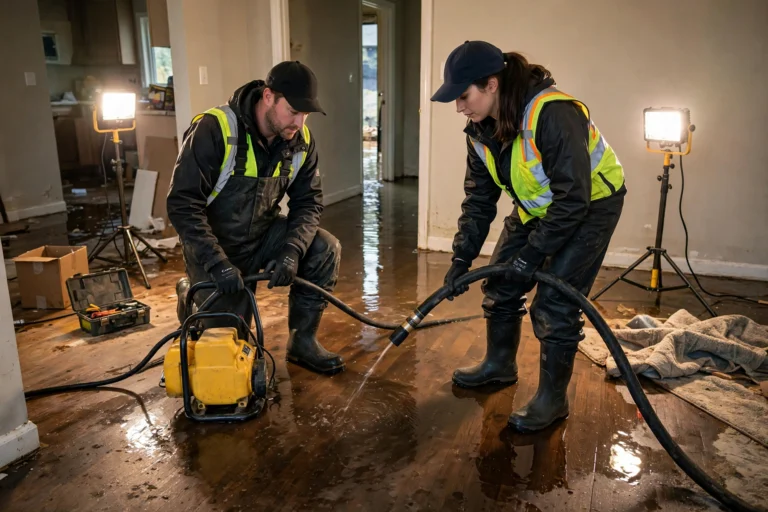
Drying runs in phases, and each one has its own clock. On day one, the source is stopped, standing water is extracted, and technicians map how far the water travelled with moisture meters and thermal imaging. Days two to five are structural drying: air movers and dehumidifiers run around the clock while readings are logged daily. Only after readings confirm the structure is dry do repairs begin — drywall, flooring, paint, and trim — which is the part that usually takes one to three weeks, depending on materials and availability.
A small, clean-water spill on tile may be dry within a day or two, while a burst pipe that soaked drywall, carpet pad, and a subfloor is a different job — and a whole-home flood is different again. The size of the loss, the water category, and how long the water sat before extraction matter more than square footage alone.
How long does each material take to dry?
Different materials release water at different speeds. The list below is a rough guide for drying with professional equipment; passive air drying takes longer, and some materials never fully dry on their own.
- Carpet and pad: 1 to 3 days for light wetting; 3 to 5 days when heavily saturated, and the pad is often replaced.
- Drywall: 2 to 4 days for light wetting; 4 to 7 days when saturated, and it is often cut out.
- Hardwood flooring: 5 to 10 days for light wetting; 2 to 4 weeks or more when heavily saturated.
- Tile and concrete slab: 1 to 3 days for the surface; up to 2 weeks for a saturated slab.
- Subfloor (plywood): 3 to 7 days for light wetting; 1 to 3 weeks when saturated.
- Wall framing (studs): 3 to 7 days for light wetting; 1 to 2 weeks when saturated.
- Insulation: usually replaced when wet, and always replaced when soaked.
Treat these as ranges, not promises. A technician measures moisture rather than guessing, and the job is finished when readings — not the calendar — say the material is dry.
What slows drying down in a New Orleans home?
Humidity is the first factor. New Orleans air is often already damp, so opening windows on a humid day can push moist air back inside. Professional drying usually means closing the space up and letting dehumidifiers pull the moisture out, which is why equipment may run even when the weather feels fine.
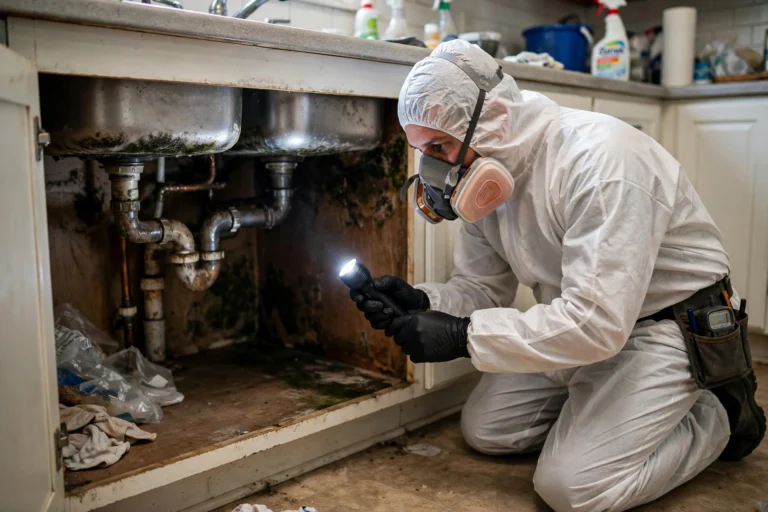
Older homes add complications: plaster-and-lath walls hold water differently from modern drywall, and many raised New Orleans houses have crawl spaces where water sits unseen under the floor. Water trapped behind cabinets, under a bathtub, or inside a wall cavity keeps drying going long after visible surfaces look fine.
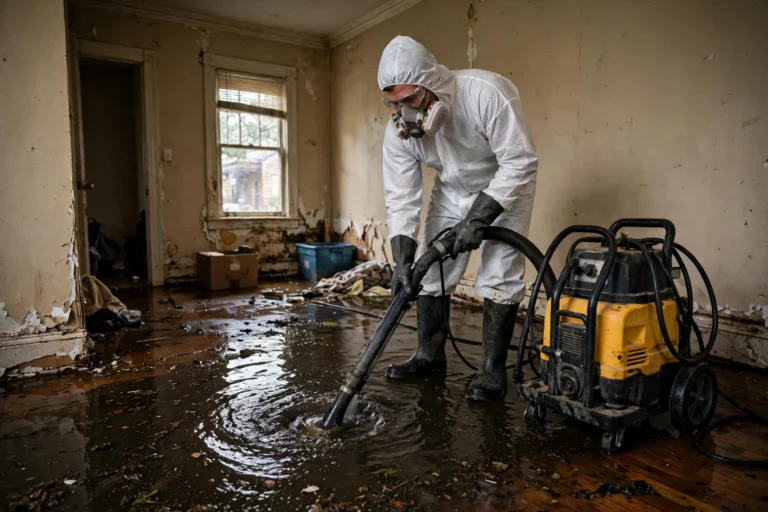
Delay is the other big factor: every hour water sits, it wicks deeper into framing, subfloors, and baseboards. Contaminated water — sewage or floodwater — changes the job entirely, since affected porous materials must be removed before drying can start. Our guide to sewer backup cleanup covers what to do when that kind of water enters the home.
How do you know when a house is truly dry?
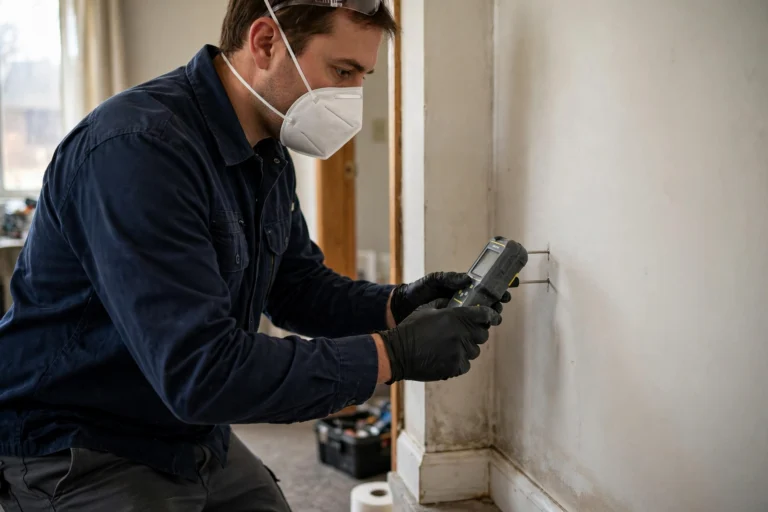
A surface that feels dry can still hide wet material underneath, so technicians answer this with instruments, not touch. Pin and pinless moisture meters read moisture inside drywall, wood, and concrete, and thermal cameras show cold, damp patches behind surfaces. Readings are compared against a dry standard — usually an unaffected area of the same material in your home — and logged daily so the trend is visible.
Drying ends when every affected material reads at or below its dry standard on consecutive checks. That paper trail matters beyond the job itself: drying logs support a water damage claim and show an insurer exactly what was wet and when it dried.

What should you do while the equipment is running?
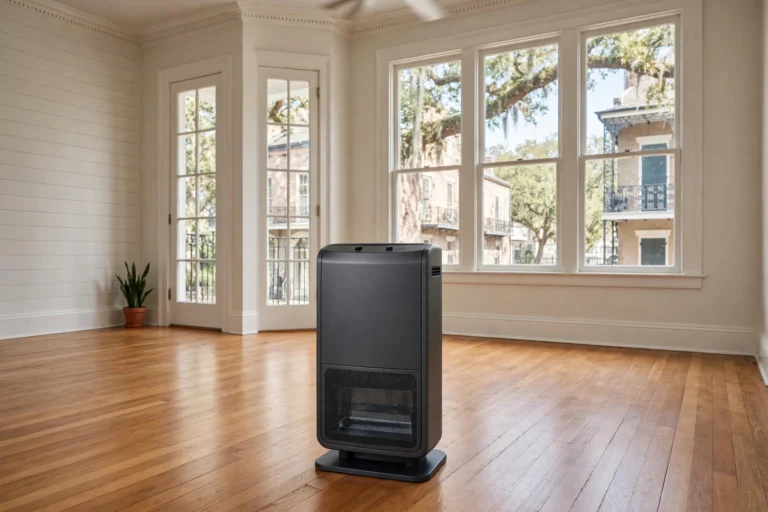
Mostly, leave it alone. Air movers and dehumidifiers are sized and aimed for a reason, and moving them or switching them off lets moisture settle back into materials and adds days to the job. Expect noise and a warmer room — dehumidifiers release heat as they work — and keep children and pets clear of cords and hoses.
Keep doors and windows closed in the drying area unless your technician tells you otherwise, and call the team if a breaker trips, a machine stops, or water reappears. A daily check-in on readings is normal; a crew that never re-measures is guessing. If the loss involved belongings too, our guide to water-damaged belongings explains what can usually be saved while drying is underway.

When is drying not enough?
Some materials do not dry back to a usable state. Soaked fiberglass insulation loses its insulating value and traps moisture against framing; particleboard and MDF cabinets swell and crumble once saturated; carpet pad is inexpensive and almost always replaced after a significant wetting; and drywall that has sagged, lost strength, or grown mold is cut out rather than dried in place.
Removal is not a failure of the drying job — it is part of it: it opens wall cavities so framing can actually dry, and removes the food source mold would otherwise grow on. If mold is found during the work, the job moves into mold remediation, and a mold inspection can confirm whether hidden growth remains once drying is complete.
If water has reached your floors or walls, the fastest way to shorten the timeline is to start it: stop the source, call for extraction, and let readings — not guesswork — decide when the house is dry. Get Restoration New Orleans responds around the clock across Greater New Orleans at (504) 520-4646, with professional water damage restoration from extraction through verified dry.
Frequently asked questionsCan I dry my house myself with household fans?
For a small, clean-water spill on a hard floor, household fans and a home dehumidifier may be enough. For anything larger, water that reached drywall, carpet pad, or a subfloor, or water that sat for more than a day, household equipment rarely moves enough air or pulls enough moisture — especially in New Orleans humidity. A moisture meter check is the surest way to know whether DIY drying worked.
How soon can mold start growing after water damage?
Mold can begin growing on damp surfaces within 24 to 48 hours, which is why drying starts immediately rather than after a weekend. Fast extraction and continuous dehumidification are the best prevention; once growth is visible or suspected, it needs a separate remediation step.
Should I turn the drying equipment off at night?
No. Drying depends on continuous airflow and dehumidification, and switching equipment off lets moisture reabsorb into materials. The job takes longer, not shorter, when machines run only during the day.
Why is my drying taking longer than my neighbor’s?
Water amount, water category, materials, how long the water sat, humidity, and hidden pockets all change the timeline. Two similar-looking leaks can hide very different amounts of water inside walls and under floors.
Can I paint or install new flooring as soon as everything feels dry?
Wait until moisture readings confirm the structure is dry. Painting or laying flooring over damp material traps moisture, which leads to peeling paint, warped boards, and mold growth underneath the new finish.
—

One Comment