To prevent water damage while you’re away in New Orleans, shut off the main water supply, check the washing machine hoses and water heater, and test the sump pump before you leave. A leak unseen for three days does far more damage than one caught in an hour. If you come home to water damage, call Property Restoration New Orleans at (504) 520-4646.
Key takeaways
- Shutting off the main water supply is the single most effective step — a failed hose or valve cannot flood a house with no water coming in.
- Washing machine hoses, toilet supply lines, and refrigerator water lines stay pressurised even when the appliance is off, so they fail while nobody is home.
- Test the sump pump with a bucket of water before you leave, especially with heavy rain forecast for Tuesday night and Wednesday this week.
- Keep the heat on at a steady low setting through the cold snap, and ask someone to walk through the house while you are away.
- Take dated photos of every room before you leave — they are the record your insurer will want if you come home to damage.
Why does an empty house flood so badly?
A leak is a race against time. At home, you hear the drip, see the puddle, and shut the valve within minutes. Away for Thanksgiving, the same leak runs for three or four days. A washing machine hose can release hundreds of gallons in that time, soaking floors, baseboards, and the ceiling of the room below. By the time you walk in the door, the water has spread far beyond the room where it started.
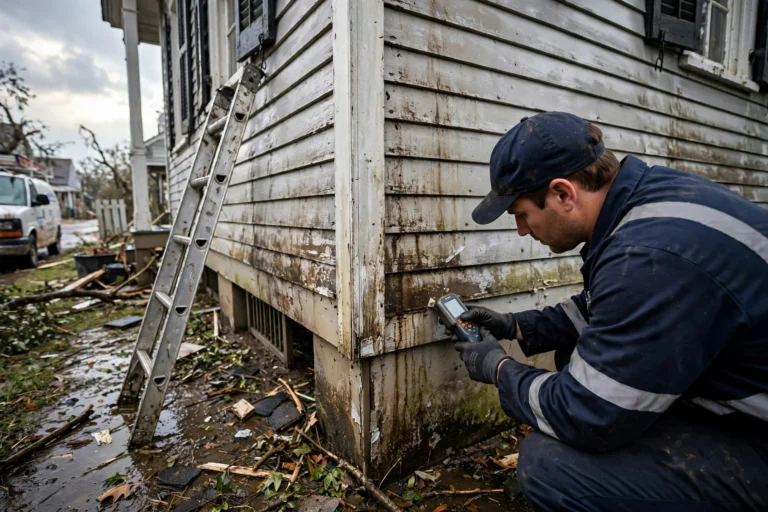
New Orleans homes have their own weak points. Many houses sit raised on piers, with plumbing running through crawl spaces and exterior walls. Low-lying yards and heavy rain put sump pumps to work, and a pump that fails during a storm leaves water with nowhere to go. Add a cold snap — lows near 6°C on Wednesday and Thursday this week — and pipes in unheated spaces get colder than usual. None of this means a flood is likely. It means a few checks before you leave are worth far more than the repairs after you return.
Should you shut off the main water supply before you leave?
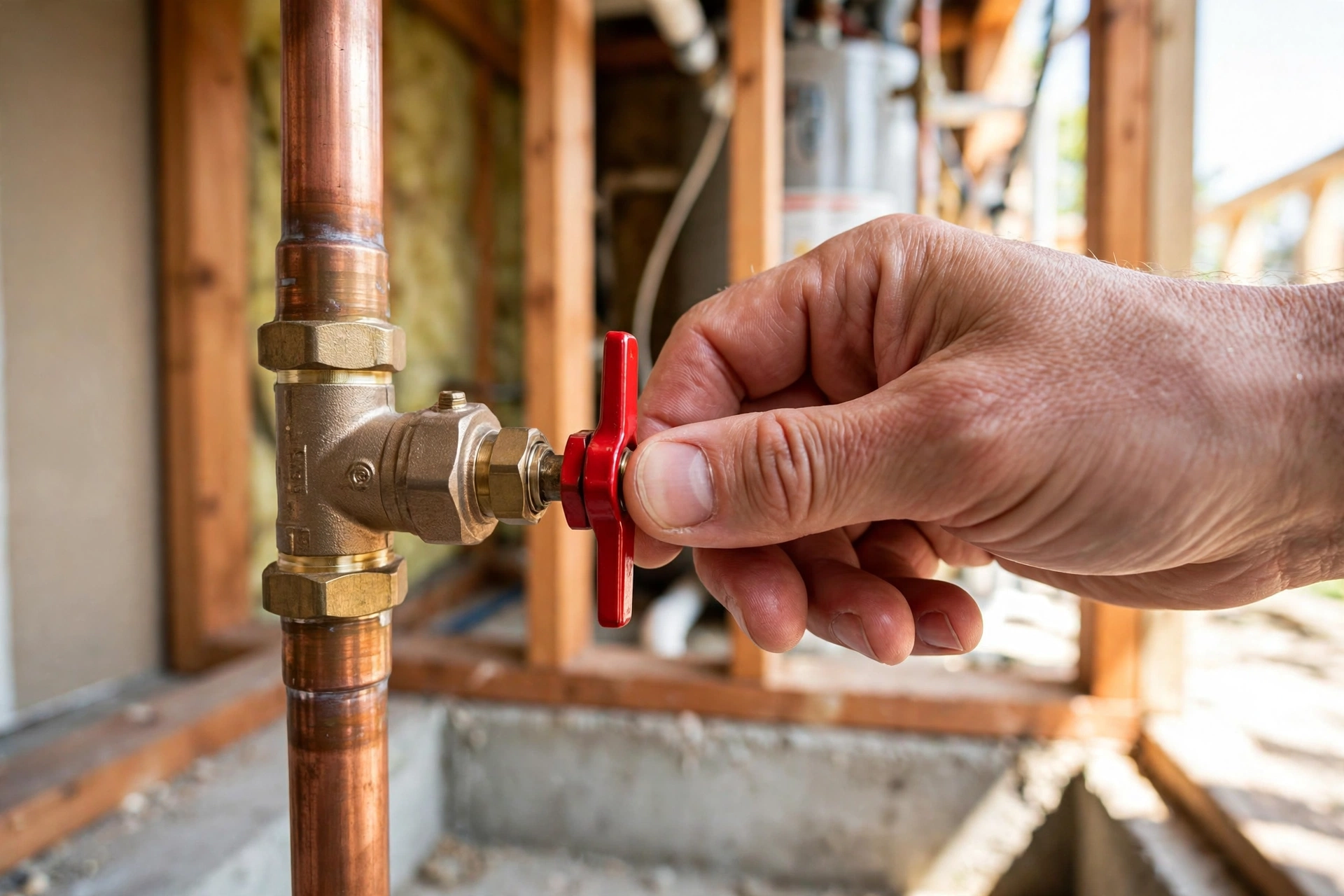
Yes, if you will be away for more than a day or two. Closing the main valve stops water entering the whole house, so a burst hose, a cracked fitting, or a failed toilet valve cannot keep feeding a leak while you are gone. It is the one step that protects against every pressurised failure at once.
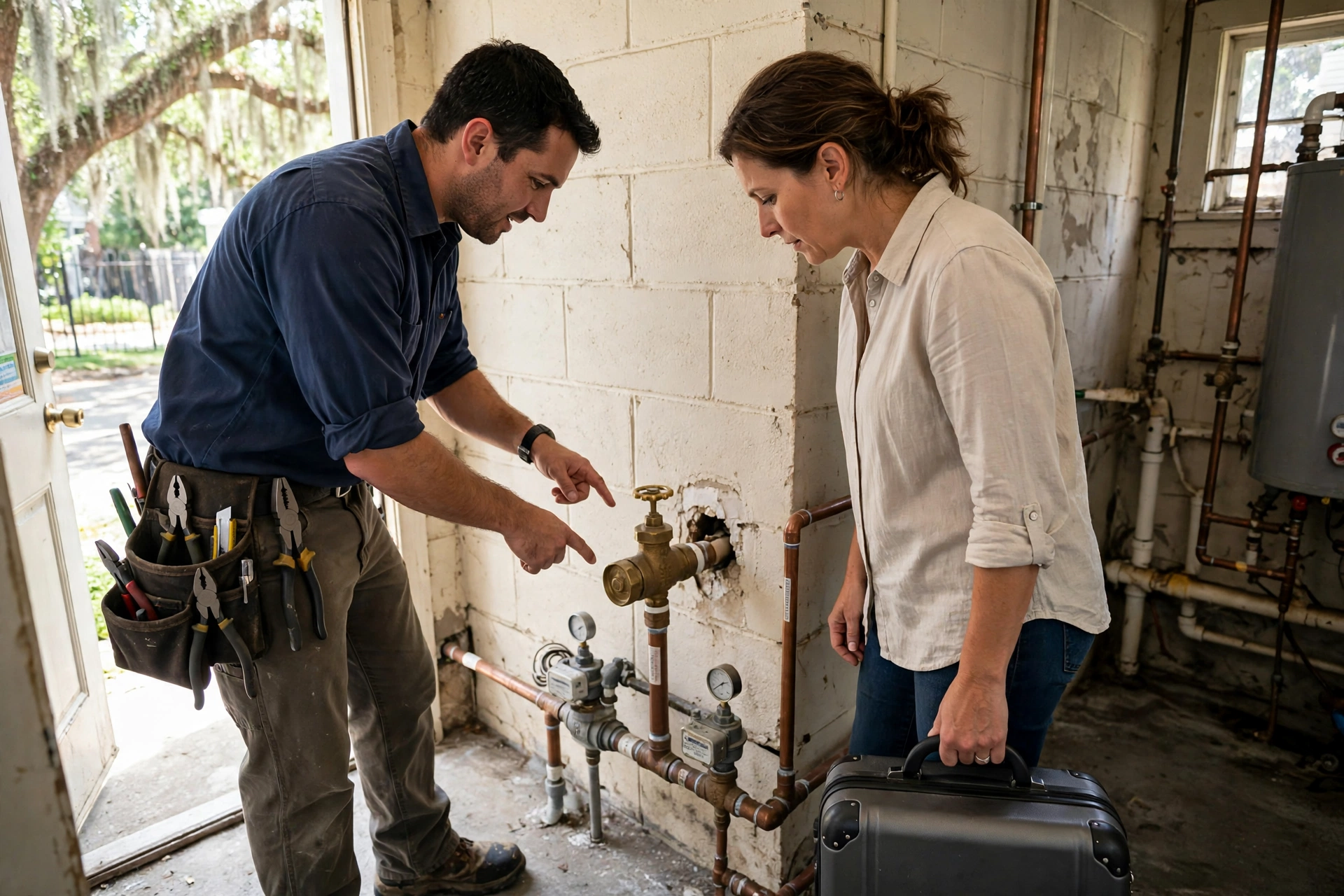
Find the valve now, before the trip, not on the morning you leave. In most New Orleans homes it sits where the water line enters the house — a utility closet, the garage, or under the house near the front — and older homes may have it at the meter by the street. It is usually a lever-style ball valve, which closes with a quarter turn, or an older wheel-style gate valve, which needs several turns clockwise. Turn it, then open a faucet upstairs and watch the flow slow to a trickle and stop. That confirms the shutoff worked. If the valve is stiff, corroded, or will not turn fully, have a plumber replace it before you travel — a valve you cannot close is no protection at all.
There are two exceptions. If your home has a fire sprinkler system or a boiler that needs water, ask a plumber which valves are safe to close before you touch the main. And if you shut the main, set the water heater correctly: put a gas heater on “Pilot” and switch an electric heater off at the breaker, or use its “Vacation” mode if it has one. A heater left heating with no water coming in can build pressure and wear out faster.
What if you cannot shut off the main?
Close the risky valves instead. Every appliance and fixture with its own shutoff is a separate chance to stop a leak at the source. Turn off the supply valves behind the washing machine, under each sink, at each toilet, and on the line to the refrigerator ice maker. A washing machine hose that bursts with its valve closed can only release the water already in the hose — a puddle, not a flood.
Check the dishwasher too. Its supply line and drain hose sit out of sight, and a slow leak under the unit can soak the kitchen floor for days before anyone notices. Run it once before you leave and look underneath for drips. Our guide to a dishwasher leak explains the warning signs to check.
Which appliances should you check before you travel?
Walk the house the day before you leave and look at every appliance that uses water. Start with the water heater: look for rust, dampness, or a puddle around the base. A heater that is already weeping will not improve while you are away, and a small puddle today can become a failed tank by the weekend. Our guide to a water heater leak covers the signs to watch for.
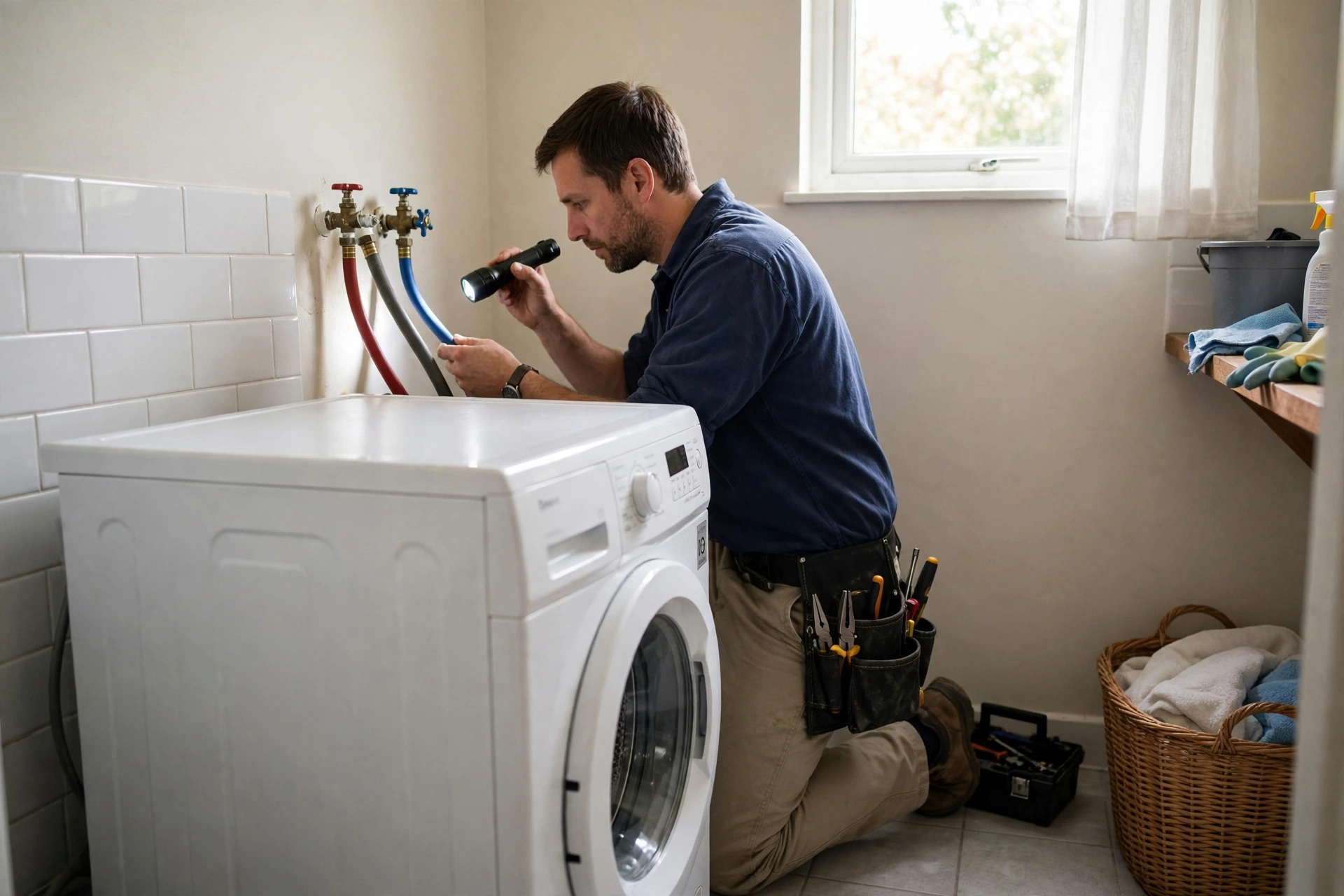
Check the washing machine hoses next. Look for bulges, cracks, fraying, or dampness where the hose meets the wall and the machine. Rubber hoses older than five years are the most likely to fail, and a braided steel hose is a cheap upgrade that lasts longer. Do not start a load as you walk out the door — run appliances only while you are home and awake.
Look behind the refrigerator as well. The thin plastic water line to the ice maker is easy to forget, and it cracks more often than the fridge itself. If the line looks brittle or damp, close its valve for the trip. The same goes for any humidifier or water filter with a pressurised connection.
How do you test a sump pump before a trip?
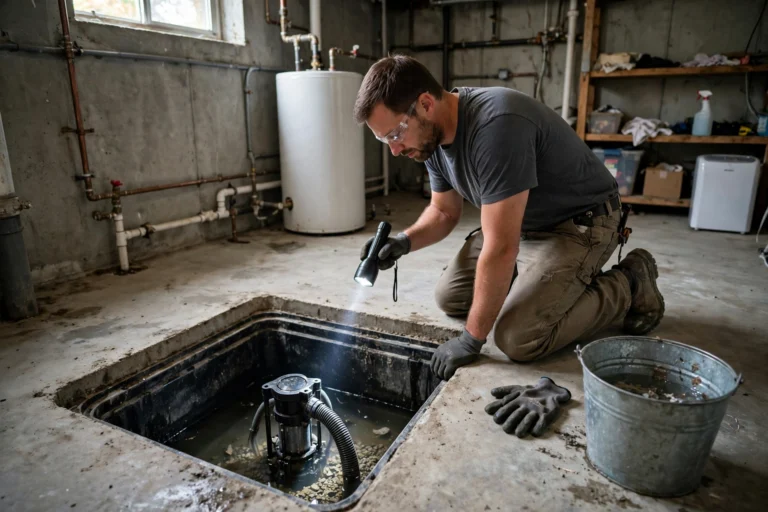
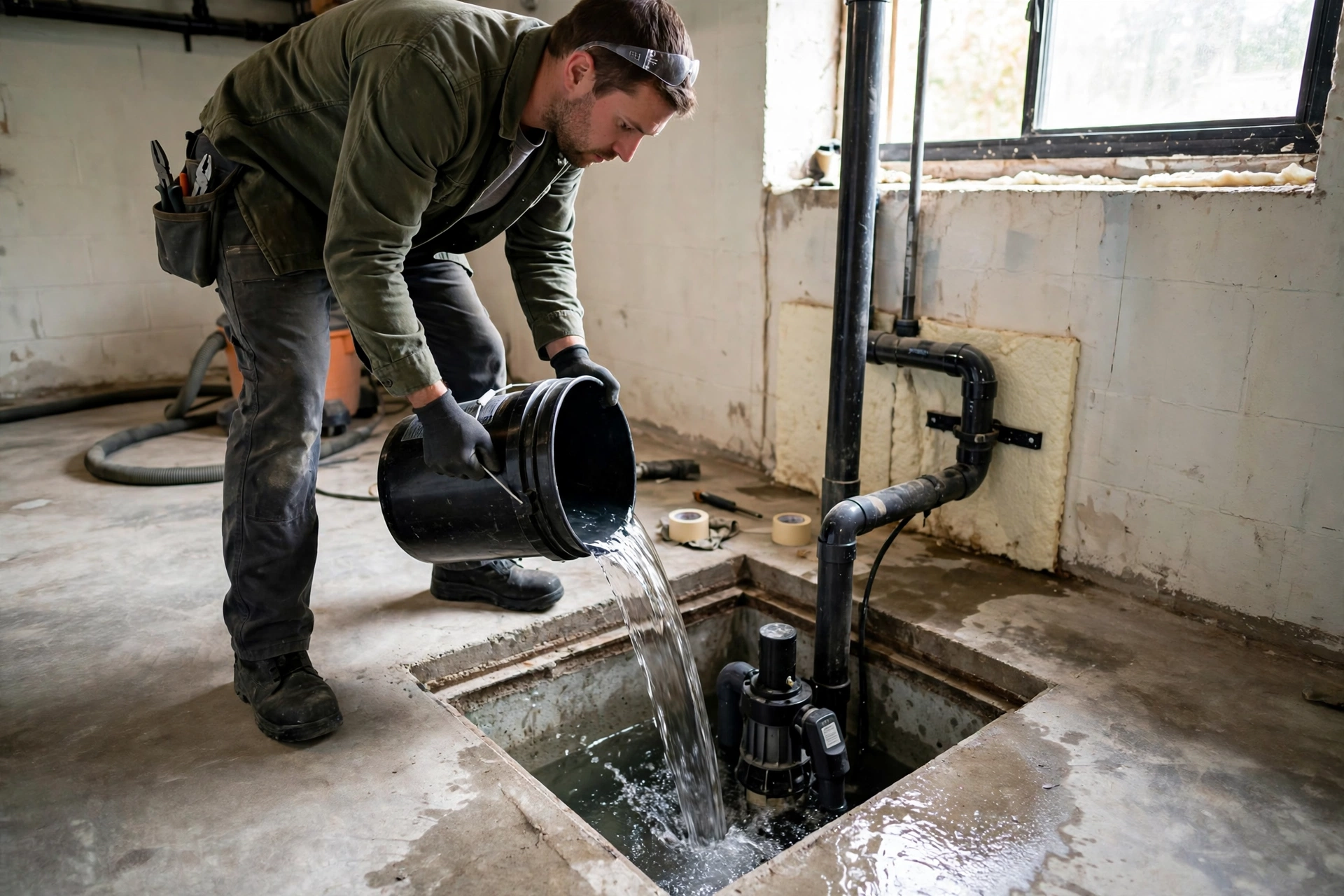
If your home has a sump pump, test it — do not assume it works. Pour a bucket of water into the pit slowly and watch the pump switch on, drain the pit, and switch off. Listen for a grinding or rattling sound, which can mean the float is stuck or the pump is wearing out. Check that the discharge line runs clear of the house and is not blocked by leaves or debris, because a pump that runs but cannot discharge will just keep cycling.
This matters more than usual this week. Heavy rain is forecast for Tuesday night and Wednesday morning, right as many people leave town for Thanksgiving. A pump that fails during that rain leaves the pit filling with nobody home to hear the alarm. If the pump has a battery backup, check the battery too — a power cut during a storm is exactly when the backup earns its keep. If the pump does not start when you pour the water in, or it runs without lowering the level, get it fixed before you leave. Our guide to sump pump failure explains the warning signs in more detail.
Should you leave the heat on while you’re away?
Yes. Do not switch the heating off to save money while the house is empty. Set the thermostat to a steady, lower temperature — around 55°F is the usual minimum — and leave it there. That keeps the whole house, including closets and rooms on outside walls, warm enough to protect pipes in exterior walls and crawl spaces.
New Orleans rarely sees a hard freeze, and this week’s cold snap stays above freezing, with lows near 6°C on Wednesday and Thursday. The risk here is not a burst pipe overnight. It is a house that cools right down, holds damp air, and leaves pipes in the coldest corners colder than they need to be. Open the cabinet doors under kitchen and bathroom sinks on outside walls so warm room air reaches the pipes behind them, and disconnect garden hoses and cover outdoor spigots before the cold arrives. Our guide on how to prevent frozen pipes covers the full winter checklist for raised homes.
What else should you do before you leave?
Clear the gutters and downspouts. Leaves pack them tight in late November, and with heavy rain forecast for Tuesday night, a clogged gutter sends water over the edge and down the siding instead of away from the house. Our guide to gutter cleaning explains what to check before winter rain.
Consider a leak sensor if you travel often. Small battery sensors sit under sinks, behind the washing machine, and near the water heater, and they sound an alarm — or send a phone alert — the moment they touch water. They are cheap, they need no plumbing, and they turn a leak discovered on Sunday into a leak discovered within minutes.
Ask someone to check the house. A neighbour, friend, or family member who walks through every day or two can catch what no sensor will: a damp smell, a stain spreading on a ceiling, a sump pit that keeps refilling. Leave them your number and the location of the main shutoff, so they can stop the water instead of just reporting it.
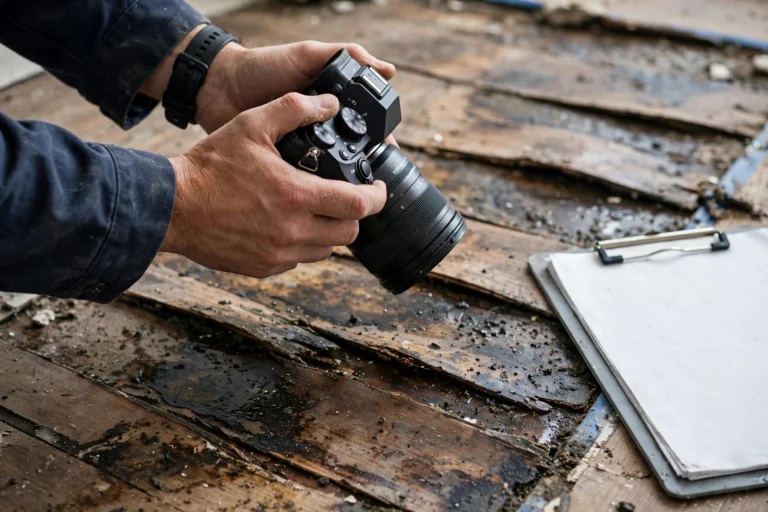
Finally, take dated photos of every room before you leave — floors, ceilings, and the areas around appliances. If you come home to damage, those photos show the insurer what the house looked like before the trip. Our guide to a water damage insurance claim explains what to document and what to leave alone.
What should you do if you come home to water damage?
Stay calm and work in order. First, if water is still running, shut off the main valve. Then turn off power to the wet areas at the breaker panel, and do not walk through standing water while the electricity is on. Take photos of everything before you move anything.
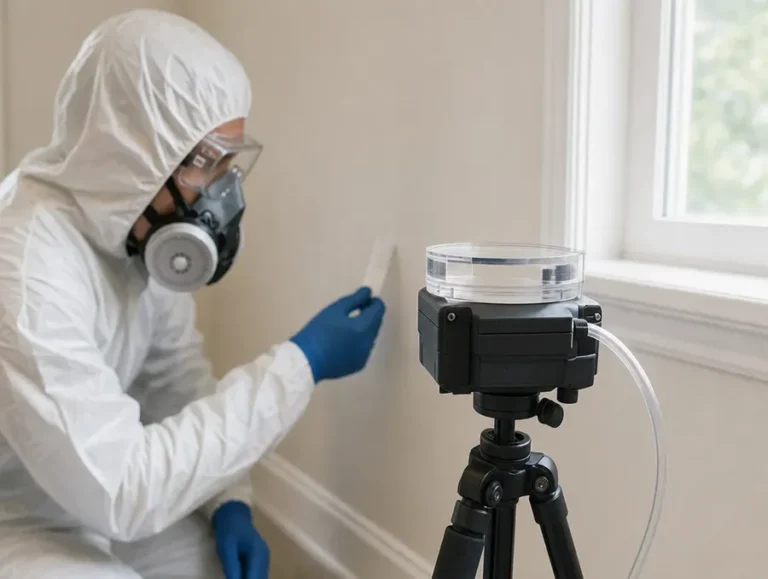
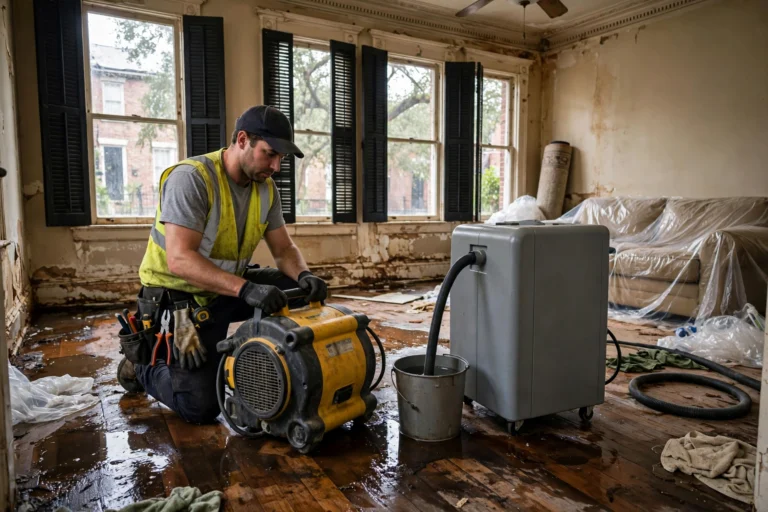
Do not wait to see if it dries on its own. In New Orleans humidity, damp floors, walls, and baseboards can start growing mold within a day or two, and the longer wet material stays wet, the bigger the job becomes. Our mold remediation team can test the area and dry it properly, and our water damage restoration team can extract the water, dry the structure, and trace how far it travelled. If a pipe burst while you were away, our guide to what to do when a burst pipe floods your home covers the first steps.
A holiday trip should end with unpacking, not with mopping. Spend twenty minutes on these checks before you leave, and the house will be waiting for you the way you left it. If you come home to water damage, call Property Restoration New Orleans at (504) 520-4646 — we answer around the clock.
Frequently asked questions
Should I turn off the water when I go on vacation?
Yes, for any trip longer than a day or two. Closing the main water supply is the most effective single step, because no water can enter the house while you are away. If you cannot close the main, close the individual supply valves behind the washing machine, at each toilet, and on the refrigerator water line instead.
Will turning off the main water damage my water heater?
Not if you set the heater correctly first. Put a gas water heater on “Pilot” or use its “Vacation” mode, and switch an electric heater off at the breaker. A heater left heating with the water supply closed can build pressure and wear out faster, so the heater setting is part of the shutoff, not an afterthought.
How long does it take for a small leak to cause serious damage?
A slow leak can soak a floor, a subfloor, and the ceiling below within a day, and a failed hose can release hundreds of gallons over a long weekend. In New Orleans humidity, damp walls and floors can start growing mold within a day or two, which is why a leak found after a trip is almost always a bigger job than the same leak found the same day.
Does homeowners insurance cover water damage found after a trip?
Sudden, accidental damage — such as a hose that bursts while you are away — is often covered, while slow leaks, wear, and long-term neglect usually are not. Dated photos taken before you leave, and photos of the damage when you return, are the records that support a claim. Check your policy and talk to your insurer before you start repairs.
What should I ask someone checking my house to look for?
Ask them to walk every room and check for water on floors, new stains on ceilings or walls, a damp or musty smell, the sound of running water, and the level in the sump pit. Give them the location of the main shutoff valve and your phone number, so they can stop the water first and call you second.