
A slab leak is a leak in a water pipe buried beneath your home’s concrete foundation. The warning signs are a water bill that jumps for no reason, warm spots on the floor, the sound of running water when every tap is off, and damp flooring. If you notice two or more of these signs, call Property Restoration New Orleans at (504) 520-4646 for help.
Key takeaways
- A slab leak is a hidden leak in a pipe under the concrete slab — you rarely see water directly.
- The clearest early signs are a rising water bill, warm floor spots, and running-water sounds with everything off.
- The water meter test takes about 15 minutes and can confirm water is escaping somewhere.
- A slab leak can damage flooring, feed mould growth, and wash away the soil under the foundation.
- Two or more signs together mean calling a professional now, not next week.
What is a slab leak, and why does it happen in New Orleans?
A slab leak is a leak in one of the water pipes that runs underneath, or inside, your home’s concrete foundation slab. Because the pipe is buried under solid concrete, the leak stays hidden. Water escapes into the soil below your home instead of spraying where you can see it, and the damage can go on for weeks before the first sign appears above ground.
New Orleans soil makes the problem more likely. The ground here is soft, wet, and always shifting between wet and dry seasons, and that movement stresses buried pipes and their joints. Older copper lines can also corrode over time, especially where soil stays damp. A sharp cold snap adds to the strain, as pipes contract in the cold — the strong front that moved through on 12 November, with the coldest morning of the weekend expected on Saturday 14 November, is exactly the kind of swing that tests older buried lines.
Many homes in Metairie, Kenner, and newer New Orleans neighbourhoods sit on slab foundations, and even older raised homes often have slab additions, garage slabs, and patios with buried water lines running beneath them. If your home has any concrete slab with pipes underneath, a slab leak is possible.
What are the signs of a slab leak?
Slab leaks show up indirectly, because the leak itself is hidden under concrete. No single sign proves a slab leak, but two or more signs pointing the same way should be taken seriously.
- A water bill that jumps for no reason. A sudden, unexplained rise in your water bill is one of the clearest signs. If your household habits have not changed but the bill keeps climbing, pressurised water is escaping somewhere you cannot see.
- Warm or hot spots on the floor. If a hot water line under the slab is leaking, the escaping hot water heats the concrete above it. A warm patch on tile or wood flooring, with no heating vent nearby, is the classic slab-leak tell. Your feet often notice it before your eyes do.
- The sound of running water when everything is off. If you hear a faint hiss, trickle, or the sound of a toilet constantly running when every tap, toilet, and appliance is switched off, water may be escaping from a pipe under your slab. In a quiet house at night, this is often the first thing people notice.
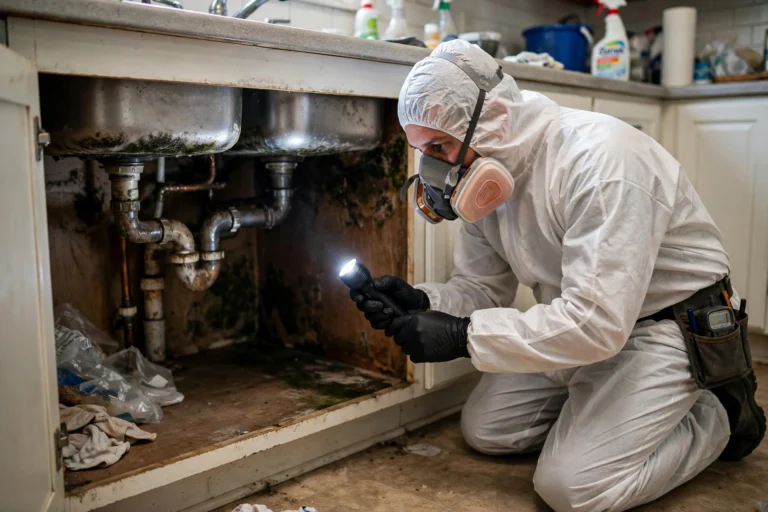
- Damp, warped, or loose flooring. Water from a slab leak can work its way up through the concrete and into your flooring. Look for damp carpet, warped wood, loose tiles, or a musty smell in one area that will not go away. The signs of water damage in walls often appear alongside floor damage, since moisture spreads through framing and baseboards too.
- Low water pressure throughout the home. When water leaks out of a pressurised pipe under the slab, less water reaches your fixtures. If pressure has dropped at every tap, not just one, a hidden leak is one of the likely causes.
- New cracks in walls, floors, or baseboards. As leaking water saturates the soil under the foundation, the ground can shift and settle. That movement puts stress on the slab and can open cracks in walls, floors, and baseboards, or make doors stick where they used to close cleanly.
- Soggy ground or pooling water near the foundation. Water escaping under the slab can make its way to the outside edges of your home. Standing water, soggy soil, or an unusually green patch of grass near the base of the house that stays for days after dry weather may be coming from a leak under the slab rather than from rain.

How can you confirm a slab leak with the water meter test?
The water meter test is a simple check any homeowner can do in about 15 minutes, and it can confirm whether water is escaping even when you cannot see it.
- Turn off every tap, toilet, and appliance. Make sure no washing machine, dishwasher, or ice maker is running, and that nobody flushes a toilet during the test.
- Find your water meter and read it. Most meters sit near the street in a covered box. Note the reading, and look for the small leak indicator — often a tiny triangle or dial that spins when water is flowing.
- Wait 15 minutes and read it again. Do not run any water in the meantime. If the reading has changed, or the indicator is still moving, water is escaping somewhere in your system.
- Note what the test does and does not prove. A moving meter confirms a hidden leak, but it does not prove the leak is under the slab. A running toilet, a dripping tap, or a line to an outdoor spigot can also move the meter, so rule those out first.
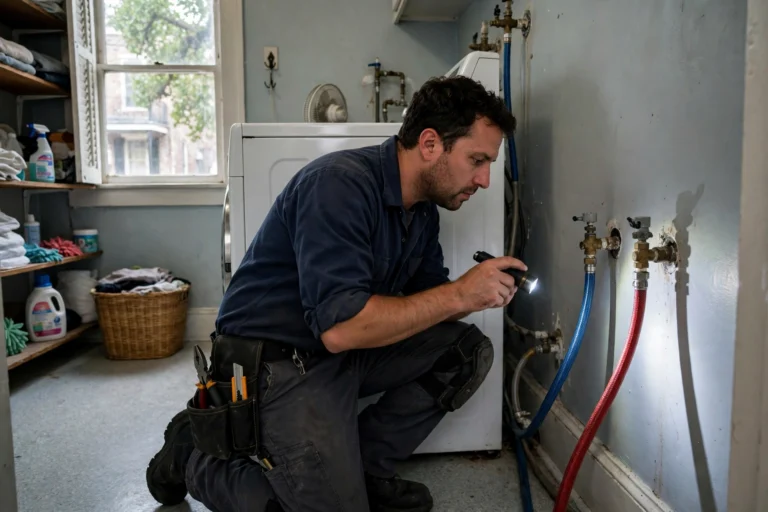
If the meter moves with everything off and no visible leak explains it, call a plumber for professional leak detection. Pros pinpoint slab leaks with acoustic listening equipment, thermal imaging, or tracer gas, and detection usually takes one to three hours.

What should you do if you suspect a slab leak?
Do not wait to see if it gets better — a pressurised leak under a slab runs 24 hours a day, and the water damage only grows. Work through these steps in order.
- Turn off the main water supply if damage is spreading. If flooring is buckling, water is pooling, or your bill has jumped sharply, shutting off the main valve stops the flow while you arrange help. If a visible pipe has burst instead, the steps in what to do when a pipe bursts apply.
- Document what you see. Take photos of damp flooring, stains, cracks, and the meter reading, and keep copies of recent water bills. This record helps the plumber, and it helps with an insurance claim.
- Call a plumber for detection and repair. Slab leak repair means finding the exact spot first, then either repairing the section or rerouting the line. Do not let anyone break concrete on a guess.
- Call for help with the water damage. Once the leak is found, the wet flooring, subfloor, and wall bases still need proper drying. Our team provides water damage restoration across New Orleans, including moisture checks and drying. Call (504) 520-4646 — we are available 24/7.
- Check for mould early. Moisture trapped under flooring feeds mould growth, often before you can see it. If dampness or a musty smell has been present for days, ask about mold remediation alongside the drying work.

Will homeowners insurance cover a slab leak?
It depends on your policy. The resulting water damage — ruined flooring, wet drywall, mould cleanup — is often covered when the leak was sudden and accidental, but the pipe repair itself and the cost of breaking into the slab often are not. Slow leaks and maintenance problems are commonly excluded. Photograph everything, keep your bills and receipts, and check your policy or ask your insurer before work starts rather than assuming either way.
Frequently asked questions
Can a slab leak go unnoticed for months?
Yes. Because the leak is buried under concrete, it can run for weeks or months before the first sign appears above ground. A water bill that creeps up slowly is often the only early clue, which is why comparing each bill with the last one matters.
How do professionals find a slab leak under concrete?
They use acoustic listening equipment to hear water escaping, thermal cameras to spot warm areas on the floor, and sometimes tracer gas fed into the line. Detection usually takes one to three hours and avoids breaking concrete until the leak is pinpointed.
Is a warm spot on the floor always a slab leak?
No. Sunlight through a window, a heating vent, or underfloor heating can all warm a patch of floor. A warm spot counts as a slab-leak sign when it has no other explanation, stays warm at night, or appears alongside other signs such as a rising bill or running-water sounds.
Can a slab leak cause mould?
Yes. Moisture from a slab leak wicks upward through concrete and into flooring, wall bases, and the air in the room. In New Orleans humidity, that dampness can feed mould growth under flooring and inside wall bases long before you see it on a surface.
Should I turn off my water if I suspect a slab leak?
If water is spreading, flooring is buckling, or your bill has jumped sharply, turn off the main valve and call for help. If the signs are mild — a slightly higher bill and one warm spot — book detection promptly and keep monitoring, but do not leave it for weeks.