Hurricane Isaias made landfall Saturday, October 10, near Destin, Florida, as a Category 2 storm, then weakened and pushed inland, bringing flooding and damaging winds across the Southeast. Louisiana spent the days before landfall under hurricane and storm surge warnings. New Orleans was spared the worst — but spared does not mean untouched.
Storms do not need to make landfall in your zip code to hurt your house. Days of tropical moisture and wind-driven rain can push water into places you will not notice until the drywall softens or the closet smells — and with New Orleans near 81% humidity, anything that got damp is on a short clock.
This checklist covers the days right after the storm: what to walk, what to touch, what to watch — and when to bring in help.
Walk the outside first
Start where the storm did its work.
Roof and gutters. From the ground, look for lifted or missing shingles, loose flashing around vents and chimneys, and gutters pulling away from the fascia. Wind-driven rain gets under compromised shingles easily. If you are not comfortable on a ladder, do the ground check and stay off the roof.
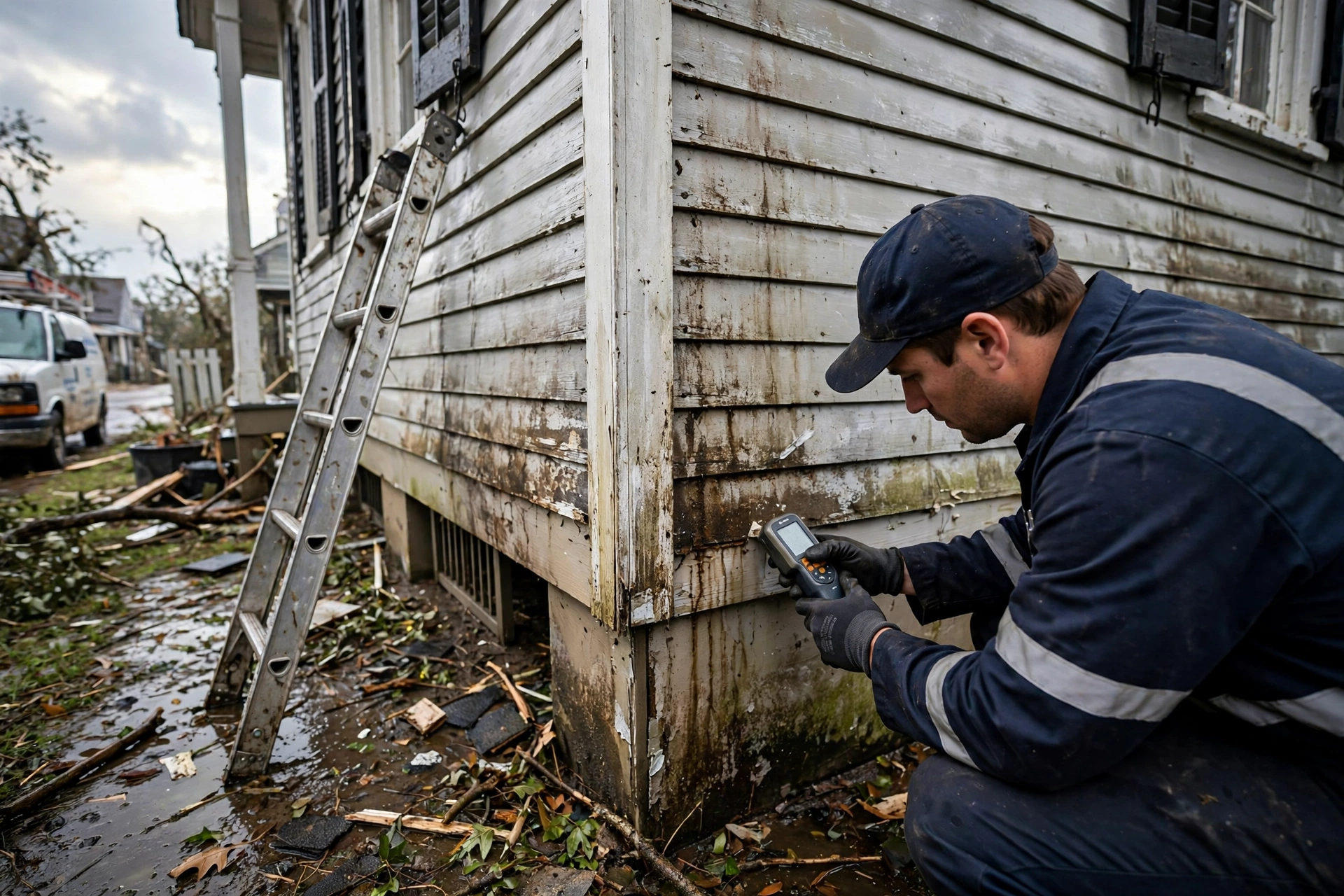
Siding and windows. Check for cracked or loosened panels on the windward side, and gaps, peeling caulk, or staining below sills — entry points that become wet drywall weeks later.
Yard drainage. Standing water against the foundation is the quiet one — if the ground is still saturated near your slab or piers, water may have wicked into the lower wall. Note where it pooled and watch those spots inside. Roof and structural issues belong to storm damage restoration crews, not weekend fixes.
Check inside where water hides
Inside, water that got in during the storm does not always drip or pool — it hides.
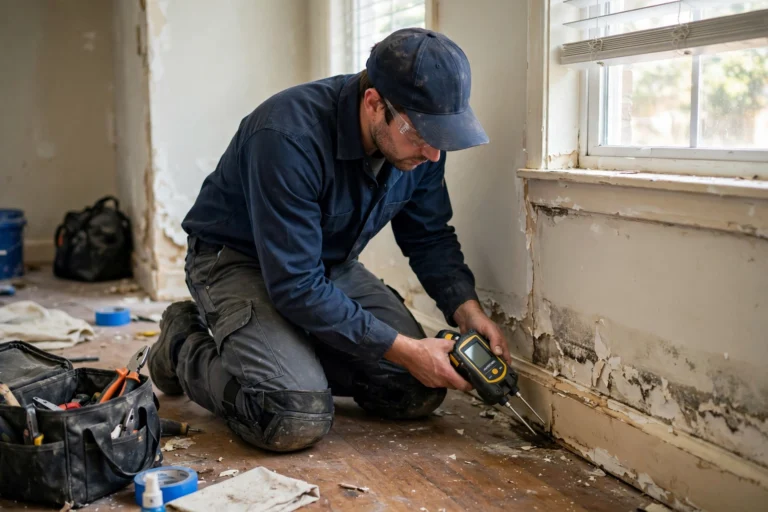
- Baseboards and the bottom foot of drywall. Press along ground-floor walls, especially exterior ones. Softness, bubbling paint, or a faint tide line means water moved up into the wall.
- Window sills and the wall below. Feel for dampness or discoloration — wind-driven rain that beat a frame lands here first.
- Under sinks, behind the washer, around the water heater. Storm water and backed-up drains collect in low spots.
- Closets on exterior walls. Dark, still, and rarely checked — ideal for mold, and homeowners seldom look behind what is stored there.
- Attic and ceiling stains. Even a small brown ring after a storm deserves attention; roof leaks rarely seal themselves. Water inside walls or under flooring is water damage restoration work — drying has to go deeper than a hardware-store fan.
Watch for mold over the next two weeks
This is the part most people miss. Mold can start growing on damp drywall, wood, and fabric within 24 to 48 hours, and New Orleans’ post-storm humidity keeps materials damp far longer than in dry weather. For the next two weeks, watch for:
- Musty smells in closets, bathrooms, or rooms that took water — mold often smells before it shows.
- New or spreading stains on walls and ceilings, even faint ones.
- Allergy-like symptoms that get worse at home: sneezing, congestion, itchy eyes in one particular room.
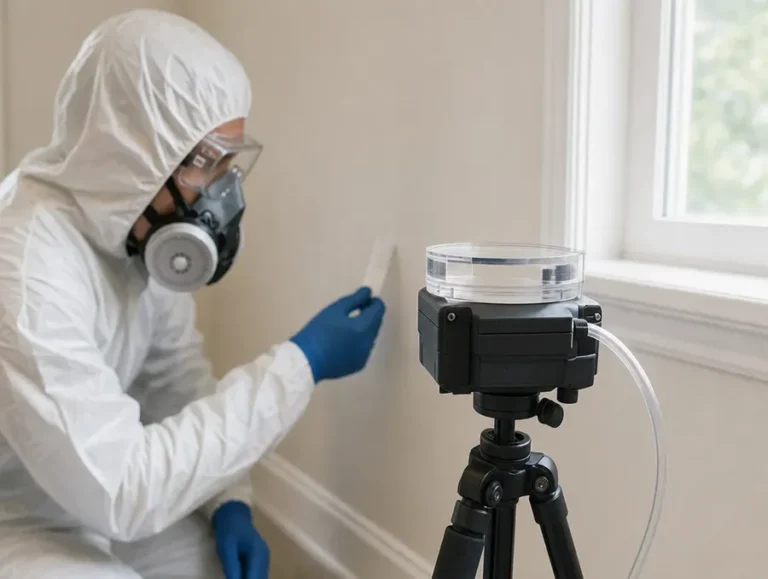
If a musty smell showed up after the storm, our post on musty smells after heavy rain explains what it usually points to. Small bathroom spots can be handled with household cleaning; mold inside a wall cavity or across a wide area needs professional mold remediation.
What not to do
- Do not run the HVAC if water reached a ground-floor return vent. The system can push contaminated moisture through the whole house. Have the ducts checked first.
- Do not seal a wet room up and “deal with it later.” Closed, damp rooms grow mold faster than ventilated ones. Get air moving.
- Do not tear out drywall yourself without knowing what is behind it. Storm water can carry contaminants, and soaked insulation stays wet long after the surface looks dry.
- Do not assume the roof is fine because the ceiling is dry. Leaks travel along rafters and show up rooms away, days later.
When to call a restoration crew
Call sooner rather than later when any of these are true (for first-day actions before the crew arrives, see our emergency steps guide):
- Water is still present 24 hours after the rain stopped — something is trapping it and it is not draining on its own.
- Drywall is soft, sagging, or visibly stained across more than a small patch.
- Mustiness is getting stronger, or mold is spreading beyond a small surface spot.
- Roof damage is letting water in, or you suspect water inside the wall cavities.
- Elderly residents, young children, or anyone with respiratory issues lives there — they should not be in a damp, possibly moldy space.
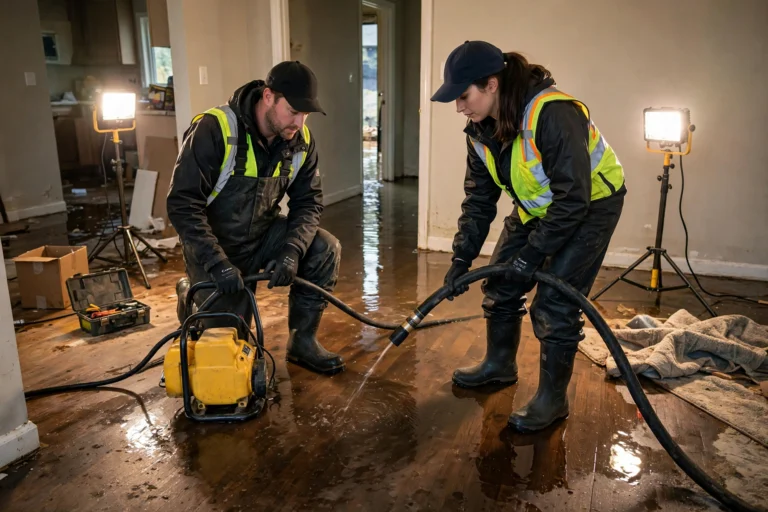
After a storm, restoration schedules fill fast — and a crew’s moisture meters find water inside walls that fans never reach.
FAQ
How soon after Hurricane Isaias should I check my New Orleans home for damage? Right now — an exterior walk plus a check of the usual hiding spots takes under an hour, and the sooner trapped water is found, the less it costs to dry.
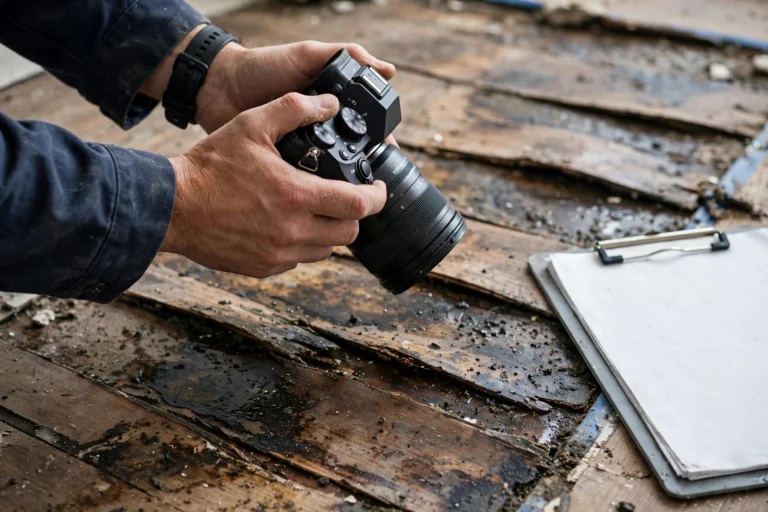
Does homeowners insurance cover hurricane water damage in New Orleans? It depends on the source. Wind-driven rain entering through storm-damaged roofing or siding is typically covered under a standard homeowners policy; rising floodwater from outside generally is not — that needs a separate flood policy. Photograph everything before cleanup.
How long does it take for mold to grow after a hurricane? Mold can begin growing on damp materials within 24 to 48 hours. In New Orleans’ post-storm humidity, materials stay damp longer, so a home that took water over the weekend can develop mold within one to two weeks.
Can I just let everything air dry on its own? Surface drying is not structural drying. Air drying handles what you can see; water trapped behind baseboards, under flooring, or inside wall cavities stays wet and grows mold. Professional drying uses moisture meters and commercial equipment to confirm the hidden areas are actually dry.
Isaias did not hit New Orleans head-on, and that is exactly why it is easy to skip the inspection. Walk the exterior, check the hiding spots, watch for mold over the next two weeks — and if you find water that is not drying, call before the problem grows.
Get Restoration New Orleans offers 24/7 emergency response across the metro area. Call (504) 520-4646 for storm and water damage help after Hurricane Isaias.