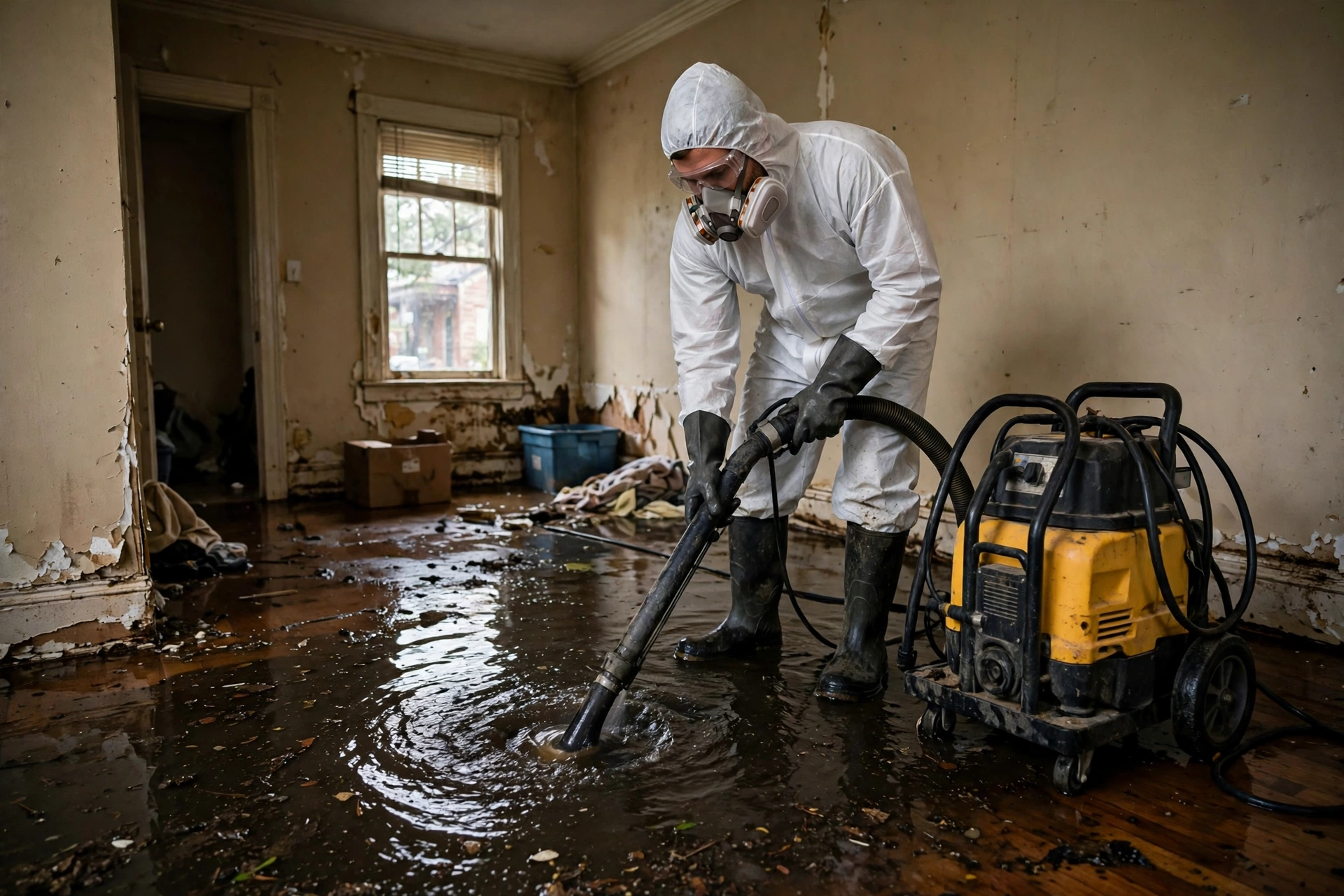
If sewage is backing up into your New Orleans home, stop using water right away, keep everyone and pets away from the affected area, and call a professional cleanup crew. Sewage water carries bacteria and contaminants, so do-it-yourself cleanup is risky. Get Restoration New Orleans responds around the clock at (504) 520-4646 for sewer backup cleanup across the metro area.
Key takeaways
– Sewage backups in New Orleans most often follow heavy rain that overwhelms older drainage and sewer lines.
– Black water (sewage) is contaminated — keep people and pets away and do not wade through it.
– Stop using toilets, sinks, washers, and showers until the backup is resolved.
– Photograph everything before cleanup — your insurer will need it.
– Professional cleanup means extraction, disinfection, drying, and removal of contaminated materials, not just mopping.
Why sewer backups happen in New Orleans
New Orleans sits below sea level with a combined strain on its drainage: intense downpours, low-lying streets, an aging sewer network, and pumps that work hard during every big rain. When the system is overwhelmed, water can reverse course and come up through floor drains, toilets, and tubs — especially in older neighborhoods and low-lying blocks.
This week’s weather is a good reminder: a tropical disturbance pushed several inches of rain across the area, the Flood Watch stayed up for days, and the Sewerage and Water Board staffed extra crews as the pumps ran through the event. Backups are most likely exactly in weeks like that one.
Tree roots are the other common cause here. Roots hunt for water and find tiny cracks in older sewer laterals, growing into a mat that traps debris until the line chokes. Grease poured down kitchen drains hardens in the cool line and narrows it further. Any of these can turn a normal rain into a backup in your lowest drain.
How to tell a sewer backup from ordinary flooding
Not all water on your floor is the same, and the distinction matters for safety.
– Sewage backup comes up from drains, toilets, or tubs, often with a foul odor, and may be dark or murky. It can happen even when it is not raining, if the blockage is in your lateral line.
– Floodwater from outside comes in under doors or up through slab cracks after heavy rain. If it has mixed with sewage from overwhelmed lines, treat it as contaminated too.
When in doubt, assume contamination and keep your distance. Contaminated water is not a mop-and-bucket situation.
What to do in the first hour
1. Stop all water use. Every flush, shower, or laundry load adds pressure to the line and can make the backup worse.
2. Keep everyone away. Move people and pets out of the affected rooms. Sewage water can carry bacteria, viruses, and parasites — skin contact and splashes are the risk.
3. Do not run the HVAC. If the affected area has a return vent, contaminated moisture can be pulled into the duct system and spread through the house.
4. Shut off power to the affected area if water is near outlets, cords, or appliances. Water and electricity are a dangerous mix — if the breaker panel is in the flooded zone, call an electrician rather than wading in.
5. Photograph the damage before anything is moved or cleaned. Wide shots of each room plus close-ups of water lines and damaged items give your insurer what they need. If the water came from the storm rather than a backup, our post-storm damage checklist (https://getrestorationneworleans.com/blog/post-isaias-hurricane-damage-checklist-new-orleans/) walks through what to inspect in the first hours after the rain.
6. Call a professional crew. Sewage cleanup requires extraction equipment, disinfection, controlled demolition of contaminated materials, and structural drying. Call (504) 520-4646 — the crew responds 24/7 across Greater New Orleans.
What not to do
– Do not mop it up yourself and call it done. Household cleaning cannot disinfect porous materials or find moisture inside walls and under flooring.
– Do not use bleach as your whole plan. It does not reach moisture trapped behind baseboards or under floors, and mixing it with other cleaners is dangerous.
– Do not keep contaminated soft goods. Carpet, padding, upholstered furniture, and stored boxes that soaked up sewage generally cannot be saved — they hold contamination even after they look clean.
– Do not delay. Sewage water degrades quickly, and mold can begin growing on damp materials within 24 to 48 hours in this climate — the same timeline covered in our flash flood aftermath guide (https://getrestorationneworleans.com/blog/attic-crawl-space-mold-removal-new-orleans/).
How professional sewer backup cleanup works
A proper cleanup is a process, not a mop:
1. Inspection and safety setup. Technicians identify the water category, the affected materials, and any electrical hazards before work starts.
2. Extraction. Standing water and sludge are removed with commercial extraction equipment.
3. Removal of contaminated materials. Porous materials that absorbed sewage — carpet and pad, affected drywall sections, insulation — are cut out and disposed of safely.
4. Cleaning and disinfection. Hard surfaces are cleaned and treated with professional-grade antimicrobial products.
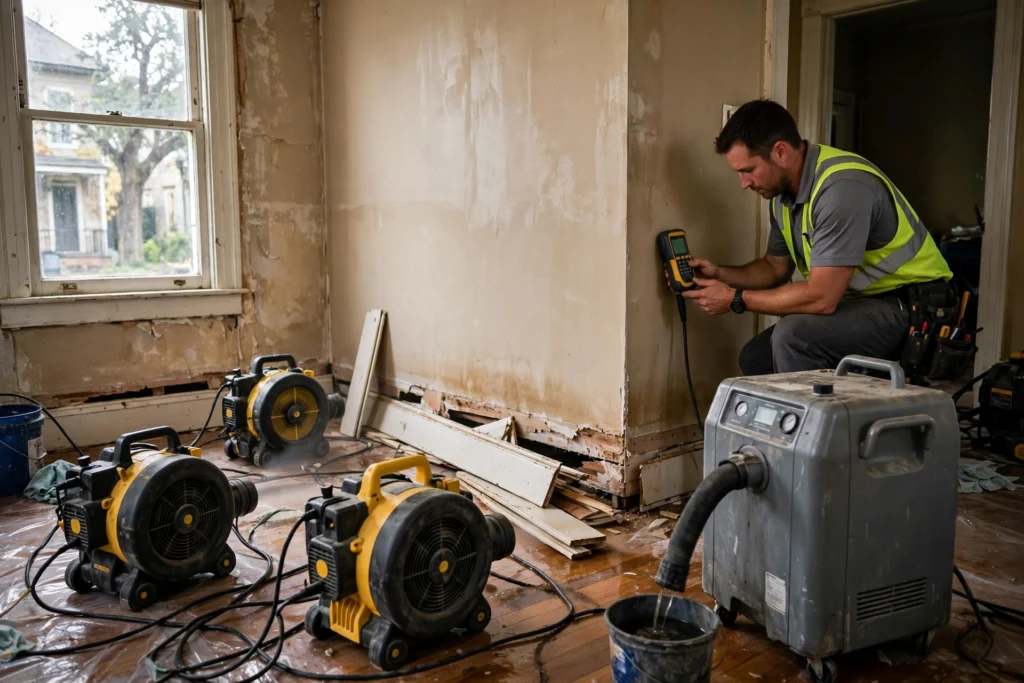
5. Drying and verification. Air movers and dehumidifiers dry the structure, and moisture meters confirm hidden areas are actually dry before anything is rebuilt.
Everything that took sewage water falls under professional water damage restoration work (https://getrestorationneworleans.com/water-damage-restoration/) — drying has to go deeper than a hardware-store fan can reach.
Keeping it from happening again
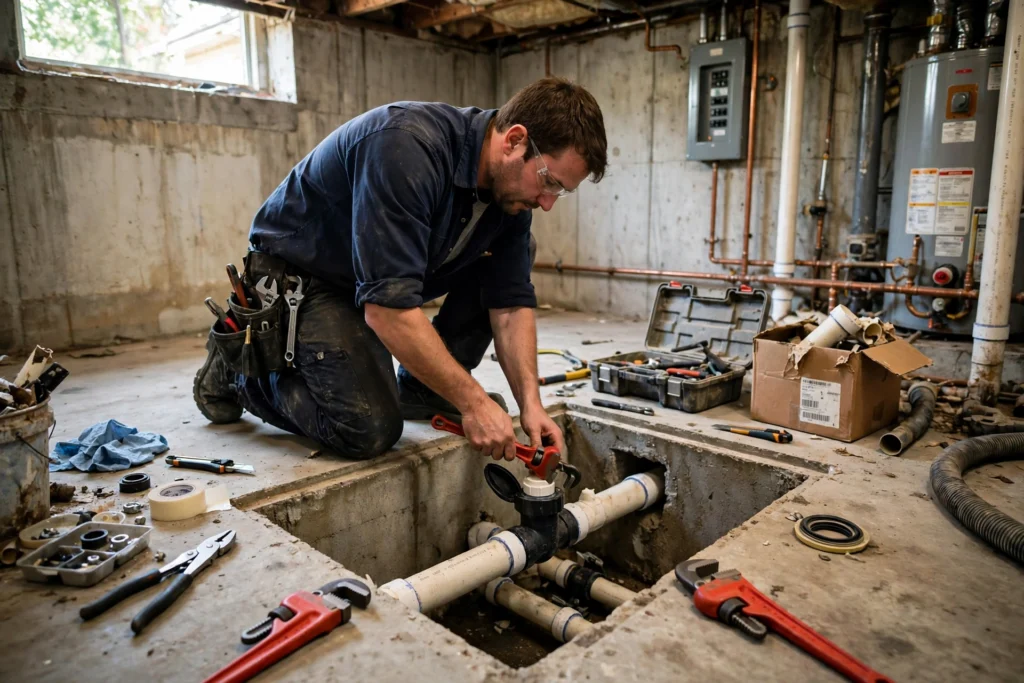
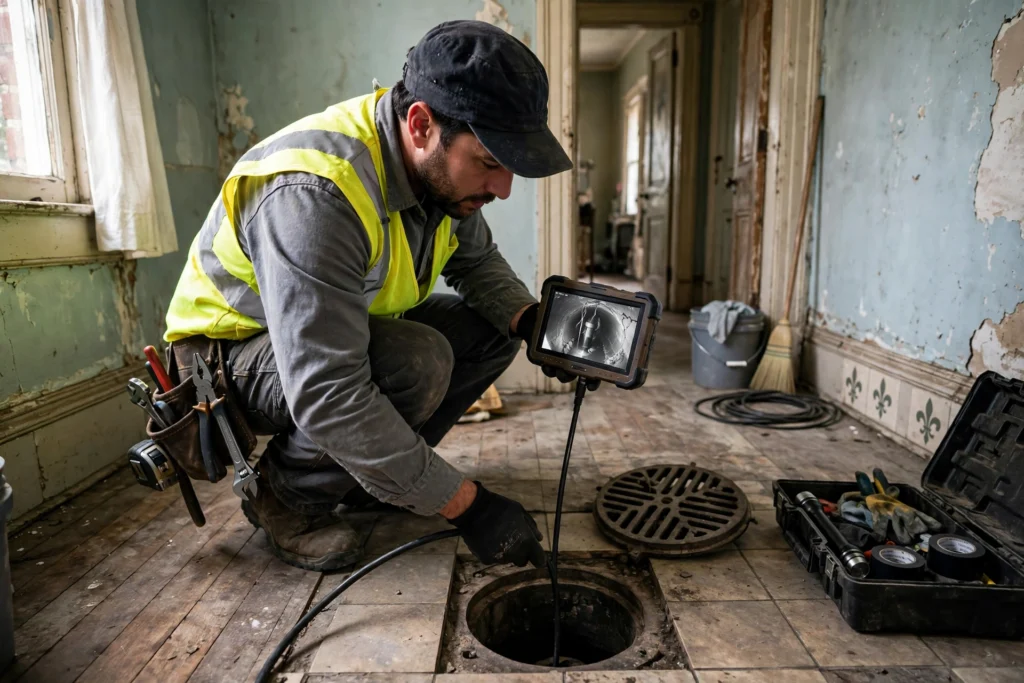
– Know your lateral. In older New Orleans homes, the sewer line to the street may be decades old. A camera inspection shows roots, cracks, and bellies before they become a backup.
– Install a backwater valve. This one-way valve on your sewer lateral lets waste flow out but blocks it from flowing back in — the single best defense for homes in low-lying areas.
– Keep grease out of drains. Pour cooking grease into a container and trash it; in the line it hardens and narrows the pipe.
– Watch the lowest drain. Your basement or ground-floor floor drain is usually the first place a backup shows up. If it gurgles when you flush upstairs, the line is telling you something.
– Mind the catch basins. The city asks residents to keep leaves and debris clear of street catch basins before big rains — clogged basins push more water into an already strained system.
FAQ
Is sewer backup dangerous?
Yes. Sewage water is classified as black water — it can carry bacteria, viruses, and parasites. Keep people and pets away from it, avoid skin contact, and do not try to clean a significant backup yourself.
Does homeowners insurance cover sewer backup in Louisiana?
Standard homeowners policies usually exclude sewer backup, but many insurers offer it as an add-on endorsement — often worth having in New Orleans. Flood insurance is a separate policy and covers rising water from outside, not backups. Check your policy before you need it, and photograph everything.
Can I clean up a small sewer backup myself?
A tiny, contained spill on a hard surface can sometimes be handled with proper protective gear and thorough disinfection. Anything beyond that — soaked carpet, water in walls, a backup that keeps returning — needs professional equipment and disposal.
Why does my sewer back up every time it rains hard?
The most common reasons are a partially blocked lateral (roots, grease, debris), an undersized or aging line, or the municipal system backing up during heavy rain events. A camera inspection finds which one you have.
How fast does mold grow after a sewer backup?
In New Orleans humidity, mold can start on damp materials within 24 to 48 hours. That is one reason fast extraction and professional drying matter — air drying alone leaves moisture inside walls and floors where mold starts unseen.
The bottom line
Sewer backups are one of the messiest surprises a New Orleans home can deliver, and they tend to arrive during the weeks the drainage system is under the most strain. Stop water use, keep your distance, document the damage, and bring in a crew with the right equipment. If sewage is coming up in your home right now, call Get Restoration New Orleans at (504) 520-4646 — help is available 24/7.

One Comment