If your water heater is leaking in New Orleans, turn off its water supply and its power or gas, keep water away from outlets, and clean up only what you can safely reach. A slow leak can soak floors and walls and start mold within a day or two. Get Restoration New Orleans responds 24/7 at (504) 520-4646.
Key takeaways
- A puddle at the base of the tank usually means a bigger problem than a drip from a fitting.
- Turn off the water, then the power or gas, before touching anything wet near the heater.
- Photograph the leak and the damage before cleanup starts, for your insurance record.
- Water that reaches drywall, flooring, or stored items needs professional drying, not just a fan.
- Annual checks of valves, fittings, and the tank catch most leaks before they flood a room.
How do I know my water heater is leaking?
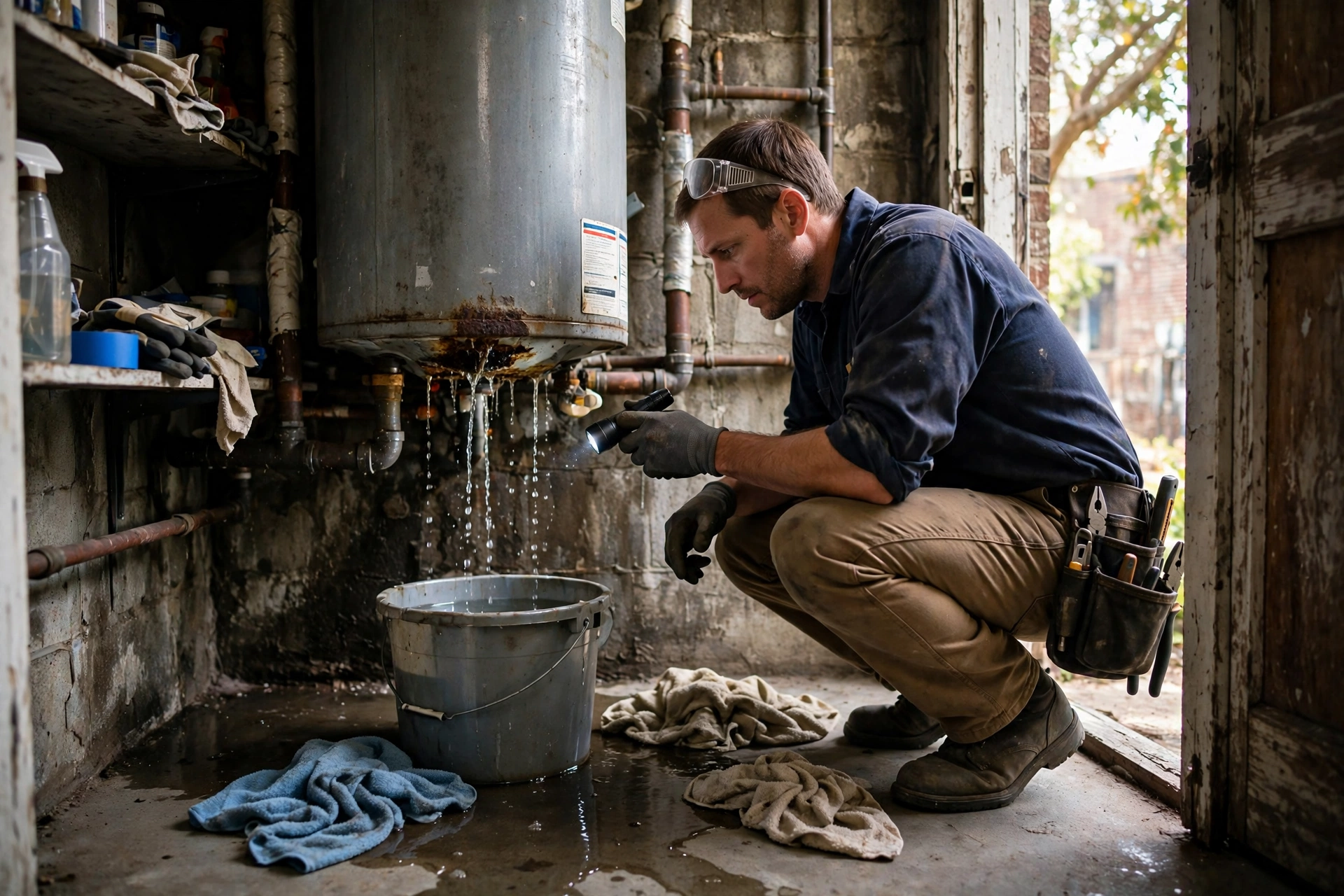
Not every wet floor near a water heater is a leak. In a humid New Orleans utility room, condensation can leave a light film of moisture on a cold tank or pipe. The test is simple: dry the area completely, then check again in a few hours. If water returns as a puddle, a steady drip, or a spreading wet patch, you have a leak.

Watch for these warning signs:
- Water pooling at the base. This is the most urgent sign. A leak from the tank itself usually cannot be repaired and means the unit is failing.
- Drips from valves or fittings. A dripping temperature and pressure relief valve, drain valve, or inlet connection may be a worn part, but it still needs attention before it gets worse.
- Rust, corrosion, or mineral streaks. Rust on the tank, fittings, or pipes points to water escaping over time and metal weakening from the inside.
- Rusty or discolored hot water, or popping and rumbling noises. Both point to sediment and corrosion building up inside the tank.
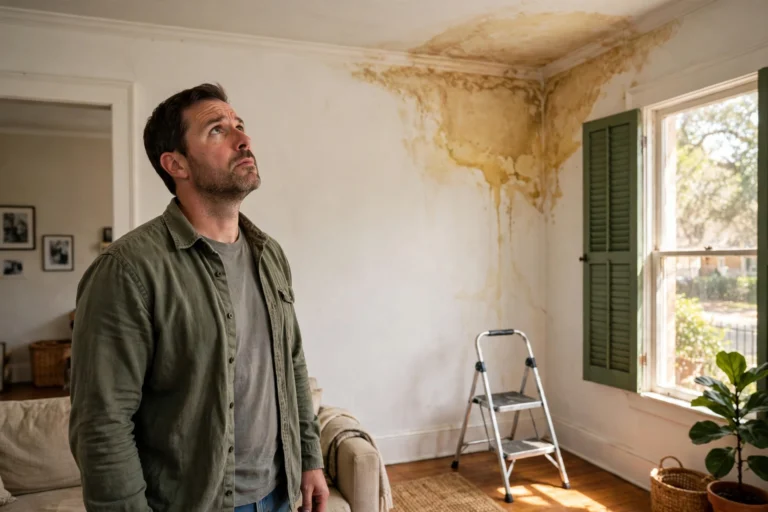
- Damp drywall, warped flooring, or a musty smell nearby. Water travels. A leak in a utility closet can show up as a soft spot in the next room’s floor or a musty odor in a closet sharing a wall.
What should I do first if my water heater leaks?
Work through these steps in order, and skip any step that does not feel safe. Water and electricity are a dangerous mix, and a gas heater adds its own risks.

- Turn off the water supply to the heater. Find the cold-water shutoff valve on the pipe going into the top of the tank and turn it clockwise until it stops. If you cannot find it or it will not move, shut off the main water supply to the house instead.
- Turn off the power or gas. For an electric heater, switch off its dedicated breaker. For a gas heater, turn the gas control to the pilot or off position, following the instructions printed on the unit. If you smell gas, leave the area and call your gas utility or emergency services instead of touching the heater.
- Stay out of standing water near outlets. If water has reached outlets, cords, or the breaker panel, do not wade in. Shut off power from a dry location if you can do so safely, or call a professional.
- Contain what you can and photograph everything. Use towels at the edges of the puddle to keep water from reaching drywall, stored boxes, and flooring in the next room. Take wide shots of the room and close-ups of the leak and any damaged flooring or walls — your insurer will want this record.
- Call for help the same day. Even a small leak leaves moisture inside walls and under flooring where a household fan cannot reach it. For professional water damage restoration, call Get Restoration New Orleans at (504) 520-4646. The crew responds 24/7 across Greater New Orleans.
One caution: if you shut off the main water supply, do not keep running an electric water heater with no water in it. Turn its power off as well.
Is a leaking water heater dangerous?
Usually the danger is damage, not drama — but there are real safety risks. Water near wiring or outlets is a shock hazard, and a relief valve that keeps discharging hot water or steam signals a pressure problem that should be checked by a professional rather than ignored. If a gas heater’s venting is damaged or you smell gas, treat that as an emergency and get out of the area.
The more common danger is slow: a leak dripping for weeks can rot subflooring and feed mold inside a wall cavity long before anyone notices a stain.
Can a leaking water heater be repaired, or does it need replacing?
It depends on where the water is coming from:
- A fitting, connection, or valve leak can often be repaired. A loose connection can be tightened, and a worn drain valve or relief valve can be replaced by a qualified technician.
- A leak from the tank itself generally cannot be repaired in a lasting, safe way. Once the inner tank has corroded through, replacement is the practical fix.
- An older unit with repeated problems is usually better replaced than repaired again. Each repair buys time, but it does not restore a tank already rusting from the inside.
A plumber handles the heater; a restoration crew handles what the water did to your home. Stop the water, fix or replace the heater, then dry the structure properly.
What happens to floors and walls after a water heater leak?
Water does not stay where it falls. It wicks up drywall, runs under flooring, and settles into insulation and subflooring, so a room can look dry on the surface while moisture meters still read wet inside the wall.
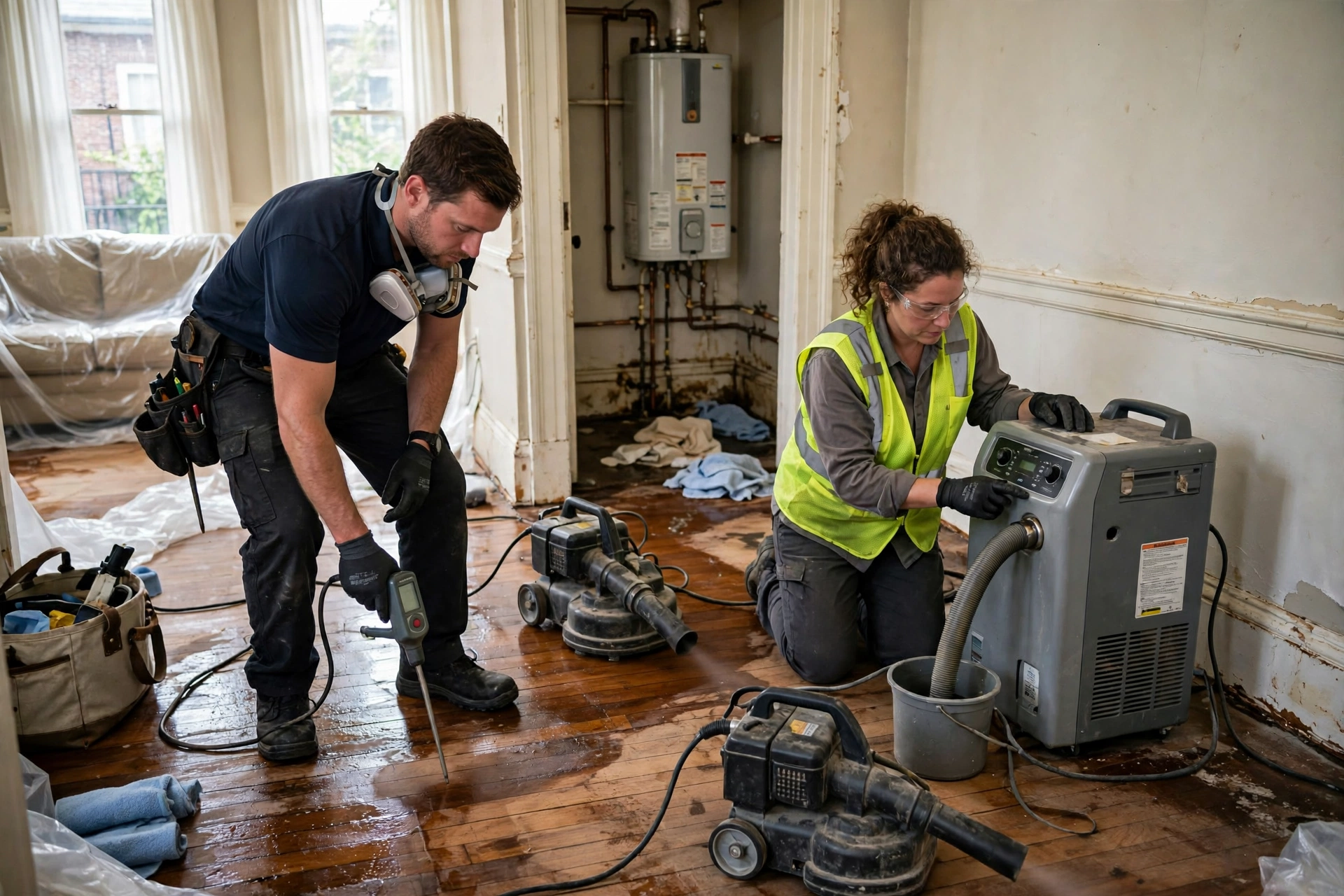
Professional drying follows a sequence: extract standing water, remove materials that cannot be dried safely, run air movers and dehumidifiers, and verify with moisture readings that hidden areas are actually dry before anything is rebuilt. Skipping that verification is how mold gets its start. If a musty smell follows a leak, our mold inspection guide explains what an inspection covers. The same steps are covered in our sewer backup cleanup guide.
Move dry items out of the wet area. Paper, fabric, and cardboard soak up water fast and are often the first things to grow mold.
How do I prevent the next water heater leak?
- Look at the tank and pipes once a year for rust, mineral streaks, and drips at every fitting and valve.
- Test the relief valve briefly, following the manufacturer’s instructions, and replace it if it keeps dripping.
- Flush sediment as the manufacturer recommends, to reduce noise and slow internal corrosion.
- Know your shutoffs before you need them: the heater’s water valve, the main water shutoff, and the heater’s breaker or gas control.
- Keep the floor around the heater clear so a small puddle is visible the day it appears.
- Plan for age and budget for replacement on your schedule rather than during an emergency flood.
FAQ
What should I do first when my water heater starts leaking?
Turn off the water supply to the heater, then turn off its power or gas. Keep water away from electrical outlets, photograph the leak and any damage, and call a professional the same day if water has reached floors or walls.
Is a small water heater leak an emergency?
Treat it as urgent, even if it looks small. A slow drip can soak flooring and wall cavities and start mold within a day or two in New Orleans humidity. If water is spreading, near electrics, or coming from the tank itself, call for help right away rather than waiting.
Can I repair a leaking water heater myself?
You can safely turn off the water and power and contain a small puddle, and a loose fitting can sometimes be tightened. Relief valve work, gas controls, and any leak from the tank itself should be left to a qualified technician, and water damage to floors and walls should be dried professionally.
How do I tell a leak from condensation on my water heater?
Dry the tank and floor completely, then check again after a few hours. Condensation returns only as a light film, while a leak returns as a drip, a puddle, or a spreading wet patch. If water keeps returning, treat it as a leak.
Does homeowners insurance cover water heater leak damage?
It depends on your policy and on whether the damage was sudden or long-term. Sudden leaks are commonly covered, while damage from a leak that went unaddressed for a long time may not be. Photograph everything, keep repair records, and check your policy before you need it.
The bottom line
A leaking water heater rewards fast, calm action: shut off the water, shut off the power or gas, photograph the damage, and get the structure dried properly. The heater itself may be a repair or a replacement, but the water it released is the part that damages your home if it is left to sit. If a leak has soaked floors or walls in your New Orleans home, call Get Restoration New Orleans at (504) 520-4646 — help is available 24/7, and the sooner drying starts, the smaller the repair stays.
2 Comments