

If rainwater is coming through your ceiling in New Orleans, catch the drip, protect anything electrical, and photograph the damage before you clean up. The stain is rarely directly below the entry point: water travels along rafters and decking before it finds a way in. Get Restoration New Orleans responds 24/7 at (504) 520-4646.
Key takeaways
- A ceiling stain shows where water ended up, not necessarily where it got in.
- Act in order: electrics first, then catch the water, move valuables, and photograph everything.
- A leak that appears only during rain usually points to the roof, not to plumbing.
- Flashing, valleys, vent boots, and clogged gutters are the usual starting points.
- Wet drywall, insulation, and framing need moisture readings, not just a coat of paint.
What should you do first when rainwater starts coming in?
Start with electricity. If water is dripping near a light fitting, a ceiling fan, or an outlet, do not touch the switch or the fitting. If you can reach the breaker panel without walking through water, switch off power to that room and keep it off until the area is dry and checked.
Next, catch the water and protect what is below it: a bucket under the drip, towels around it, and furniture, rugs, and electronics moved out of the way. If the ceiling is sagging or bulging, keep everyone out of the room and do not push on it — it may be holding a heavy pocket of water.
Then document everything before you clean up: photograph the drip, the stain, and any damaged belongings, and note the date and the weather. That record matters if you later file a water damage claim, because cleanup erases evidence fast.

How can you tell a roof leak from a plumbing leak?
Timing is the best clue. A roof leak shows up during rain or shortly after it, and usually worsens in wind-driven rain. A plumbing leak can appear in any weather, often below a bathroom or kitchen or along a pipe run. If a stain grows after a shower or laundry load rather than after rain, suspect plumbing first.
Location helps too. Roof leaks appear on upper floors and ceilings below an attic, often near exterior walls, chimneys, or skylights. Plumbing leaks follow fixtures: a stain below an upstairs bathroom points away from the roof. When unsure, note when the stain changes and compare it with recent rain and fixture use.
Where do roof leaks usually start?
Most leaks start where the roof surface is interrupted, not in the middle of a plain stretch of shingles. In the order a roofer checks them: flashing around chimneys and skylights, valleys where two roof slopes meet, rubber vent-pipe boots cracked by age and sun, and shingles damaged or missing after wind.
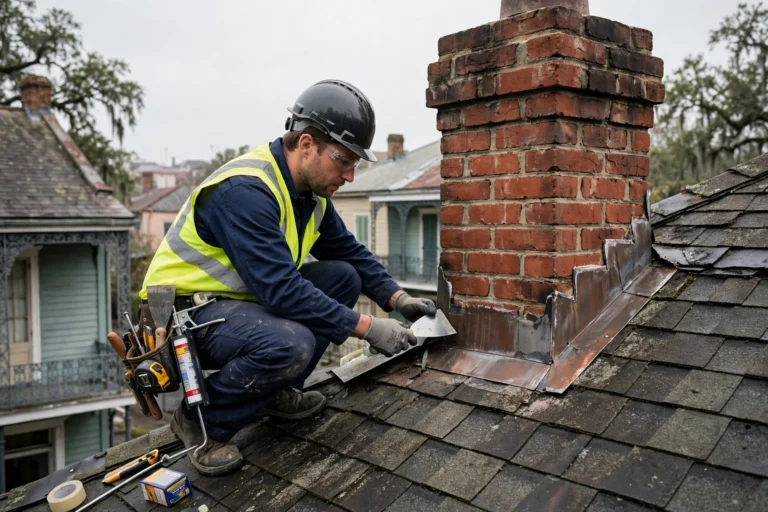
Clogged gutters cause leaks too: when a gutter overflows, water backs up under the roof edge and soaks the fascia and decking. New Orleans adds wind-driven rain that pushes water uphill under shingles, and flat roofs where water ponds instead of draining. A stain near a fireplace may trace back to failed chimney flashing, which is why chimney repair and roof repair often go together.
What should you check from inside the house — safely?
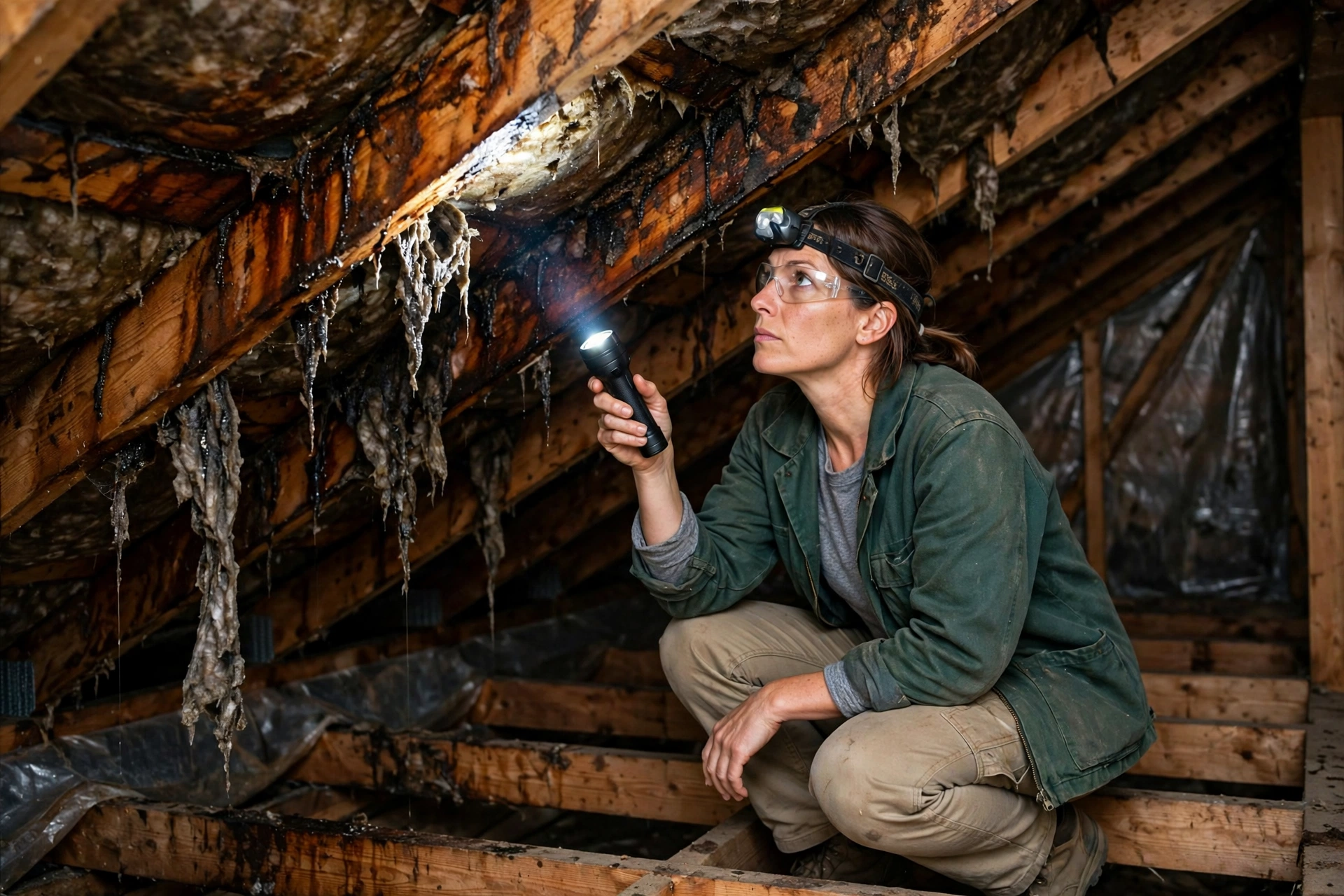
You can gather useful clues without climbing on the roof. In the attic, if you have stable footing, step only on joists or solid decking — never on drywall between joists — and look with a flashlight for water trails, stained decking, and wet insulation. Stay out entirely if the ceiling below is sagging.
Mark the stain’s edge lightly with a pencil or painter’s tape and date it, then check it after the next rain: growth past the mark means it is still active. From the ground, look for missing shingles, slipped flashing, and overflowing gutters — but a wet roof is no place for a homeowner’s ladder.
What should you not do after a roof leak?
Do not paint over the stain: paint seals moisture inside the drywall, hides an active leak, and gives mold a damp surface to grow on. Do not ignore a small stain either: every storm adds water to insulation and framing, and a minor entry point can become soaked drywall and mold within weeks.
Do not climb onto a wet roof, poke a sagging ceiling, or run fans into a soaked electrical fitting. Do not throw damaged items away before photographing them — once they are gone, so is the evidence for your claim. One dry day does not mean the structure is dry: water hides inside wall cavities long after the surface looks fine.
When does a roof leak become a restoration job?
Call for professional help when the ceiling is sagging, the drip cannot be contained, water is near electrics, or you smell mustiness or see mold. The same applies when a stain spreads after each storm or insulation is soaked: then the job is no longer just a roof repair.
Restoration covers what a roofer does not: water extraction, moisture mapping, structural drying, and removal of drywall or insulation that cannot be dried back to a safe state. If mold has started, the work moves into mold remediation, and our guide to the drying timeline explains how professionals confirm a house is truly dry before repairs begin.
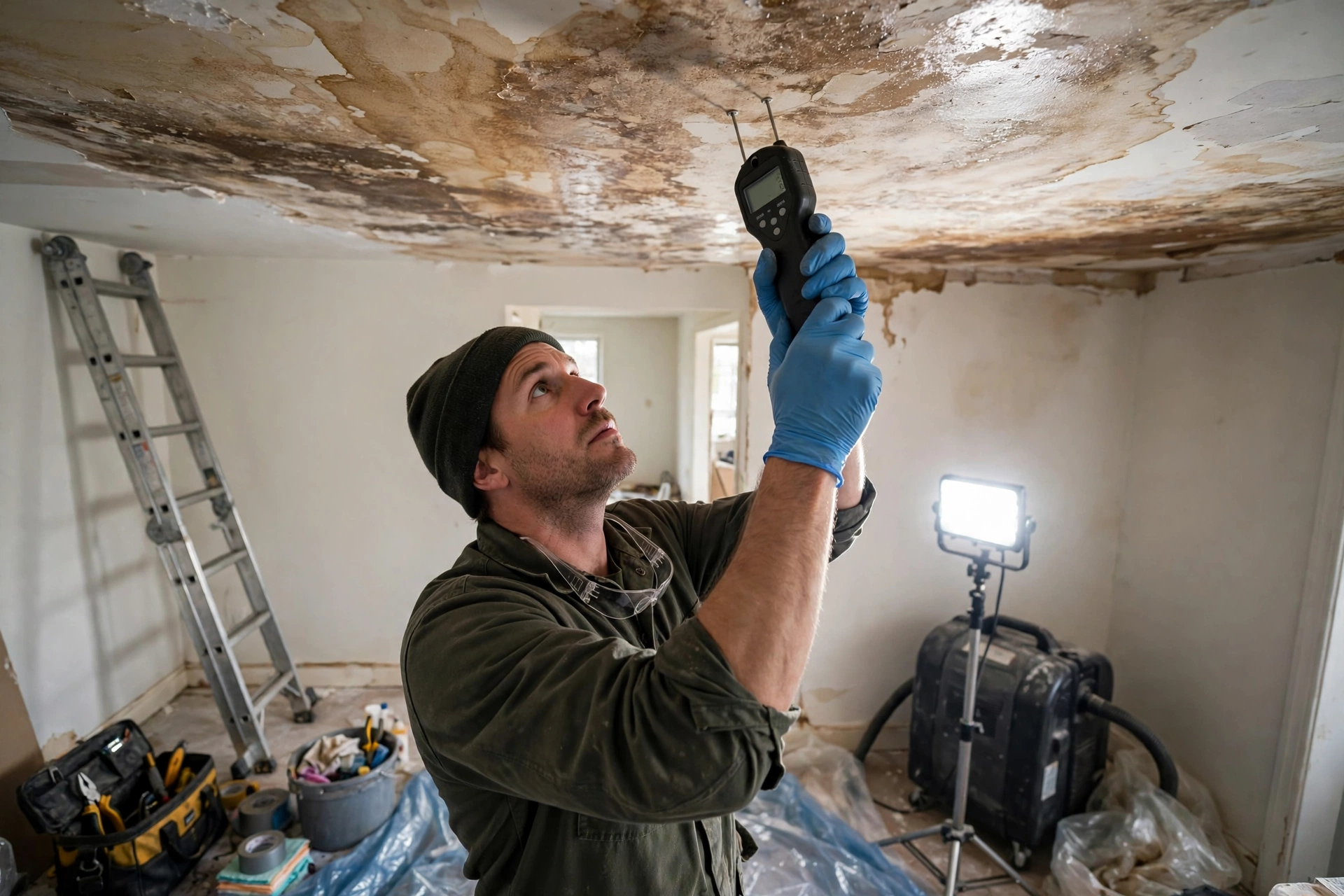
For storm-driven leaks, stop the entry point first, then dry the structure. Get Restoration New Orleans handles the interior side across Greater New Orleans at (504) 520-4646, with professional water damage restoration and storm damage restoration from extraction through verified dry.
Frequently asked questions
Can I just paint over a ceiling stain after a roof leak?
No. Paint seals moisture inside the drywall and hides an active leak, so the stain usually returns and mold can grow behind the new coat. Find and fix the entry point first, confirm the area is dry with moisture readings, then prime and repaint.
How do I know if a roof leak is still active?
Mark the edge of the stain with a pencil or painter’s tape and check it after the next rain. If it grows, darkens, feels damp, or drips again, the leak is still active. A stain unchanged through several heavy rains is more likely old damage — but only a moisture reading confirms the material is dry.
Does homeowners insurance cover roof leak water damage in New Orleans?
It depends on the cause and your policy. Sudden damage, such as a storm tearing off shingles, is often covered, while damage from long-term wear or a leak left unrepaired for months is often excluded. Photograph everything before cleanup, keep receipts for emergency work, and report the leak promptly.
How long can I wait before calling someone about a roof leak?
Do not wait for the next storm. Each rain adds water to insulation and framing, and mold can begin growing on damp surfaces within a day or two. A small stain is cheapest to deal with while it is still small: call a roofer to find the entry point, and a restoration team if water has reached ceilings, walls, or insulation.
Should I go into the attic to find the leak myself?
Only if you can do it safely: a stable floor or joists to walk on, a flashlight, and no sagging ceiling below. Step only on joists or solid decking, never on drywall between joists, and stay out entirely if the ceiling below is sagging or the space feels unsafe. From the ground, binoculars and photographs of missing shingles or damaged flashing are plenty for a professional to work with.



2 Comments