A turkey fryer fire in New Orleans usually starts with one of three mistakes: a partly frozen bird dropped into hot oil, a pot filled too high, or a fryer set up too close to the house. Fry outdoors on level ground at least 10 feet from the home, thaw and dry the turkey fully, and never leave the fryer unattended. If a fryer fire damages your home, call Property Restoration New Orleans at (504) 520-4646.
Key takeaways
- Thanksgiving is the leading day of the year for home cooking fires in the United States, according to the National Fire Protection Association.
- Never deep-fry a frozen or partly frozen turkey: ice in the bird makes hot oil boil over and catch fire.
- Measure the oil level with a water test before heating, so the pot cannot overflow when the turkey goes in.
- Set the fryer outdoors on firm, level ground at least 10 feet from the house, never on a deck, in a garage, or under a carport.
- If the oil catches fire, never use water and never carry the pot: get everyone away and call 911.
Why are turkey fryers so dangerous?
A turkey fryer is a large pot of oil heated to around 350°F over an open propane flame, and many models have no thermostat. If the oil overheats, it can reach its flash point and ignite on its own. If the pot tips, or oil spills onto the burner, the flame spreads across the spill in seconds. The National Fire Protection Association discourages oil turkey fryers for this reason.
The most common trigger is a turkey that is not fully thawed. Ice on the bird or inside the cavity turns to steam the moment it hits hot oil, and the steam throws oil out of the pot and onto the burner. A pot that is overfilled does the same thing when the turkey displaces the oil. In New Orleans, many homes have wooden decks and carports, and a fryer placed on one puts an open flame against wood and under a roof. The National Fire Protection Association reported an estimated 1,446 home cooking fires on Thanksgiving Day in 2023, a 388% increase over the daily average.
How do you fry a turkey safely?
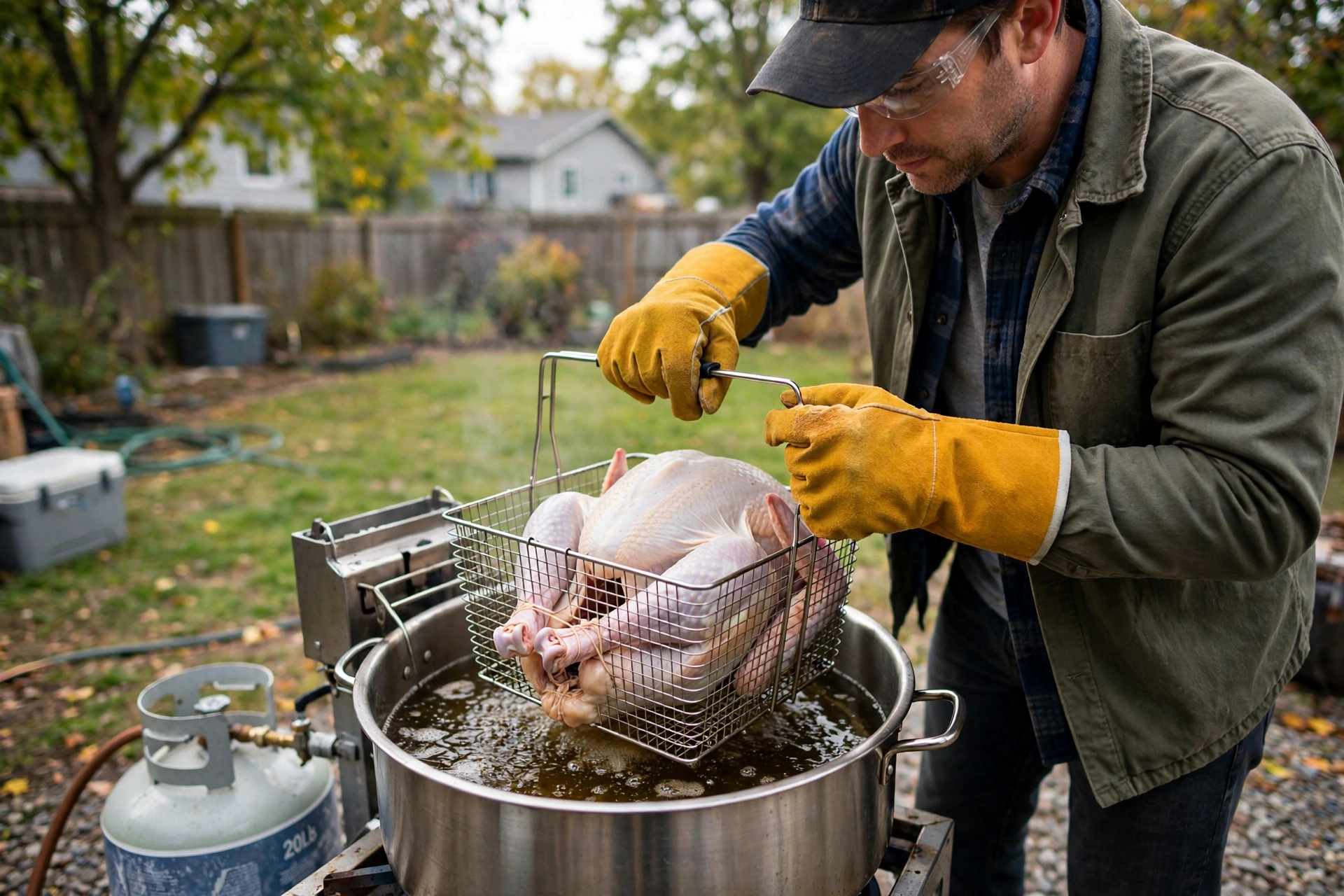
Start with the thaw. The U.S. Department of Agriculture allows about 24 hours of refrigerator thawing for every 4 to 5 pounds of turkey, so a 15-pound bird needs three to four days in the fridge. The turkey must be completely thawed and patted dry inside and out. Do not stuff a turkey you plan to fry.
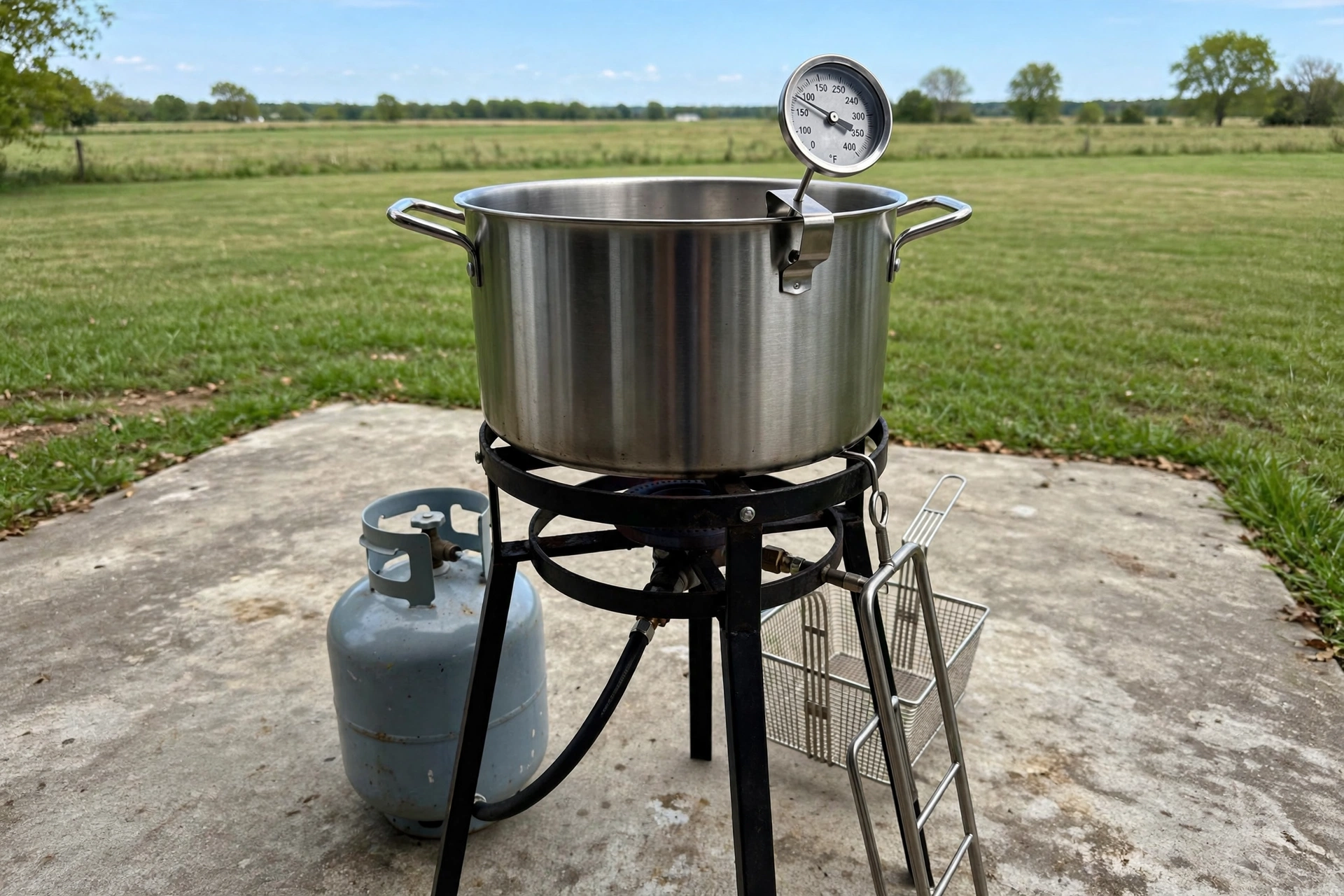
Measure the oil before you heat anything. Put the thawed turkey in the basket, set it in the empty fryer, and add water until the turkey is barely covered. Lift the turkey out, let the water drain back into the pot, and mark the water line. Pour the water out, dry the pot, and add oil only up to that line, leaving 3 to 5 inches between the oil and the top of the pot. This test stops the most common accident: oil boiling over when the bird goes in.
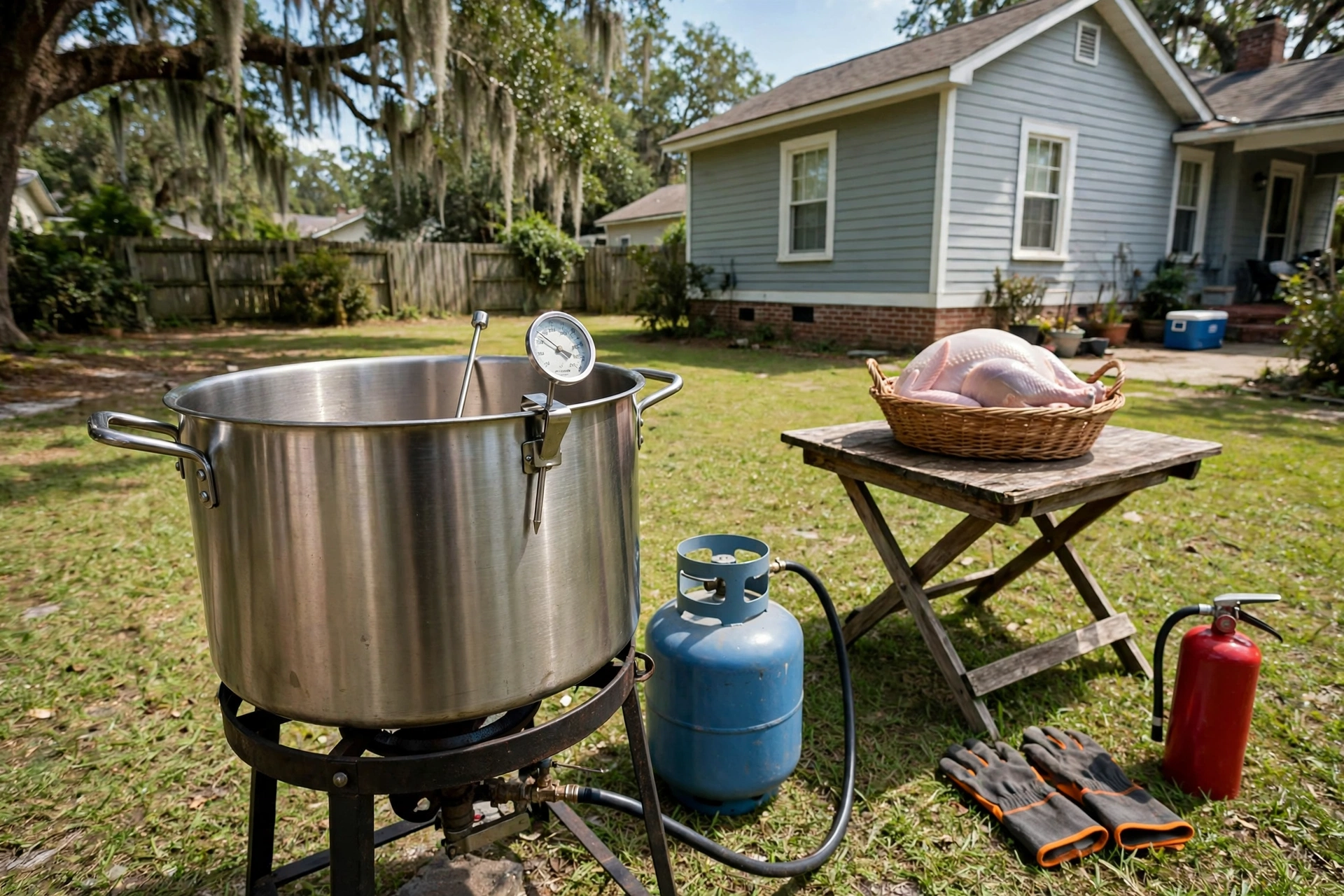
Set up outside on firm, level ground, at least 10 feet from the house and clear of eaves, decks, trees, and anything combustible. The U.S. Fire Administration says never to move a fryer once it is in use, so choose the spot before you light it. Keep children and pets at least 3 feet away until the oil has cooled completely. Heat the oil to the temperature in your fryer manual, usually around 350°F, and monitor it the whole time with a frying thermometer. Lower the turkey in very slowly, a few inches at a time, and stay with the fryer from lighting until the oil is cool. The turkey is done when it reaches 165°F in the innermost thigh, the innermost wing, and the thickest part of the breast. If the oil starts smoking, turn the burner off at once.
What are the mistakes that cause turkey fryer fires?
First, frying a frozen or partly frozen turkey: even a small pocket of ice can throw enough oil out of the pot to start a fire. Thaw in the refrigerator and check the cavity with your hand before you start. Second, overfilling the pot: skipping the water test and guessing the oil level is how most boil-overs happen. Fill only to the marked line.
Third, the wrong location: a fryer on a wooden deck, in a garage, or under a carport puts an open flame under a roof and against wood. In New Orleans, where carports and raised decks are common, this is the mistake we see most often.
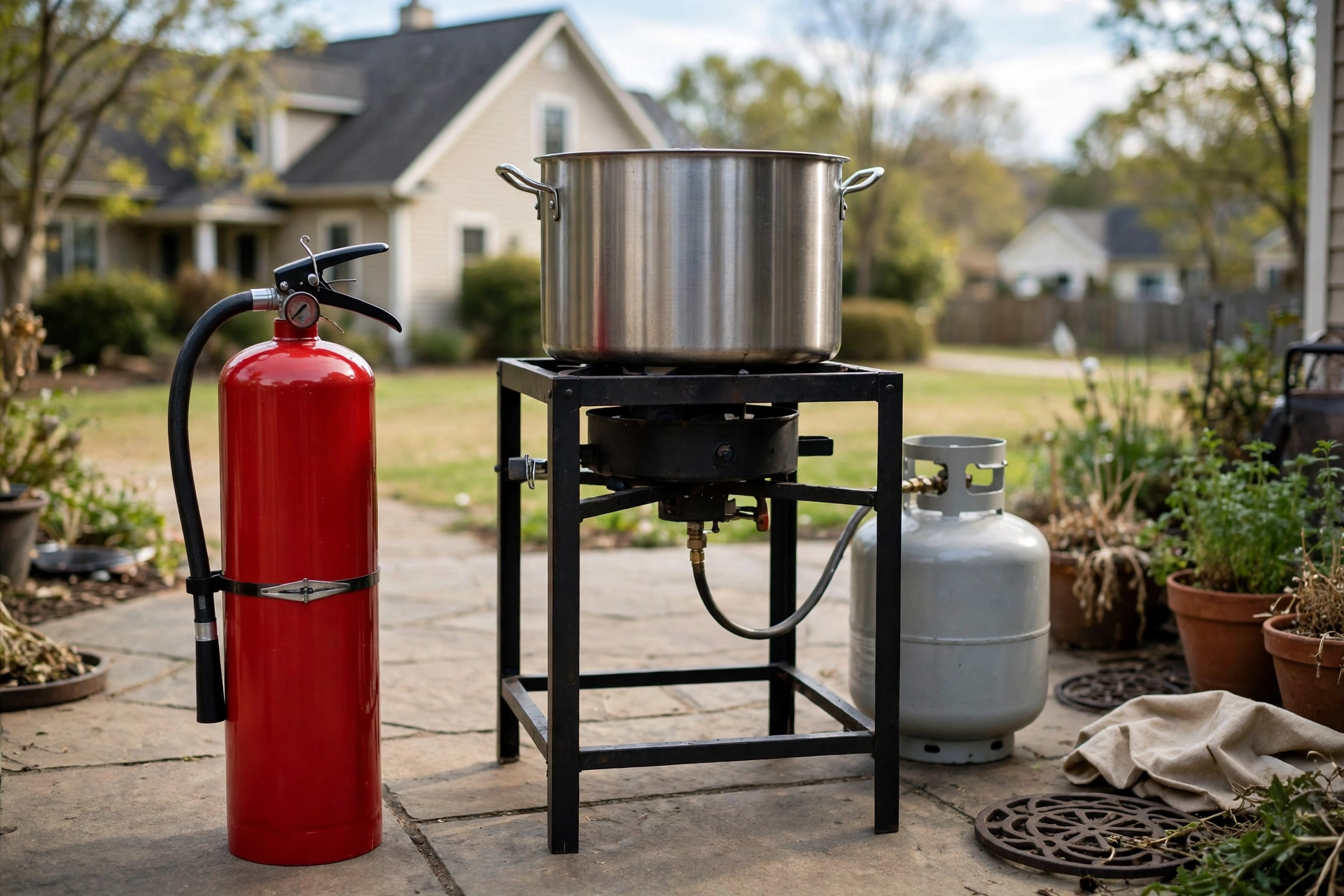
Fourth, leaving the fryer unattended: most reported incidents happen while the oil is heating, before the turkey goes in. Stay with it, and keep a fire extinguisher rated for grease fires within reach. Fifth, the wrong oil or no thermometer: use the oil your manual specifies, with a high smoke point, and clip a thermometer to the pot. Sixth, using water on a grease fire, or trying to carry a burning pot: water throws flaming oil across the yard, and carrying the pot spreads the fire and risks serious burns.
What should you do if the oil catches fire?
Do not use water, and do not try to move the pot. If the fire is small and still inside the pot, turn off the burner if you can do it safely. A fire extinguisher rated for grease fires can put out a small oil fire. If the fire is spreading, the pot has tipped, or the flames are reaching the house, get everyone away and call 911. Do not go back for the turkey or the fryer.
After the fire is out, do not clean up the soot and smoke damage yourself. Soot is acidic and keeps damaging surfaces the longer it sits. Our fire and smoke damage team can assess what the fire and the smoke reached, including the parts you cannot see. Our Thanksgiving kitchen fire safety guide covers the other holiday cooking risks, and the smoke odor removal guide explains why a house can still smell of smoke weeks after a small fire.
What if the fryer fire already damaged your home?
A fryer fire that reaches the house usually damages the deck or carport first, then the siding, the eaves, and the rooms behind them. Even a fire that looks small from outside can leave smoke and soot damage inside, because smoke travels through vents and open doors. Take photos of everything before you clean up, and keep the damaged fryer and pot. Our guide to a smoke damage cleanup explains what to document and what to leave alone until a professional has seen it. If the fire reached the house, call us at Property Restoration New Orleans on (504) 520-4646.
Thanksgiving in New Orleans is a week for cooking for a crowd, and a fried turkey is part of that tradition for a lot of families. The fryer itself is not the problem: the setup is. Thaw the bird, measure the oil, fry outside and well away from the house, and stay with it until the oil is cool.
Frequently asked questions
Is it safe to deep-fry a turkey at home?
The National Fire Protection Association discourages oil turkey fryers, because tipping, overflowing oil, and overheating can cause serious burns and destructive fires. If you fry anyway, follow the safety steps in this guide: a fully thawed turkey, a measured oil level, an outdoor setup at least 10 feet from the house, a thermometer, and constant supervision. An oil-free fryer or a professionally fried turkey is the safer choice.
How far from the house should a turkey fryer be?
At least 10 feet, on firm, level ground outdoors, clear of eaves, decks, trees, and anything combustible. Never use a fryer on a wooden deck, in a garage, under a patio cover, or beneath a carport, and never move it once it is lit.
Can you fry a frozen turkey?
No. Never deep-fry a frozen or partly frozen turkey. Ice in the bird turns to steam in the hot oil and throws oil out of the pot onto the burner, which can start a fire. Thaw the turkey fully in the refrigerator, allowing about 24 hours for every 4 to 5 pounds, and pat it dry inside and out before frying.
What should you do if turkey fryer oil catches fire?
Do not use water and do not carry the pot. Turn off the burner only if you can do it safely, and use a fire extinguisher rated for grease fires on a small fire in the pot. If the fire is spreading or the pot has tipped, get everyone away and call 911.
What temperature should the oil be for frying a turkey?
Heat the oil to the temperature in your fryer manual, usually around 350°F, and monitor it with a frying thermometer for the whole cook. The turkey is done when it reaches 165°F in the innermost thigh, the innermost wing, and the thickest part of the breast. If the oil starts smoking, turn the burner off at once.