
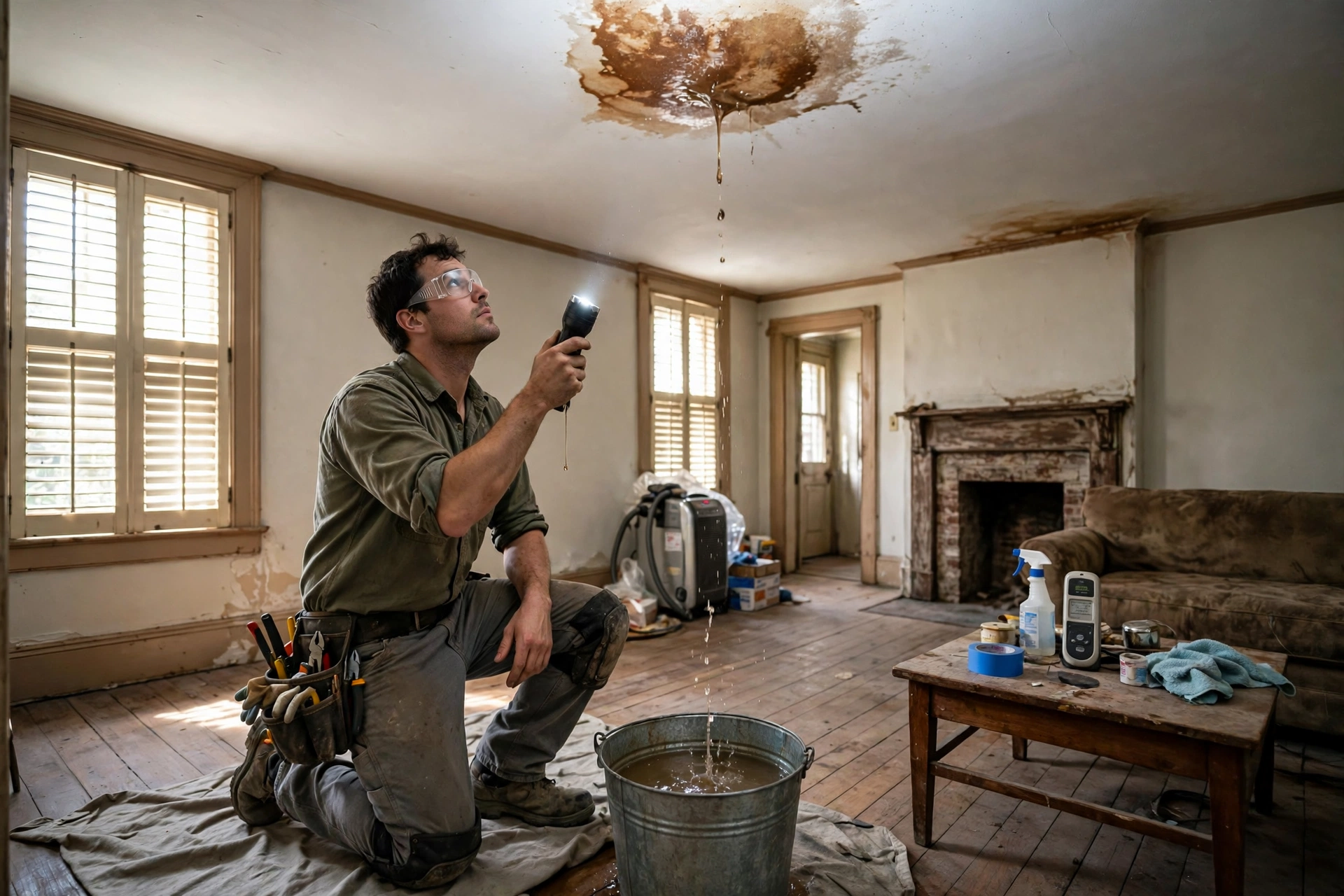
An upstairs bathroom leak usually shows up as a stain or drip on the ceiling below, not as visible damage in the bathroom itself. The most common causes are a failed toilet wax ring, a shower or tub drain leak, cracked grout or caulk, or a supply pipe in the floor. Shut off the water at the fixture, cut power to the room below if water is near a light or outlet, and call a local water damage restoration company in New Orleans at (504) 520-4646 if the ceiling is sagging or the leak has been running unseen.
Key takeaways
- A ceiling stain below a bathroom means water has already been soaking into the floor above it for a while.
- When the drip happens tells you the source: after showers points to the shower, after flushes to the toilet, all the time to a supply pipe.
- Shut off the fixture valve first, then cut power to the room below if water is near any light or outlet.
- A sagging ceiling can fall without warning — stay out from under it and do not poke it.
- Mold can start growing within 24 to 48 hours of sustained moisture, so drying matters as much as fixing the leak.
- Test one fixture at a time, ten minutes each, to trace the leak before you call anyone.
Why does an upstairs bathroom leak show up on the ceiling below?
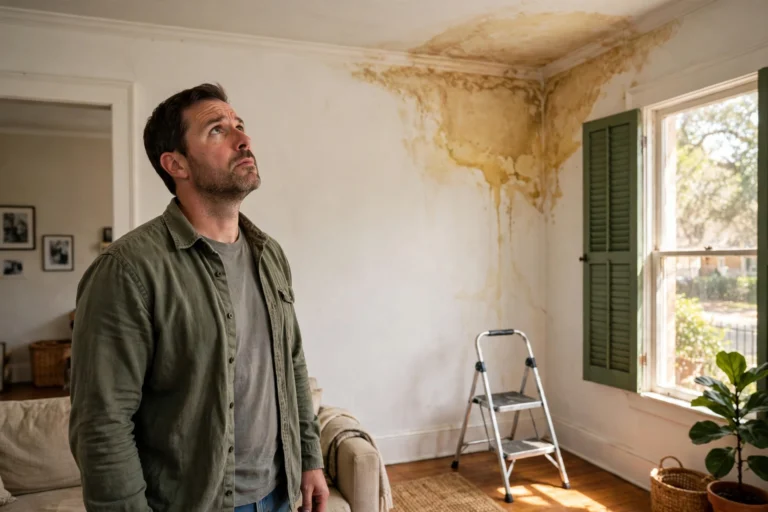
Gravity pulls escaping water down through floor seams, the subfloor and the spaces between joists until it reaches the back of the drywall ceiling below. That is why the first sign is often a brown stain or a slow drip in a downstairs room, while the bathroom upstairs still looks dry.
A slow leak can run for weeks or months behind tile or under a vanity before it becomes visible. These spots drain away from sight instead of pooling on the floor where you would notice them. By the time a stain appears, the wood under the toilet or tub has often been soaking up water for a long time. Treat any new ceiling stain as an active leak until you prove otherwise.
Many two-story New Orleans homes were built before modern waterproofing standards, so small seal failures turn into ceiling damage faster than homeowners expect. Showers are forecast for Monday after last week’s cold front — if a stain grows on a dry day, the bathroom above is the prime suspect, not the roof.
What are the warning signs of an upstairs bathroom leak?
Check the bathroom and the room below it for these signs:

- A brown or yellow stain on the ceiling below the bathroom, especially one that grows or darkens after showers or flushes.
- A soft or spongy spot on the bathroom floor near the toilet or tub, or tiles that feel loose.
- A musty smell in the bathroom or the room below, even when nothing looks wet.
- Peeling paint or bubbling wallpaper on the ceiling or the wall below the bathroom.
- A toilet that rocks when you sit on it, or water pooling around its base after a flush.
- Cracked grout or missing caulk where the tub meets the tile, or water on the floor outside the tub after a shower.
- A water bill that climbs for no clear reason, which can point to a supply pipe leaking inside the floor.
A stain that dries and leaves a ring is not proof the leak is gone. Many leaks only show up when one shower runs long or when it rains hard. If the stain comes back or a musty smell starts, treat it as an active leak. For more on what wall stains mean, see our guide to the signs of water damage in walls.
What should I do first when I find an upstairs bathroom leak?
Work through these steps in order, and do not skip the safety ones.

- Shut off the water at the source. Turn the fixture’s angle-stop valve clockwise until it stops — on most valves that is a quarter turn, faster than walking to the house main. If you cannot find a fixture valve, or water is still coming, shut off the main water valve for the house.
- Cut power to the room below. If water has pooled near an outlet, a light fixture, a ceiling fan or a plugged-in appliance, cut power at the breaker panel rather than approaching the outlet directly. Never touch a wet light fixture or switch.
- Catch the drip and protect what is underneath. Put a bucket under the lowest point of the drip and move furniture, rugs and electronics out of the way.
- Stay out from under a sagging ceiling. Drywall holding water is heavy and can come down without warning. Do not stand under it to poke it. If the ceiling is bulging badly, a small hole at the lowest point of the bulge lets the water out where you choose — but only do this safely from the side, with a bucket underneath.
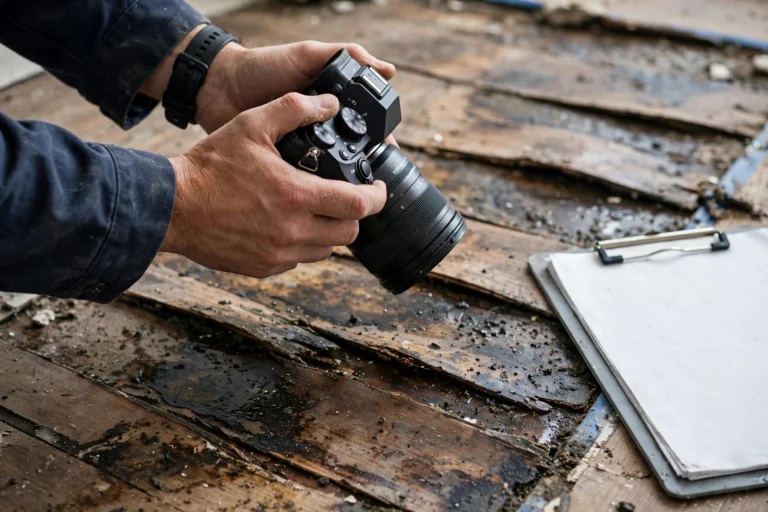
- Photograph everything before you clean. Photograph the pooled water, the fixture you suspect, the stain on the ceiling and anything wet, before you start mopping or moving things. Photos matter for insurance and for the restoration crew.
- Stop using that bathroom until the source is found. If it drips with nothing running in the bathroom, close the toilet valve, then the main valve.
How do I find the source of the leak?
When the drip happens is the best clue you have. Test one fixture at a time and give each about ten minutes, with someone watching the ceiling below.

- Only after showers: the shower or tub — the drain, cracked grout, failed caulk, or water splashing past the door. Check the gaps where the tub meets the tile and look for water on the floor outside the tub.
- Only after a flush: the wax ring that seals the toilet to the floor, or the bolts between the tank and the bowl. A toilet that rocks, or a soft spot around its base, points here.
- After using the sink: the drain under the sink or the supply lines. Look for a wet cabinet floor or drips at the nuts on the supply lines.
- All the time, even overnight: a water supply pipe in the floor or a wall. Shut everything off and check the water meter — if the leak indicator still moves, water is escaping somewhere. Our guide to slab leak signs explains the meter test in detail.
- Only when it rains hard: probably not the bathroom at all. Check upstairs windows and the flashing around the vent pipe on the roof — water can follow a pipe down and appear under the bathroom.
Test in this order: sink, then fill the tub a few inches and let it drain, then run the shower at the tub floor, then at the walls, then flush the toilet a few times. If the ceiling only drips when the shower hits the walls, it is grout or caulk, not a pipe. If it drips while the tub drains, it is the drain.
When should I call a plumber, and when a restoration company?
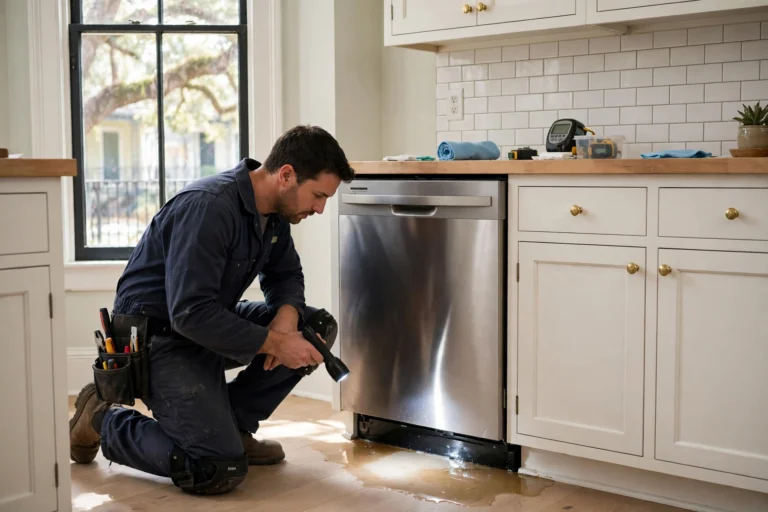
A plumber fixes the fixture itself — the wax ring, the drain, the supply line. Call a plumber first when you know the source and the damage is limited to the fixture.
Call a water damage restoration company as well when the water reached the subfloor, spread to an adjoining room, or is dripping through the ceiling below. Drying is a separate job from plumbing: wet subfloor, insulation and drywall need professional extraction and moisture checks, or the repair fails and mold follows. The EPA advises drying water-damaged areas within 24 to 48 hours to prevent mold growth, and wet ceiling tiles and insulation usually get replaced rather than dried.
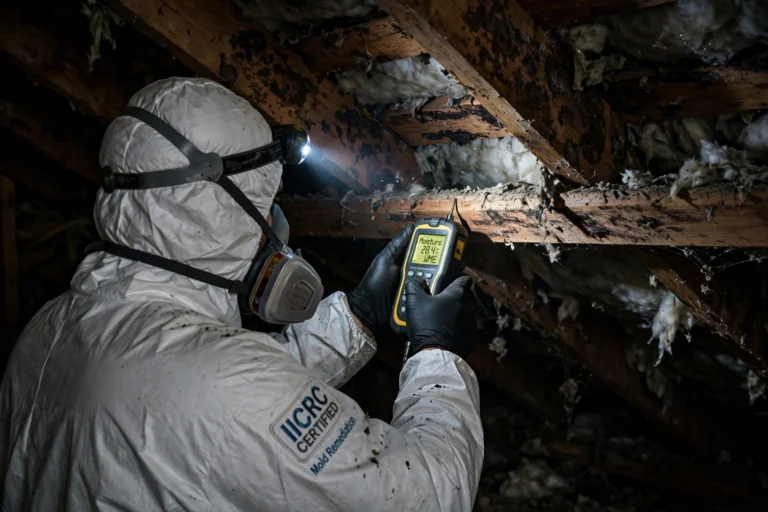
If the ceiling sags badly, the leak ran unseen for days, or water reached breaker boxes or recessed lights, bring in a licensed electrician too. A hidden leak that ran for weeks can also mean mold remediation is needed behind the wall or under the floor — our mold remediation team can check that once the area is dry. For insurance, most standard policies cover sudden and accidental water damage but not damage from a leak that ran for months through poor maintenance — keep your photos and receipts, and report the leak promptly.
How can I prevent an upstairs bathroom leak?
- Re-caulk the tub and shower every year or two, and re-grout cracked tile joints before water gets behind them.
- Check the toilet base monthly. Wipe it dry with paper towels, flush twice, and watch for water bubbling out around the porcelain footprint. Fix a rocking toilet before the wax ring fails completely.
- Replace rubber supply hoses on toilets and sinks with braided steel lines, and replace them every five to seven years. See our guide on washing machine hose burst prevention for the same principle applied to laundry hoses.
- Do not ignore a slow drain. Standing water in a tub or shower puts pressure on seals and drains, and it is often the first sign of a partial blockage.
- Test your sump pump and check the water meter a few times a year, especially before the rainy season — our sump pump failure guide shows a two-minute test any homeowner can do.
Frequently asked questions
Can an upstairs bathroom leak cause mold?
Yes. Mold can start growing within 24 to 48 hours of sustained moisture, according to the EPA. A leak hidden inside a floor or wall cavity stays wet longer, so dry the area quickly and have moisture levels checked before you close the ceiling back up.
How do I know if the leak is from the toilet or the shower?
Watch when it drips. If the ceiling only drips after showers, the shower drain, grout or caulk is the likely source. If it drips after flushes, the toilet wax ring or the tank-to-bowl bolts are the likely source. If it drips all the time, even overnight, suspect a supply pipe.
Is a ceiling stain an emergency?
A stain alone is not always an emergency, but a sagging or bulging ceiling is. Wet drywall can fall without warning, and water near lights or outlets is a shock risk. Shut off the water and the power to that room, stay out from under the bulge, and get help the same day.
Can I just paint over a ceiling water stain?
No. Painting over a stain traps whatever moisture remains underneath instead of removing it. Confirm the surface is fully dry first, fix the source of the leak, and only then prime and paint — a stain-blocking primer is needed, or the brown ring will bleed through.
How much does it cost to fix an upstairs bathroom leak?
It depends on how long the leak ran. A wax ring replacement is a small plumbing job; a leak that reached the subfloor, joists or ceiling below can need drying, drywall replacement and mold checks, which cost far more.
Should I call a plumber or a restoration company first?
Call a plumber to stop the leak at the fixture, and a restoration company if water reached the subfloor or ceiling below. If you are unsure how far the water spread, call the restoration company first — they can check moisture levels and tell you whether the structure needs drying before repairs begin.

One Comment