A clogged French drain shows up as standing water over the drain line, a soggy lawn that stays wet long after rain, or little or no water coming from the outlet during a storm. Check the inlet grate and the outlet before the next rain, and call a local water damage restoration company in New Orleans at (504) 520-4646 if water is pooling against your foundation.
Key takeaways
- A French drain only works if water can get in at the trench, travel through the pipe, and get out at the outlet — a blockage anywhere stops the whole line.
- Standing water directly over the drain line is the clearest warning sign: the system is full and has nowhere to send the water.
- Silt, tree roots, and leaves are the usual culprits in New Orleans clay soil, not a broken pipe.
- Two quick checks — the outlet during rain and a hose test at the cleanout — tell you whether the line is blocked before the next storm.
- Call 811 before you dig anywhere near the line, and get help fast if water is reaching the house.
What does a French drain do — and why does it matter in New Orleans?
A French drain is a gravel-filled trench with a perforated pipe at the bottom. Surface water and groundwater seep through the gravel into the pipe, then flow downhill to a discharge point — a street gutter, a storm drain, a dry well, or a pop-up emitter in the yard. It has no pump and no moving parts. Gravity does the work, which is why slope and a clear outlet matter so much.
In New Orleans, that simple system carries more weight than in most cities. Much of the city sits below sea level, the water table is high, and the clay soil drains slowly on its own. A heavy downpour can drop a large amount of water on a yard in a short time, and there is nowhere for it to go except into the ground or against the house. A working French drain keeps that water moving away from the foundation and out of the crawlspace. When the drain clogs, the water it was supposed to carry sits against the house instead.
What are the signs your French drain is clogged?
Check the yard and the discharge point for these signs:
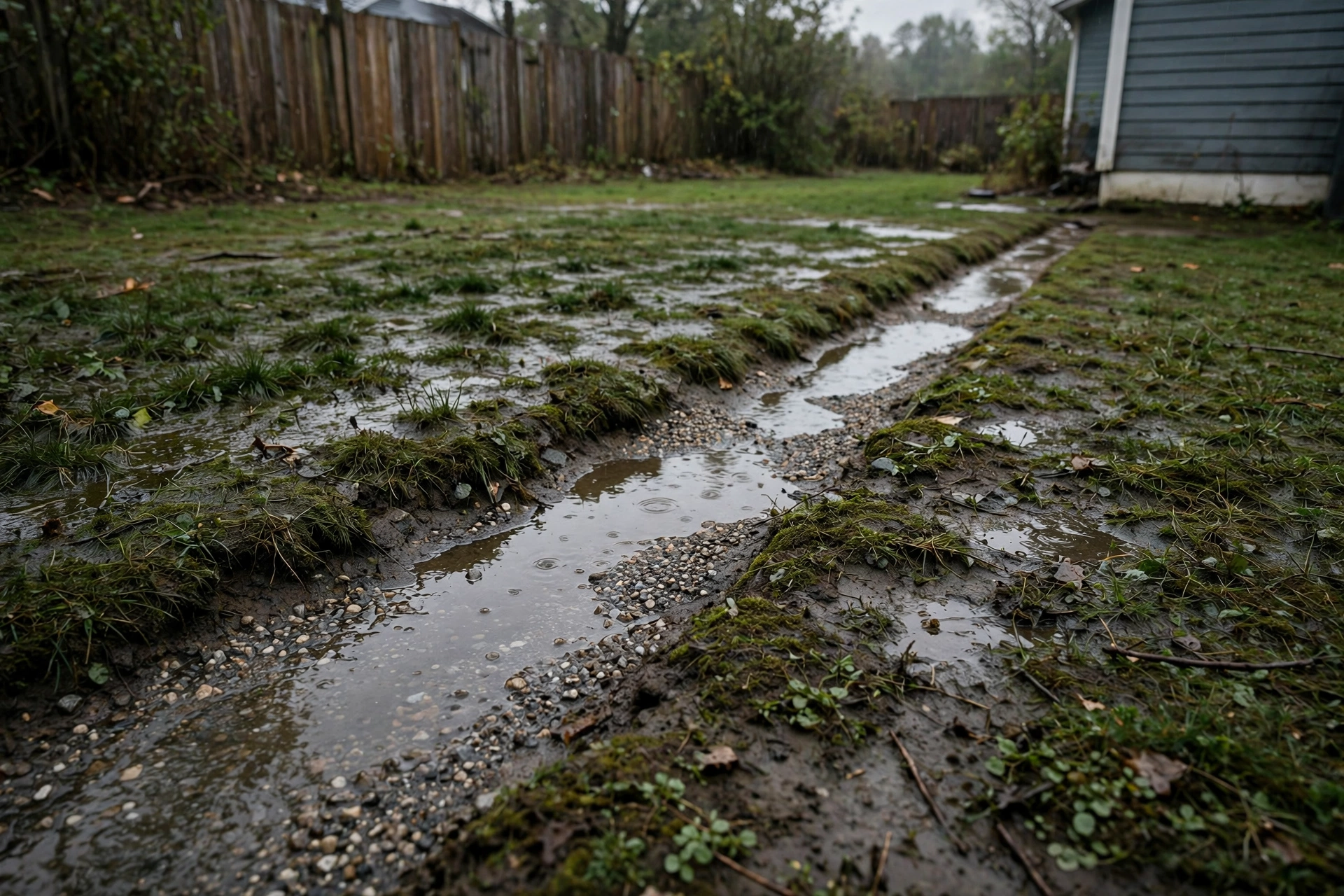
- Standing water over the trench line after rain, especially if it is still there a day later. This is the clearest sign: the pipe is full and the water has nowhere to go.
- A soggy or spongy lawn returning in a spot that used to drain well. If the same patch stays wet after ordinary rain, something has changed underground.
- Little or no flow at the outlet during rain, while the yard is clearly wet. The discharge point should run steadily in a storm.
- Water backing up near the foundation or at the inlet grate, instead of flowing into the trench.
- A musty or sour smell near the drain line, which points to standing water sitting in a clogged section rather than moving through.
- Gurgling or bubbling from a pop-up emitter, or downspouts tied into the system backing up during a storm.
- A sump pump running longer or more often than usual, because the yard water it used to share with the drain is now finding its way inside. Our guide to sump pump failure explains the two-minute bucket test.
No single symptom proves a clog. Judge the pattern: a drain that worked fine for years and now leaves the same spots wet after ordinary rain is more often clogged than broken.
What clogs a French drain in the first place?
- Fine silt and clay. This is the most common long-term cause. Tiny soil particles migrate into the gravel bed over the years, especially where the filter fabric wrap was thin, damaged during installation, or has simply worn out with age. The gravel voids fill up, and water stops reaching the pipe.
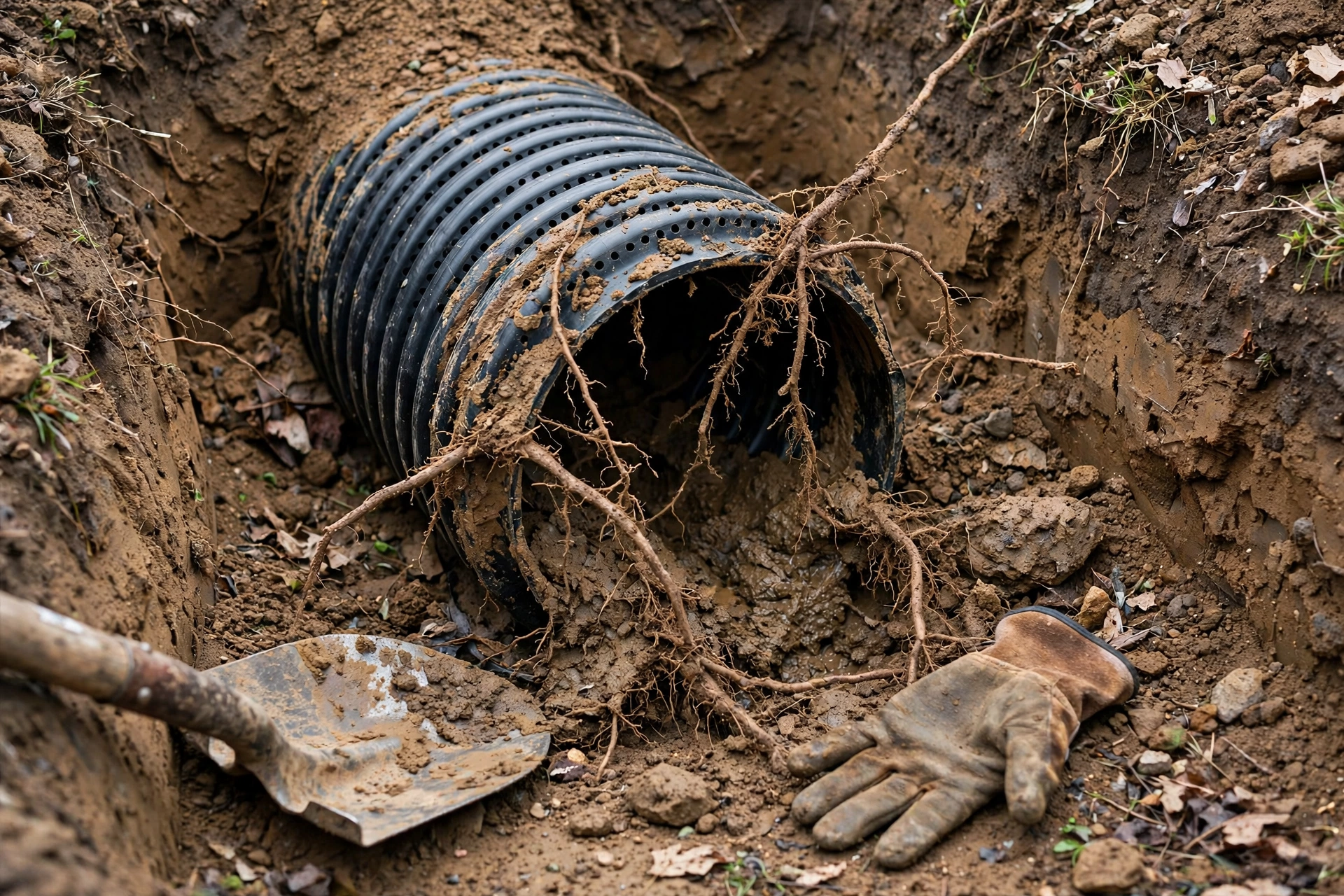
- Tree and shrub roots. Roots chase the moisture inside the pipe and gravel bed, working in through joints and small gaps. Once inside, they thicken and trap silt behind them.
- Leaves, mulch, and grass clippings. Debris at the inlet grate breaks down into sludge that works its way downhill into the pipe.
- A buried outlet. Landscaping is the quiet killer of French drains. A fresh layer of mulch or a regraded bed can bury the discharge point, and the whole line then acts clogged even though the pipe itself is clean.
- Settling and crushing. Soil over the trench settles over time and can seal the surface so water never reaches the gravel. Heavy vehicles parked over the line can crush corrugated pipe outright.
- Pipe collapse or separation. Older clay or thin-wall pipe can crack, sag, or pull apart at a joint, losing the slope the system depends on.
How can I test my French drain before the next rain?
Rain is forecast for Thursday night into Friday in New Orleans, so this is the week to check. Two simple tests tell you most of what you need to know.
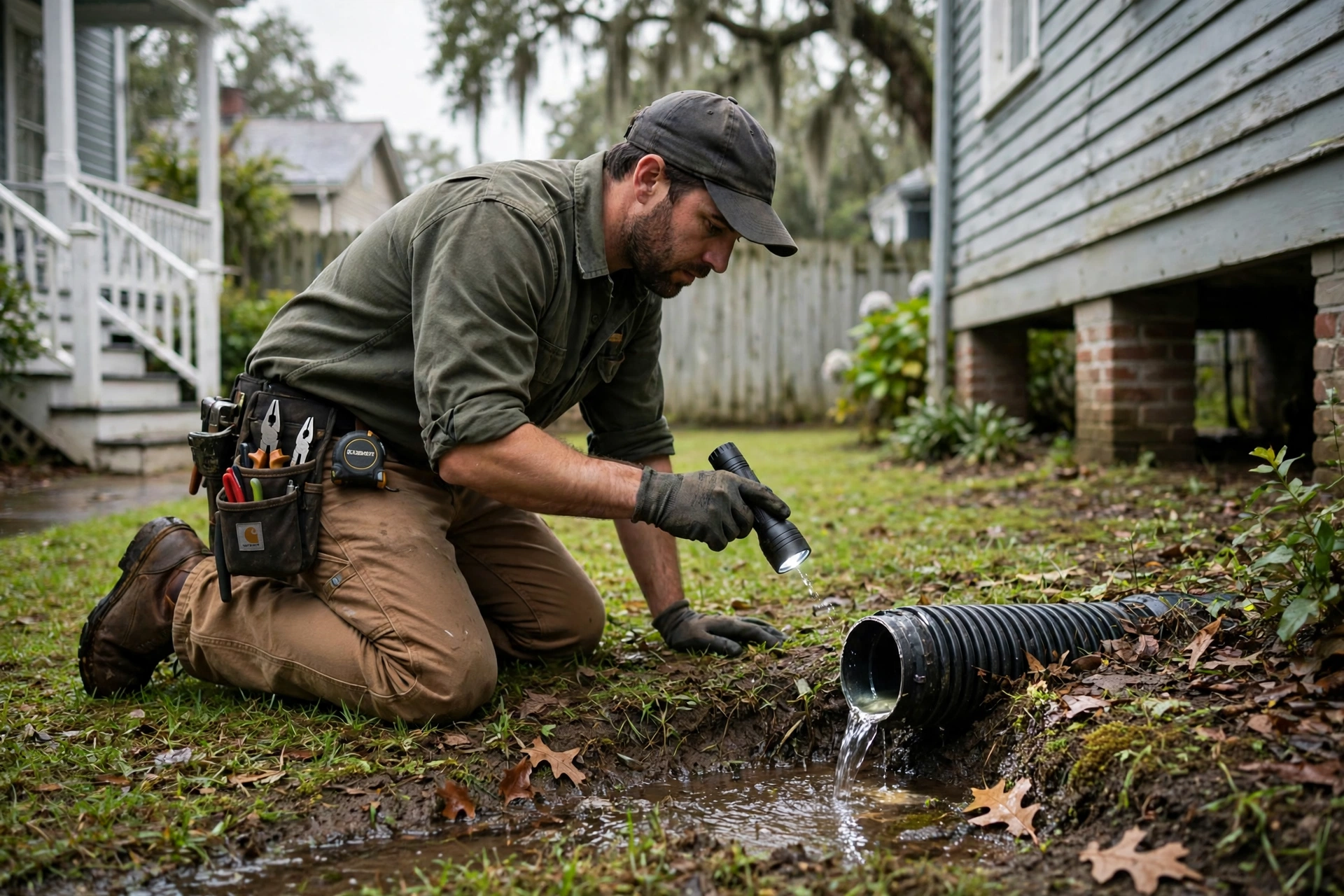
Test 1: watch the outlet during rain. Stand at the discharge point while it is raining. A working drain runs steadily. A dribble, or nothing at all while the yard is wet, points to a blockage somewhere between the trench and the outlet. Also check the pop-up emitter if you have one: it should lift and release water smoothly. Gurgling or sputtering means a backup.
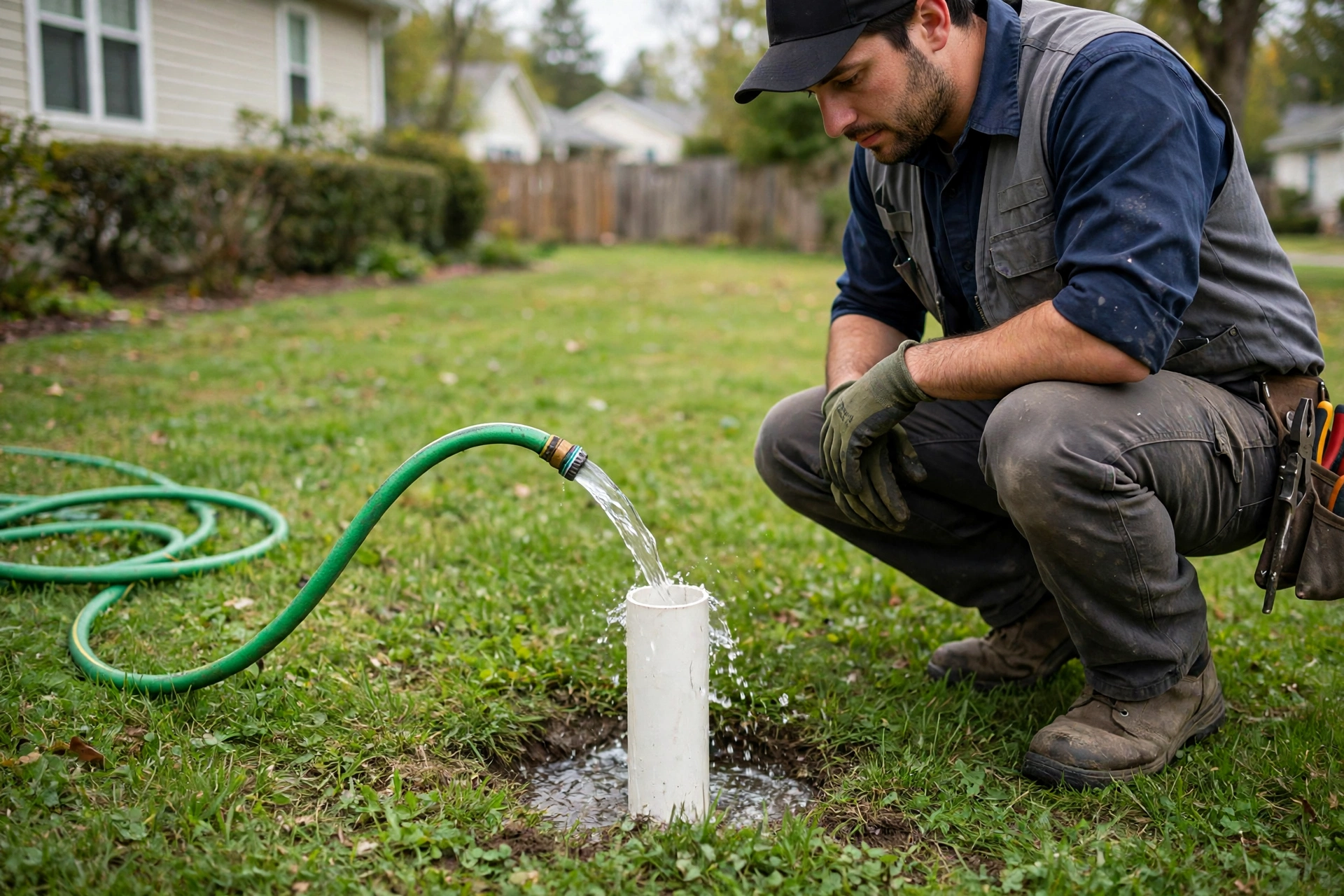
Test 2: the hose test. On a dry day, run a garden hose into the cleanout or the inlet end of the drain for a few minutes, with someone watching the outlet. On a short run, water should arrive within a few minutes. If it arrives slowly, or not at all, the blockage sits between the two points. Start at the outlet end — it is the most overlooked spot, and it is where a surprising number of clogs live.
While you are out there, lift the inlet grate and look inside. Leaves and mulch packed against the grate are a five-minute fix. And if you ever need to dig to find the pipe, call 811 first — Louisiana One Call marks buried utilities for free, and it is not optional before you put a shovel in the ground.
What should I do first if my French drain is clogged?
Work through these steps in order, and do not skip the safety ones.
- Clear the inlet grate and the outlet. Pull leaves, mulch, and grass away from both ends. This alone fixes a surprising number of “clogged” drains.
- Flush the line with a garden hose. Feed the hose into the cleanout and push water through toward the outlet in short bursts, letting it drain between bursts. Loosened silt will wash out at the discharge point.
- Snake the line from a cleanout. A drain auger can clear roots and packed debris you can reach. Work from the cleanout toward the outlet, not the other way round.
- Do not dig up the trench on a guess. Call 811 before any digging, and do not excavate a line you have not located. A wrong guess costs a lawn and still leaves the clog in place.
- Know when to stop. If flushing does not restore flow, or the same spot clogs every year, the problem is usually filter fabric failure, a crushed pipe, or a lost slope — all of which need a professional diagnosis, not another flush.
- Act fast if water is reaching the house. If water is pooling against the foundation or getting into the crawlspace, get the water out and the area dried. Mold can start growing within 24 to 48 hours of sustained moisture, so drying matters as much as clearing the drain — a water damage restoration crew can check moisture levels and dry the structure, and mold remediation may be needed if the damp has been sitting unseen.
When is it a clog — and when is it something worse?
Not every French drain failure is a clog, and cleaning only fixes blockages. Check the pattern before you commit to a fix.
- It only fails in extreme storms. The system may be undersized for the roof and yard area it serves, or the soil itself may be overwhelmed. Cleaning will not change that.
- The outlet runs strong but the yard still floods. The drain may be in the wrong spot, too shallow, or the water may be coming from somewhere else entirely — roof runoff, a neighbour’s grade, or a low spot the trench was never meant to serve.
- The drain used to work, but landscaping changed. New mulch beds, edging, or a regraded yard can bury an outlet or change how water reaches the trench.
- Standing water never drains, even in dry weather. That points to a high water table or a grading problem rather than a pipe problem.
These cases need a drainage diagnosis — where the water comes from, where the pipe runs, and where it is supposed to go — before any repair. Guessing at the cause and re-trenching is the expensive way to learn the drain was never the problem.
How do I keep a French drain working year after year?
- Flush it once a year, and inspect the inlet and outlet before and after the wettest season. A drain that clogs every year has a filter problem, not a cleaning problem.
- Keep mulch and leaves off the outlet. Mark the discharge point with a small stone or stake so landscapers do not bury it.
- Keep heavy vehicles off the line. Parked cars and equipment crush pipe and compact the soil over the trench.
- Walk the line after a big storm. Five minutes, once, after heavy rain: check the outlet flow, look for new wet spots along the trench, and note anything that changed. Catching a slowdown early keeps the fix a weekend job instead of an excavation.
- Watch what the water does, not just the drain. If the yard floods in a new place after a storm, the drainage path has changed — a buried outlet, a shifted downspout, or new grading upstream. Our guide to the signs of water damage in walls shows what to look for inside the house when outside drainage starts failing, and storm damage restoration covers the bigger picture when heavy rain overwhelms a property.
Frequently asked questions
How do I know if my French drain is clogged?
Standing water over the drain line, a soggy lawn returning in a spot that used to drain, and little or no flow at the outlet during rain are the clearest signs. Confirm it with the hose test: run water into the cleanout and watch the outlet. If the water arrives slowly or not at all, the line is blocked between the two points.
Can I unclog a French drain myself?
Often, yes. Clearing the inlet grate and the outlet, flushing the line with a garden hose from the cleanout, and snaking out roots you can reach will fix most clogs. Call a professional if flushing does not restore flow, the same spot clogs every year, or the pipe is crushed or collapsed. Call 811 before you dig anywhere near the line.
How often should a French drain be cleaned?
Flush it once a year and inspect the inlet and outlet before and after the wettest season. Check the outlet again after any major storm. A drain that needs cleaning every year has a filter or design problem, not a cleaning problem.
Why does my French drain only fail in heavy rain?
It may be undersized for the area it serves, or the soil may be overwhelmed faster than the pipe can carry water away. Check the outlet during the storm: if it runs strong while the yard still floods, the problem is placement, slope, or grading — not a clog.
What happens if a clogged French drain is ignored?
Water pools against the foundation and can seep into the crawlspace, the sump pump works harder, and damp soil against the house feeds mold growth — mold can start within 24 to 48 hours of sustained moisture. If water is already reaching the house, get the area dried by a water damage restoration crew before the damage spreads.