
A toilet leaking at the base in New Orleans is usually caused by a failed wax ring seal or a loose supply line. Shut off the valve behind the toilet, dry the floor, and stop using it until you find the source. If the floor feels soft, call Property Restoration New Orleans at (504) 520-4646.
Key takeaways
- Water that appears only after a flush usually points to the wax ring seal under the toilet.
- Water that appears all the time, even without flushing, usually points to the supply line or shutoff valve.
- Never caulk around the base to hide the leak; it traps water under the toilet and rots the floor.
- A soft or spongy floor around the toilet means the subfloor is already wet and needs a professional drying check.
- Treat water from the bowl side as unsanitary: wear gloves, disinfect the area, and wash towels on a hot setting.
How can you tell where the water is coming from?
Do not guess. The toilet, the supply line, the tank, and plain condensation can all leave water in the same spot. Wipe the toilet, supply line, valve, tank, and floor completely dry, then watch where new water appears first.
If the puddle only returns after a flush, the seal between the toilet and the drain is the prime suspect, because water only passes that seal when the bowl drains. If water appears without anyone flushing, the supply line or valve is leaking, because that pipe stays under pressure all day and night.
A food coloring test can confirm a seal leak. Add a few drops to the bowl water and flush. Colored water around the base means the water is escaping from the bowl side. In warm, humid New Orleans weather, condensation is also a suspect: cold water sweats on the tank and drips to the floor. If the tank feels wet all over on a hot day, better ventilation often solves it. Condensation never explains water that appears only after a flush, or a floor that feels soft.

What usually causes a toilet to leak at the base?
The most common cause is a failed wax ring, the seal between the toilet and the drain flange in the floor. Wax dries out over the years, and a toilet that rocks even slightly will break the seal. Once it fails, every flush pushes water past it and under the toilet. A drain blockage below the toilet can do the same thing by pushing pressure back up against the ring.
Loose bolts or a damaged flange are next. The bolts can work loose, and a flange that sits below the finished floor or has a crack will not hold a seal even with a new wax ring. If the toilet rocks when you sit on it, the bolts or the flange need attention first. The supply line and shutoff valve are the third cause: the flexible line that feeds the tank can drip slowly, and the water runs down the back of the toilet to the floor. Because this line is always under pressure, the leak never stops on its own.
Condensation is the fourth cause, and the only one that is not a leak at all. The fifth is a crack in the tank or the bowl. A hairline crack can weep water slowly and will not heal; a cracked toilet needs replacing, not resealing.

What should you do right now?
First, stop the water: turn the shutoff valve behind the toilet clockwise, then flush once to empty the tank. If the valve will not close, use the main shutoff for the house. Second, protect yourself: treat water from a failed seal as unsanitary, wear gloves, soak up the water, disinfect the area, and wash wet towels on a hot setting. Third, dry everything, because a dry floor is the only way to see where new water starts. Fourth, stop using that toilet, since every flush pushes more water past a bad seal and into the floor. Fifth, take photos of the floor, the base of the toilet, and any stain on the ceiling below.
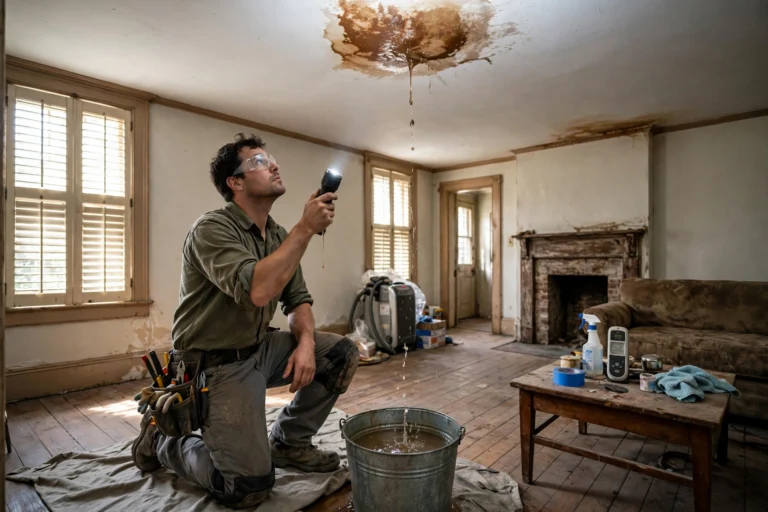
If the toilet sits on an upper floor, check the ceiling in the room below as well. A stain or a drip there means water has already traveled through the floor, and the job is bigger than a new seal. Our guide to an upstairs bathroom leak covers what to check in that room below.
What floor damage should you look for?
A base leak is slow, and slow leaks do the most harm because nobody sees them. Water that escapes at the base soaks into the subfloor, where it rots wood, loosens flooring, and feeds mold. By the time the damage shows on the surface, the floor underneath has often been wet for weeks.
Press the floor around the toilet with your foot. If it feels soft, spongy, or springy compared with the floor a few feet away, the wood below is wet. Look for vinyl lifting at the seams, tile grout gone dark, and baseboards swollen or pulling away from the wall. In an upstairs bathroom, look for a stain or a sag on the ceiling below. A sewage smell is another warning, because a failed seal also lets sewer gas seep into the room.
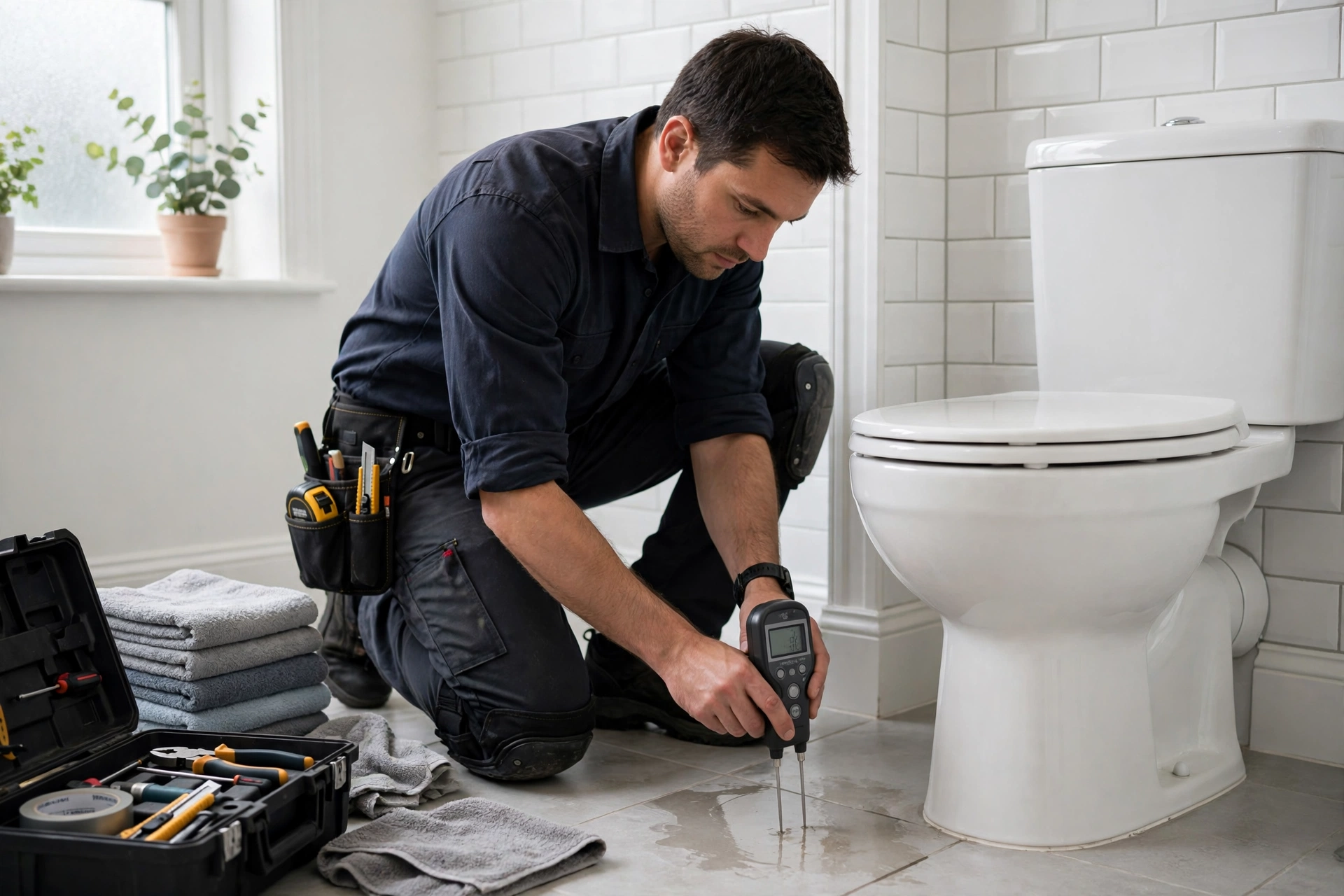
A moisture reading tells the real answer. We check the floor around the toilet, the base of the walls, and the ceiling below with meters, because water often spreads farther than the visible damage suggests. If the floor is damaged, our water damage restoration team can dry the subfloor and check for mold before the floor is rebuilt. The hidden water damage signs guide lists the other quiet warnings to watch for around the house.
What should you never do?
Do not run a bead of caulk around the base and call the job done. It makes the puddle disappear, but caulk can mask an active leak and trap water underneath, where it quietly rots the subfloor and grows mold. The right fix is to pull the toilet and replace the wax ring. Do not keep flushing a toilet that leaks at the base, and do not cover the area with a rug to hide the damp. Do not overtighten the base bolts to stop a rocking toilet either; overtightening can crack the porcelain, which turns a seal repair into a toilet replacement.
When should you call a professional?
Call a plumber the same day if the floor around the base feels soft, the toilet is upstairs, the leak returns after a new wax ring, the flange is cracked or sits below the finished floor, or the home has only one toilet. A plumber can reset the toilet on a fresh seal, repair the flange, and replace a cracked bowl or tank.
Call us at Property Restoration New Orleans on (504) 520-4646 if the floor is soft or spongy, water reached the ceiling below, the leak has been going on for a while, or a damp smell has settled into the bathroom. A slow base leak often leaves mold behind the baseboards and under the floor, and our mold remediation team can check those hidden spots. The signs of water damage in walls guide shows what to look for when water has traveled beyond the bathroom.
A toilet leaking at the base is a small problem while the floor is still solid. Find the source with the dry-and-watch test, stop the water, and fix the seal before the floor underneath pays for the delay.
Frequently asked questions
Why is my toilet leaking at the base only when I flush?
Water that appears only after a flush usually means the wax ring seal under the toilet has failed, because water only passes that seal when the bowl drains. A supply line leak shows up all the time, even without flushing.
Can I just caulk around the base to stop the leak?
No. Caulk traps water under the toilet against the subfloor and hides the damage while the wood quietly rots. The correct fix is to pull the toilet and replace the wax ring so it seals properly at the flange.
How do I know if the floor under my toilet is damaged?
Press the floor around the toilet. If it feels soft or spongy, the vinyl is lifting, the grout has gone dark, or there is a stain on the ceiling below, the subfloor is wet. A moisture meter reading confirms how far the water has spread.
Is water from a toilet base leak dangerous?
Water from the bowl side is unsanitary. Wear gloves, disinfect the area, stop using the toilet until the seal is repaired, and wash wet towels on a hot setting. A failed seal can also let sewer gas into the bathroom.
When should I call a professional about a toilet leak?
Call a plumber the same day if the floor feels soft, the toilet is upstairs, the leak returns after a new wax ring, or the flange is cracked. Call a restoration team if water reached the ceiling below or a damp smell has settled in, because the subfloor may need professional drying.