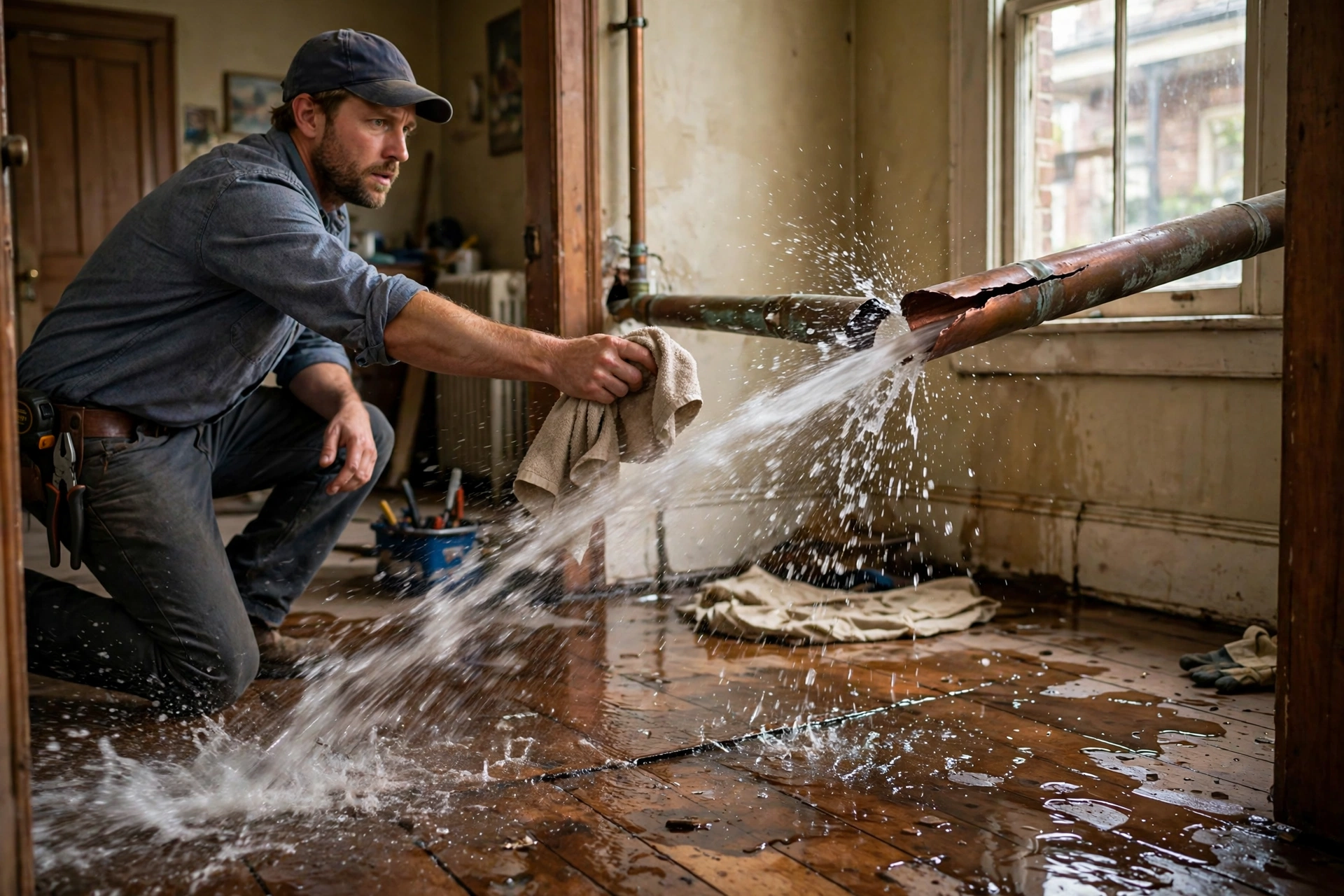
If a pipe bursts in your New Orleans home, shut off the main water valve first, then cut power to any wet areas, open the lowest cold tap to drain the lines, and call a licensed plumber. Do not wait to find the split pipe: every minute the water runs adds to the flooding. Get Restoration New Orleans responds 24/7 at (504) 520-4646 if water has already reached floors, walls or ceilings.
Key takeaways
- The main water valve is always the first step — find it before an emergency, not during one.
- Never step into standing water near outlets, appliances or the electrical panel while the power is still on.
- Opening the lowest cold tap after shutting off the water drains the lines and takes pressure off the break.
- Turn the water heater off once the supply is shut, so it does not run dry or overheat.
- Photograph everything before you clean up: your insurer will want a record of the damage as it happened.
- Water left standing for a day or two can start mould, so drying should begin the same day.
Why do pipes burst in New Orleans?
New Orleans does not get long, deep freezes, but its homes are still at risk when a cold snap arrives. Many houses here are raised on piers, with water pipes running through crawl spaces and along outside walls where cold air reaches them easily. A pipe does not need days of sub-zero weather to freeze: one cold night is enough for the water inside an exposed section to turn to ice, expand and split the pipe.
Age adds to the risk. Older copper and galvanised pipes corrode from the inside over decades, and a thin, weakened spot is the first place to give way under pressure. High water pressure, a sudden freeze-thaw cycle and pipes that were never insulated all make a burst more likely. The first real cold front of the season is the danger point, because it catches pipes that have sat warm and unprotected all year.
A cold front is moving through New Orleans this weekend, Saturday 7 November, with Sunday morning lows in the 40s across the area — the coldest mornings in a couple of weeks. That is exactly the weather that turns a frozen pipe into a burst one, and the reason to know your shut-off valve before you need it.
What should you do first when a pipe bursts?
Work in this order. The first three steps stop the damage; the rest protect your home and your claim.
- Shut off the main water supply. Turn the valve clockwise until it stops, or turn a lever handle a quarter-turn until it sits across the pipe. This is the single most important step, and it comes before anything else.
- Cut power to wet areas. At the breaker panel, switch off the circuits covering any room where water has reached outlets, switches or appliances. If the panel itself is wet, or you cannot reach it without walking through water, stay out and call an electrician or your power company.
- Drain the lines. Open the lowest cold-water tap in the house and flush each toilet once. This drains the water still sitting in the pipes and takes pressure off the break, so less water leaks out and a second pipe is less likely to split.
- Turn off the water heater. With the supply off, switch an electric heater off at its breaker, or turn a gas heater’s control to “Pilot” or “Off”. A heater running with no water flowing through it can overheat or be damaged.
- Move belongings out of the water. Lift furniture, rugs, electronics and valuables to a dry room. Put aluminium foil or plastic under furniture legs you cannot move, so wet carpet does not stain them.
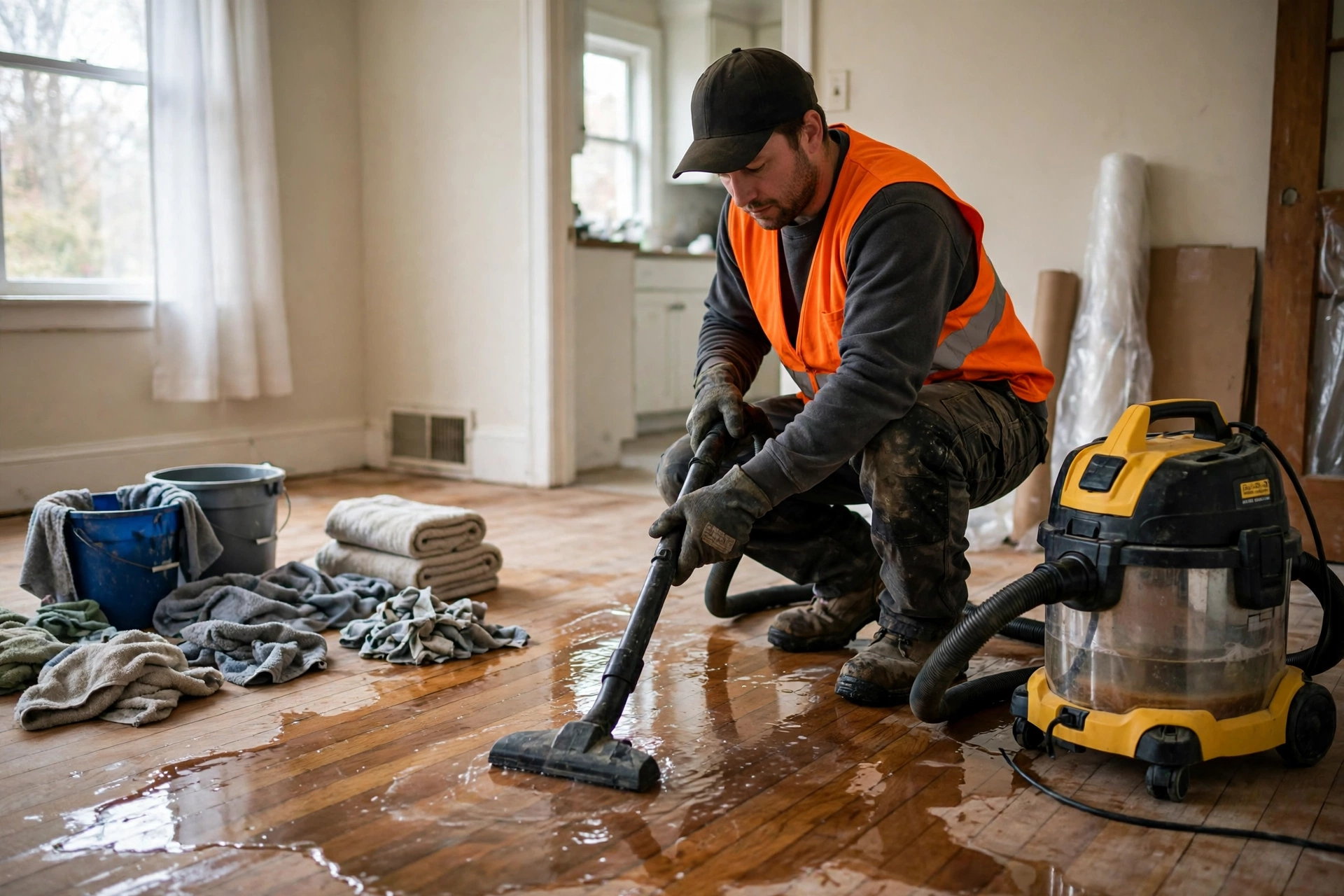
- Start removing the water. Mop, towel or use a wet-dry vacuum on standing water, working from the edges of the room toward the centre. Open windows and run fans if the weather allows.
- Call a licensed plumber, then document the damage. Tell the plumber the water is already off. Before anything is moved or thrown away, photograph and video every wet room, the burst pipe itself and any damaged belongings.
Where is the main water shut-off valve in a New Orleans home?
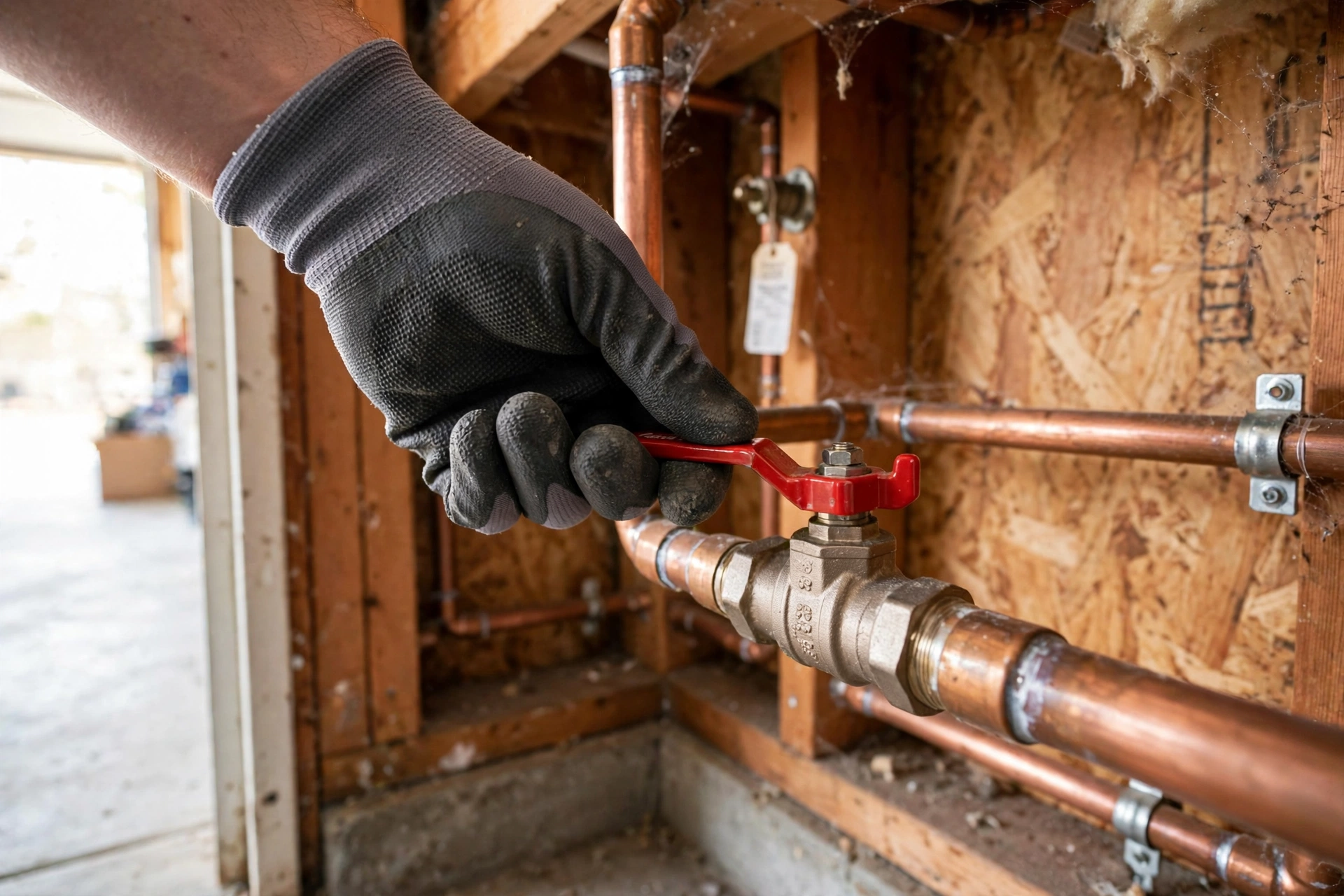
The valve sits where the main water line enters the house. In New Orleans, that is usually near the water meter at the street side of the property, in a utility closet, in the garage, or under the raised house in the crawl space. Look for a round wheel handle or a lever handle on the pipe.
A round wheel handle turns clockwise until it stops. A lever handle, or ball valve, is off when the lever sits crosswise to the pipe — a quarter-turn from its normal position. If you have never touched yours, test it now, while nothing is leaking: turn it off, check that the taps run dry, then turn it back on. A valve that has not moved in years can stick, and finding that out during a flood is the worst possible time. Make sure everyone in the household knows where it is.
What should you do after the water is off?
Once the flow has stopped and the plumber is on the way, the job shifts from stopping water to limiting what it ruins. Keep moving belongings out of the affected rooms, and lift curtains and low furniture clear of wet floors. Soak up as much water as you can with towels and a wet-dry vacuum, and get air moving through the rooms with fans and open windows.
Photograph everything before you start throwing things away. Take wide shots of each wet room, close-ups of the burst pipe and the water line, and pictures of every damaged item. Keep receipts for any emergency work, including the plumber’s call-out. If you plan to claim on insurance, this record is what the claim is built on, and our guide to a water damage insurance claim explains what to document and file.
Do not try to patch the burst pipe with tape or sealant as a permanent fix. A temporary wrap can slow a small leak until the plumber arrives, but it will not hold under pressure and it hides the damage from the person who needs to see it.
When should you call a restoration company?
Call a plumber first, because the pipe itself needs a licensed repair. Call a restoration company as soon as water has reached walls, flooring or ceilings, or if more than a small puddle is standing. Water soaks into drywall, subflooring and insulation fast, and what looks dry on the surface can stay wet underneath for days.
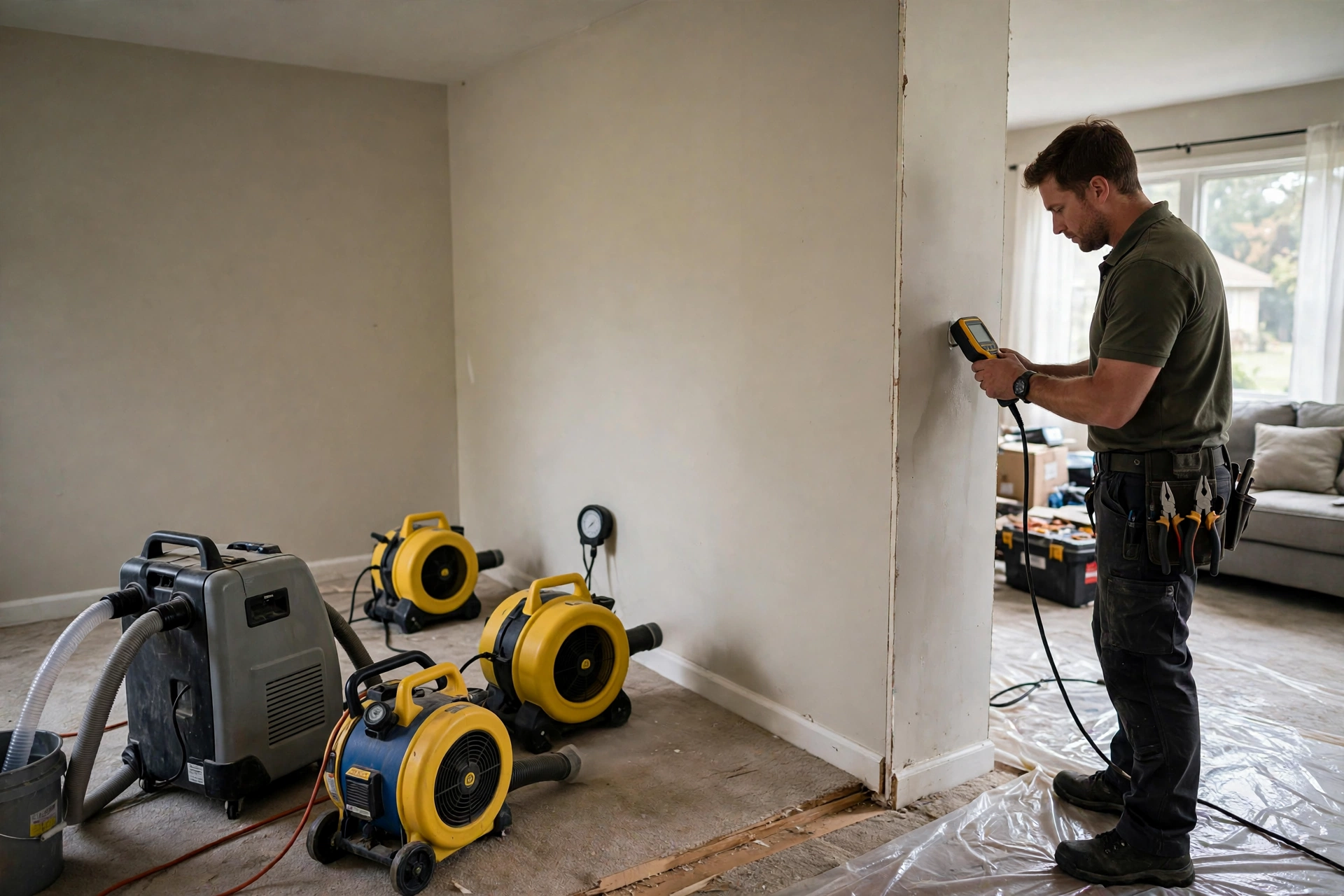
That hidden moisture is the real problem. Wet materials left for a day or two can start mould, and damp drywall and flooring weaken as they stay wet. Professional drying uses moisture meters to find the water you cannot see, then air movers and dehumidifiers to pull it out of the structure. Our water damage restoration page explains how professional drying and repair work, and our guide to how long it takes to dry a house after water damage sets out what the drying process looks like day by day.
If the burst pipe is in or near the water heater, check our guide to a water heater leak as well — a leaking heater follows the same first steps, but it has its own shut-off and safety checks.
How can you stop a pipe bursting again?
Once the repair is done and the house is dry, a few simple steps make a repeat far less likely. Insulate every exposed pipe in the crawl space, attic and garage, and cover outdoor taps before a freeze. During a hard freeze, let a tap drip slightly and keep the heating on, even if you are away for the weekend. Know where your shut-off valve is, and test it twice a year so it moves freely when it matters.
Our full winter checklist, in our guide on how to prevent frozen pipes, covers each of these steps for raised New Orleans homes. Prevention costs far less than a flooded floor — but if a pipe does burst, the first ten minutes decide how bad the damage gets. Shut off the water, make the area safe, drain the lines, and get help on the way. If water has already spread through your home, call Get Restoration New Orleans at (504) 520-4646. The team responds 24/7 across Greater New Orleans.
FAQs
How much water can a burst pipe release?
A surprising amount, very quickly. A burst supply pipe is under mains pressure, so water keeps pouring until the main valve is shut. Even a small split can soak floors, walls and ceilings within minutes, which is why shutting off the water comes before anything else.
Should I turn off the water heater if a pipe bursts?
Yes. Once the main water supply is off, switch an electric water heater off at its breaker, or turn a gas heater’s control to “Pilot” or “Off”. A water heater running with no water flowing through it can overheat or be damaged.
Can I fix a burst pipe with tape or sealant?
Only as a temporary measure until a plumber arrives. Tape, sealant or a pipe repair clamp can slow a small leak, but none of them will hold under mains pressure for long. A burst pipe needs a proper repair or a section replaced by a licensed plumber.
How soon does mould grow after water damage?
Mould can start growing within a day or two on wet drywall, wood and fabric. That is why drying should begin the same day as the burst, not after the weekend. Anything still damp after a day or two should be checked with a moisture meter.
Will my insurance cover a burst pipe?
A sudden, accidental burst is usually covered by a standard homeowners policy, while a slow leak that went unrepaired for months often is not. Every policy is different, so check your own wording, document the damage with photos before cleanup, and keep receipts for emergency work.
Who do I call first — a plumber or a restoration company?
A plumber first, to repair or replace the burst pipe. Then call a restoration company if water has reached walls, floors or ceilings, because the drying and repair work is a separate job. If water is spreading fast and you need help right away, call Get Restoration New Orleans at (504) 520-4646.