
Light your first fireplace fire of the season in New Orleans safely by having the chimney inspected first, opening the damper fully, burning only dry seasoned hardwood, keeping a metal screen or glass door closed while the fire burns, and keeping anything that can burn at least three feet away. Never leave a fire unattended and never use gasoline or lighter fluid to start it. If fire or smoke damages your home, Get Restoration New Orleans responds 24/7 at (504) 520-4646.
Key takeaways
- Have the chimney inspected every year before the first fire — creosote buildup is the leading cause of chimney fires.
- Open the damper fully before lighting, and check with a flashlight that it is open and the flue is clear.
- Burn only dry, seasoned hardwood — never treated wood, painted wood, trash or cardboard.
- Keep a metal screen or glass door closed while the fire burns, and keep furniture, stockings and decorations at least three feet away.
- Put ashes in a metal container with a tight lid, outside and at least 10 feet from the house — ashes can stay hot for days.
- Loud cracking, dense smoke and an intense hot smell can mean a chimney fire: get out and call 911.
Why does the first fire of the season carry the most risk?
A fireplace that has sat unused since spring is not the same fireplace you left behind. Over the summer, creosote — the black, tar-like residue left by wood smoke — has been sitting in the flue, and birds or squirrels may have nested in the chimney. A damper can stick shut. Leaves and debris can collect above the firebox. The first fire of the season meets all of that at once, which is why fire services treat the first lighting as the riskiest fire of the year.
The timing fits New Orleans right now. After a cool weekend, Monday 9 November brings a dry, partly cloudy day with a high near 73°F, and a strong cold front arrives Thursday, bringing the coldest air of the season so far — Friday and Saturday morning lows in the 40s on the South Shore and into the 30s on the North Shore. Fireplaces across the city are about to be lit for the first time in months, and the National Weather Service notes that the dry air and ongoing drought conditions raise the fire weather risk through Tuesday.
Heating fires are common in this season. According to the US Fire Administration, 77% of residential heating fires are confined fires — they stay contained to a chimney, flue or fuel burner. That sounds reassuring until you remember the other 23%, and that the Chimney Safety Institute of America notes the majority of chimney fires go undetected, quietly damaging the flue and the structure around it before anyone notices.
How do you check the chimney before the first fire?
Start with a look, not a match. The National Fire Protection Association’s NFPA 211 standard calls for chimneys, fireplaces and vents to be inspected at least once a year, and the US Fire Administration recommends having heating equipment and chimneys cleaned and inspected each year by a professional. Early November, before the fireplace becomes a nightly habit, is the right time to book one.
Between professional visits, you can check a few things yourself with a flashlight. Open the damper fully before you light anything — shine the light up into the fireplace to confirm it is open, because trying to open it after the fire is lit is much harder to do safely. Look up the flue for anything that does not belong: sticks, leaves or nesting material. If you see debris, do not try to burn it out — call a sweep.
Look at the walls of the firebox and the flue. Creosote starts as soft, powdery soot, then turns crusty and flaky, and finally becomes a hard, glazed tar that looks almost like a black mirror. Every form is highly combustible. Chimney professionals use a simple rule: have the chimney swept when soot or creosote reaches about one-eighth of an inch of buildup on the flue walls, and sooner if you see any glaze. A layer the thickness of a pencil lead or less is enough to fuel a chimney fire that can exceed 2,000 degrees.

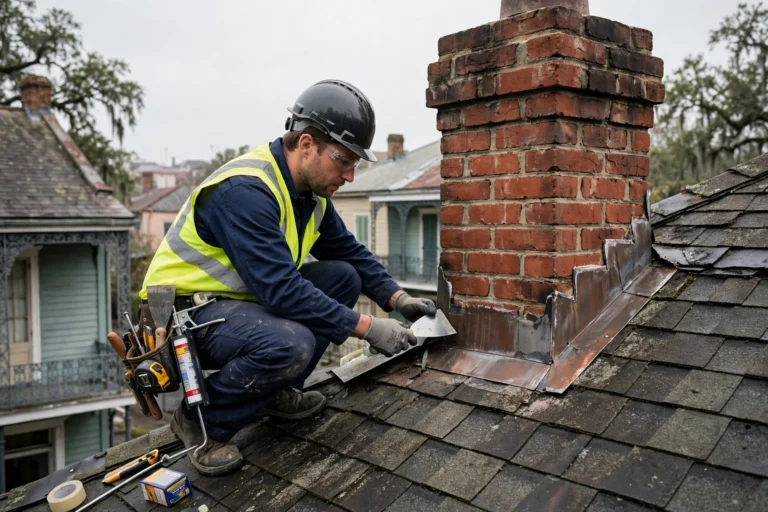
Our guide to a chimney sweep explains what a professional cleaning covers, and if the inspection finds cracked flue tiles or damaged masonry, our chimney repair page explains how repairs are handled.
What wood should you burn — and what should never go in?
Burn only dry, seasoned hardwood such as oak or hickory. Seasoned wood has been split and dried for months, so it burns hotter and cleaner. Unseasoned or green wood produces cooler smoke, and cooler smoke is exactly what speeds up creosote buildup in the flue. A simple test: seasoned wood sounds hollow when two pieces are knocked together, and the ends show cracks.
Never burn treated or painted wood, plywood, or particle board — they release toxic chemicals when burned. Never burn household trash, wrapping paper or cardboard boxes; they burn fast, throw sparks up the chimney, and can send burning paper out of the flue. And never use a flammable liquid to start a fire. Gasoline, lighter fluid and kerosene in a fireplace are a fast route to an explosion or a fire that escapes the firebox.
Store firewood outside, off the ground and away from the house, and bring in only what you plan to burn that evening. A stack of kindling next to the fireplace is fuel sitting beside the fire.
How do you build a safe fire?
Open the damper fully first, then build a small fire and let it grow — never overload the firebox to make a fire last longer. Overloading is one of the habits the Chimney Safety Institute of America links to faster creosote buildup, because a smouldering, air-starved fire makes cooler smoke.
Keep a sturdy metal mesh screen or glass doors closed while logs burn. The screen catches sparks and embers that would otherwise land on the rug or the furniture. Keep anything that can burn at least three feet from the fireplace: furniture, blankets, stockings, decorations and the stack of kindling. That three-foot rule is the same one fire services repeat for space heaters — our space heater safety guide covers it in detail.
Never leave a fire unattended, and never go to bed with a fire still burning. Keep children and pets well back from the hearth, and teach everyone in the house that the fireplace is not a place to play. Before the season starts, test your smoke alarms and carbon monoxide alarms — our carbon monoxide safety guide explains where detectors belong and what the warning signs of CO poisoning are.

What are the warning signs of a chimney fire?
A chimney fire does not always announce itself with flames. The Chimney Safety Institute of America describes the signs during an active chimney fire as loud cracking and popping, dense smoke and an intense, hot smell — a sound like a freight train is sometimes reported. Afterwards, the signs include puffy or honeycombed creosote inside the flue, warped metal in the damper or flue, and cracked flue tiles.
If you suspect a chimney fire, get everyone out of the house and call 911 from outside. Do not try to put it out yourself, and do not open the damper wider — that feeds it air. Close the fireplace doors or screen if you can do so safely on your way out, but getting out comes first.
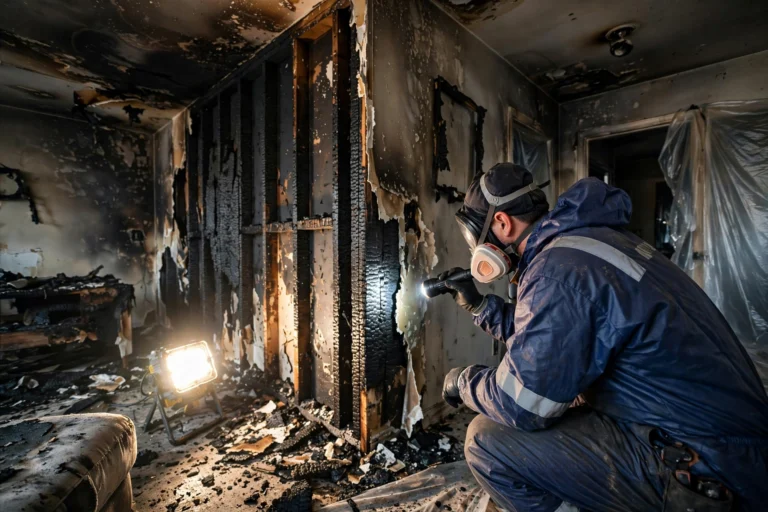
Even a small chimney fire can crack the flue lining, and a cracked flue lets heat and smoke reach the wooden structure of the house. After any suspected chimney fire, have the chimney inspected before you light another fire. If fire or smoke damages your home, our fire and smoke damage restoration page explains how professional cleanup works, and our guide to smoke damage cleanup sets out what to do in the first hours after a fire.
How do you handle ashes safely?
Ashes are the quiet hazard after the fire goes out. Embers buried in ash can stay hot for days, and every year they start fires in trash cans, garages and porches. Let ashes cool in the fireplace, then scoop them into a metal container with a tight-fitting lid and place it outside, at least 10 feet from the house, following US Fire Administration guidance. Never put ashes in a paper bag, a cardboard box or a plastic bin, and never store the container on a wooden deck or in the garage.
Keep the metal container away from the house until you are certain the ashes are fully cold — a few days, not a few hours. When you finally dispose of them, wet the ashes down first. The same rule applies to ash from a fire pit or an outdoor chiminea.
What about gas and electric fireplaces?
Gas fireplaces need attention too. Have a gas fireplace serviced by a qualified professional every year: a technician checks the burner, the pilot assembly and the venting, and looks for soot buildup that signals incomplete combustion. If you see soot on the glass or the logs, or the flames look yellow and lazy instead of blue at the base, call for service before using it again.
Electric fireplaces do not burn fuel and need no chimney, but they still deserve a quick check before regular use — dust the vents, check the cord for damage, and keep the heater outlet clear of curtains and furniture. And whatever type of fireplace you have, the smoke and carbon monoxide alarms still need testing before the season starts.

A first-fire checklist for New Orleans
Chimney inspected this year, damper open, flue clear, seasoned wood only, screen closed, three feet of clear space, alarms tested, ashes in a metal container outside. That checklist takes an evening to work through and covers nearly every fireplace fire. With the coldest mornings of the season arriving Friday, it is worth doing before the first fire, not after it. If fire or smoke does damage your home this winter, call Get Restoration New Orleans at (504) 520-4646. The team responds 24/7 across Greater New Orleans.
FAQs
How often should a chimney be inspected in New Orleans?
At least once a year, before the first fire of the season. The NFPA 211 standard calls for annual inspection of chimneys, fireplaces and vents, and the US Fire Administration recommends yearly cleaning and inspection by a professional.
How do I know if my chimney needs sweeping?
Have it swept when soot or creosote reaches about one-eighth of an inch on the flue walls, and sooner if you see any hard, glazed tar — the most dangerous form of creosote. A smoky smell around the fireplace when it has not been lit, or black, shiny deposits in the flue, are also signs it is time.
What wood is safe to burn in a fireplace?
Dry, seasoned hardwood such as oak or hickory. It burns hotter and cleaner and builds up less creosote. Never burn treated or painted wood, plywood, trash, wrapping paper or cardboard, and never use gasoline, lighter fluid or kerosene to start a fire.
Should I keep the fireplace screen closed while a fire burns?
Yes. Keep a sturdy metal mesh screen or glass doors closed while logs burn to catch sparks and embers. Keep furniture, blankets, stockings and decorations at least three feet from the fireplace.
How do I put out a fireplace fire safely?
Let it burn down naturally and never leave it unattended or go to bed with a fire still burning. Spread the embers out to cool, keep the damper open until the fire is completely out, and only close it once the embers are fully cold — closing it too early can push carbon monoxide into the house.
What should I do if I suspect a chimney fire?
Get everyone out of the house and call 911 from outside. Loud cracking and popping, dense smoke and an intense hot smell can mean a chimney fire. Do not try to put it out yourself. Have the chimney inspected before lighting another fire.