
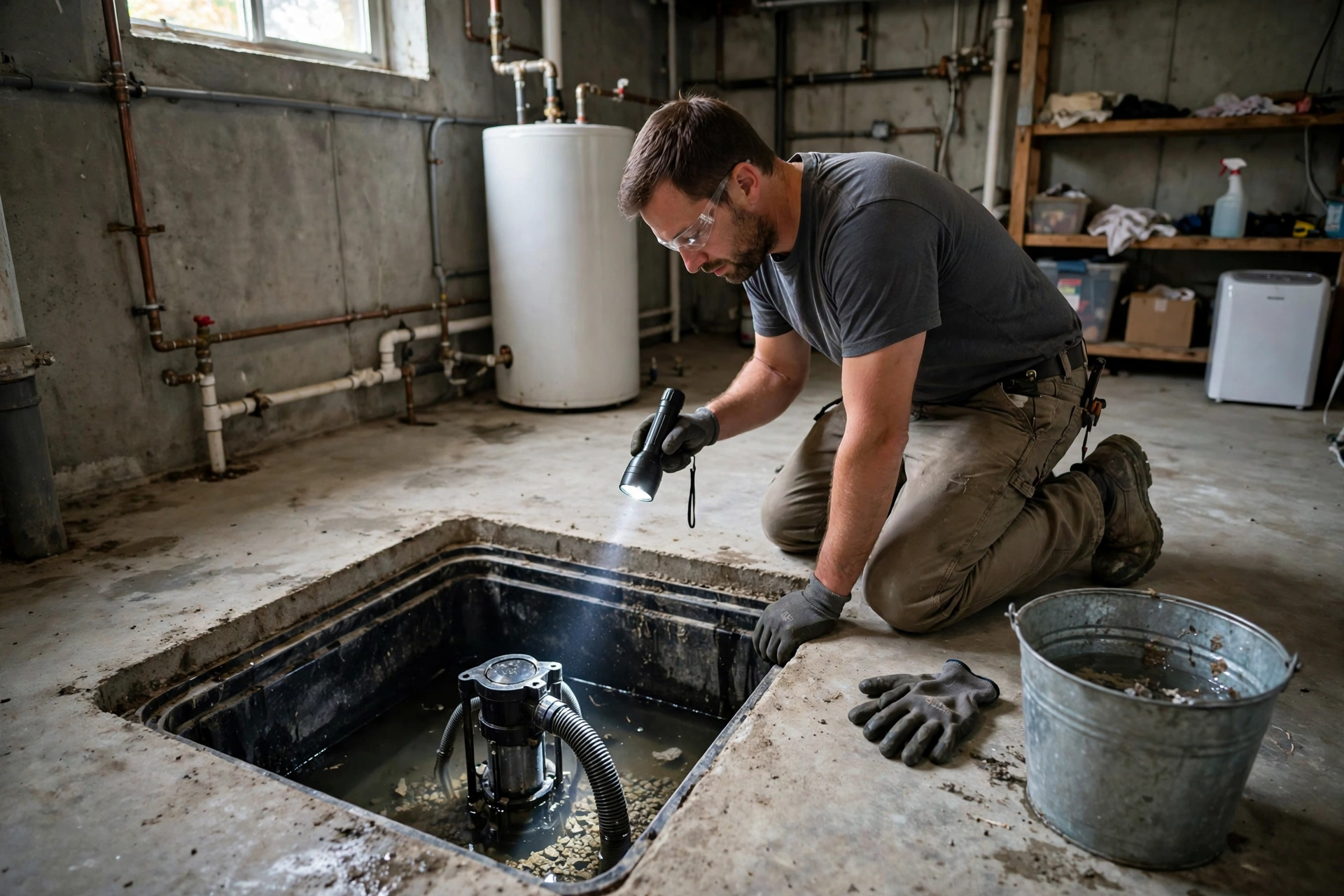
A sump pump failure means the pump in your basement or crawl space stops moving groundwater out of your home, and water can rise fast during the next heavy rain. The warning signs are a pump that runs constantly, hums without pumping, or stays silent while the pit fills. If you spot one, call Property Restoration New Orleans at (504) 520-4646 for help.
Key takeaways
- A sump pump moves groundwater out of the pit before it floods the lowest level of your home.
- Common failures: a stuck float switch, a tripped breaker or GFCI, a dead backup battery, a frozen or blocked discharge line.
- The bucket test takes about two minutes and shows whether the pump starts, empties the pit, and stops.
- Never step into standing water while the power is on — switch off the basement circuits first.
- Rain is forecast for Monday 16 November, so test the pump this weekend.
What does a sump pump do, and why does it matter in New Orleans?
A sump pump sits in a pit at the lowest point of your home, usually in a basement or crawl space. Groundwater collects in the pit, and when the water rises high enough, a float switch turns the pump on. The pump pushes the water out through a discharge pipe, away from the house, then switches off. The whole cycle runs on its own, and most homeowners never think about it until it stops working.
In New Orleans, that pump matters more than in most cities. The city sits below sea level with a high water table, so a heavy downpour can fill a sump pit in minutes. When the power goes out during a storm, a pump with no backup stops at exactly the moment it is needed most — which is why storm damage restoration so often starts with water that a failed pump let in. Cold brings a different failure: a discharge line that ends above ground can freeze where it exits the house. The strong cold front that moved through on 12 November, with Saturday 14 November the coldest morning of the weekend, is the kind of swing that tests older discharge lines — and rain is forecast to return on Monday 16 November.
What are the warning signs of a failing sump pump?
Most sump pumps give warnings before they fail outright. Act on the first sign you notice, rather than waiting for the next storm to find out.
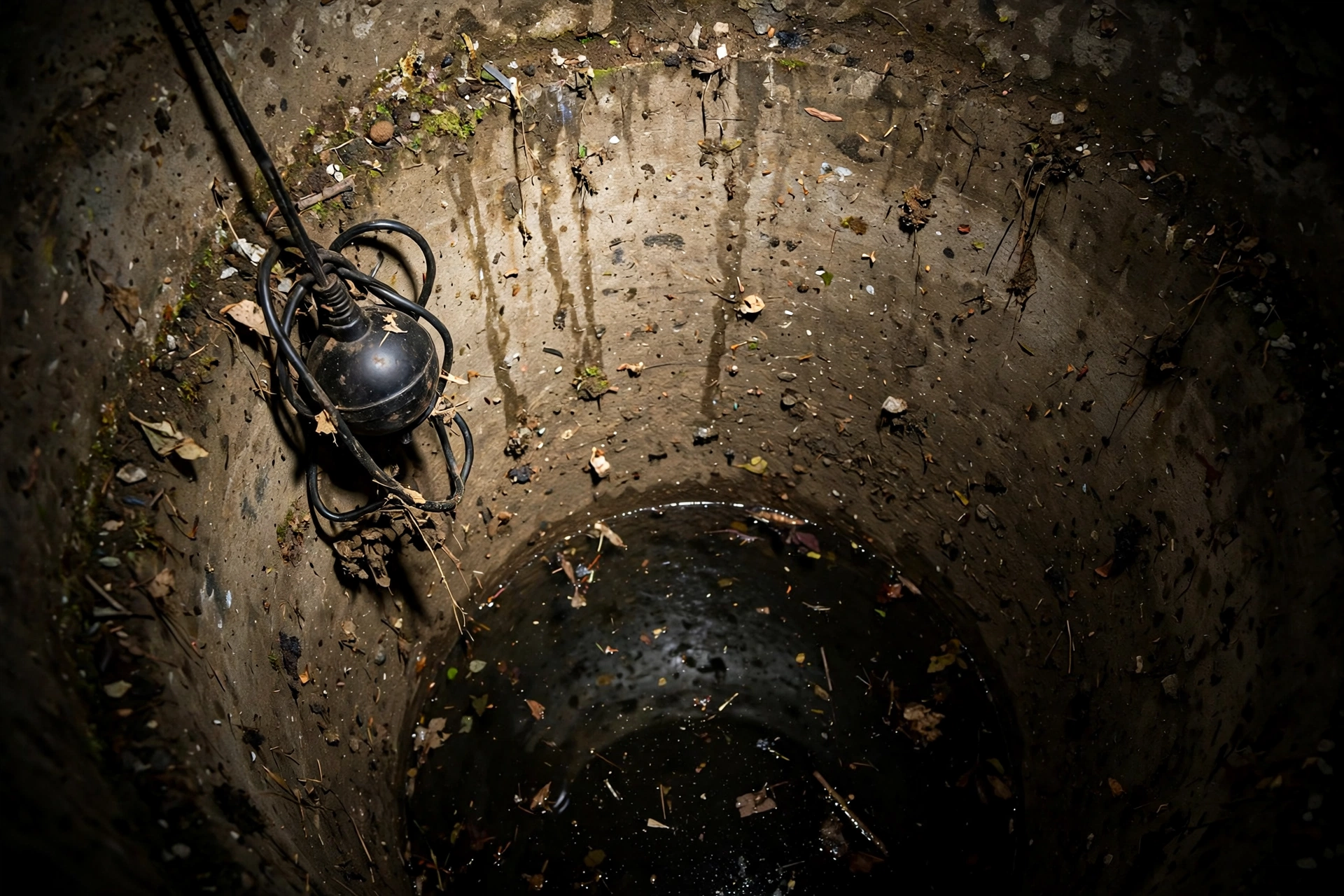
- It runs nonstop. A stuck float, a failed check valve, or a pump too small for the water coming in can keep it running without a break — and constant running wears the motor out fast.
- It hums but moves no water. The motor has power, but the impeller or intake is blocked, or the discharge line is frozen or clogged.
- It short cycles. Turning on and off every few seconds often points to a float problem or a failed check valve. Each short cycle adds wear, and the pump can burn out without warning.
- It never turns on. A tripped breaker, a tripped GFCI outlet, an unplugged cord, or a float trapped against the pit wall can all stop a pump. If the pit is filling and the pump is silent, something has already failed.
- Strange noises. Grinding, rattling, or squealing can mean worn bearings or debris in the impeller.
- Rust, corrosion, or a bad smell. Rust on the pump body and a stale smell from the pit suggest parts are breaking down or water is sitting where it should not.
- Damp baseboards or a musty smell near the pit. Water stains, damp baseboards, or a musty smell along the wall closest to the pit after a storm mean water has already escaped. The signs of water damage in walls often appear alongside this dampness. A chirping high-water alarm, or a warning light on the backup battery, is another clear signal.
How can you test your sump pump in two minutes?
The bucket test is the fastest way to know whether your pump still works. Do it this weekend, before the rain forecast for Monday.
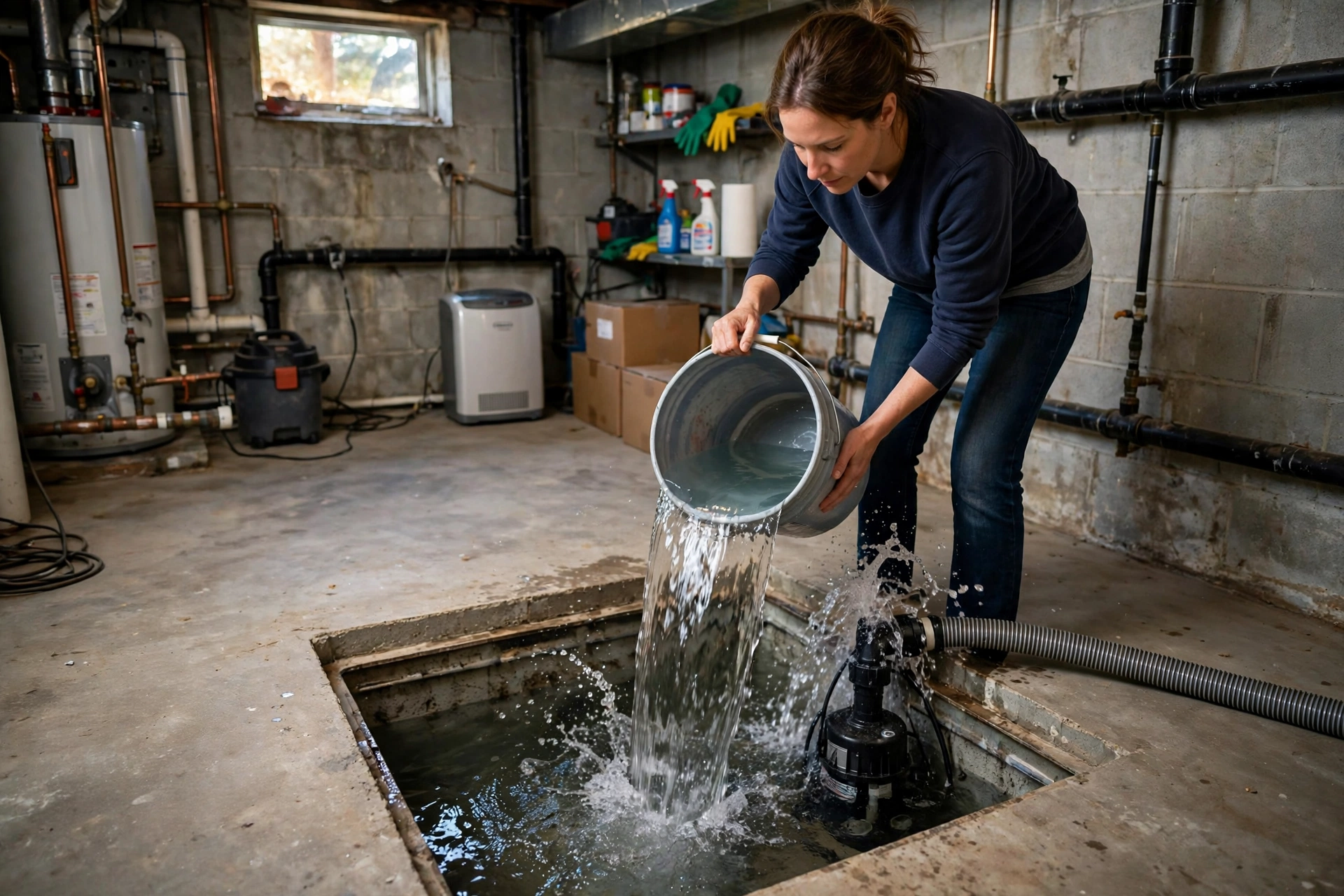
- Check the power first. Make sure the cord is plugged in, the breaker is on, and the GFCI outlet has not tripped. Keep your hands dry and stay out of any standing water.
- Pour a bucket of water into the pit. Pour slowly until the float rises. The pump should start, lower the water, and stop.
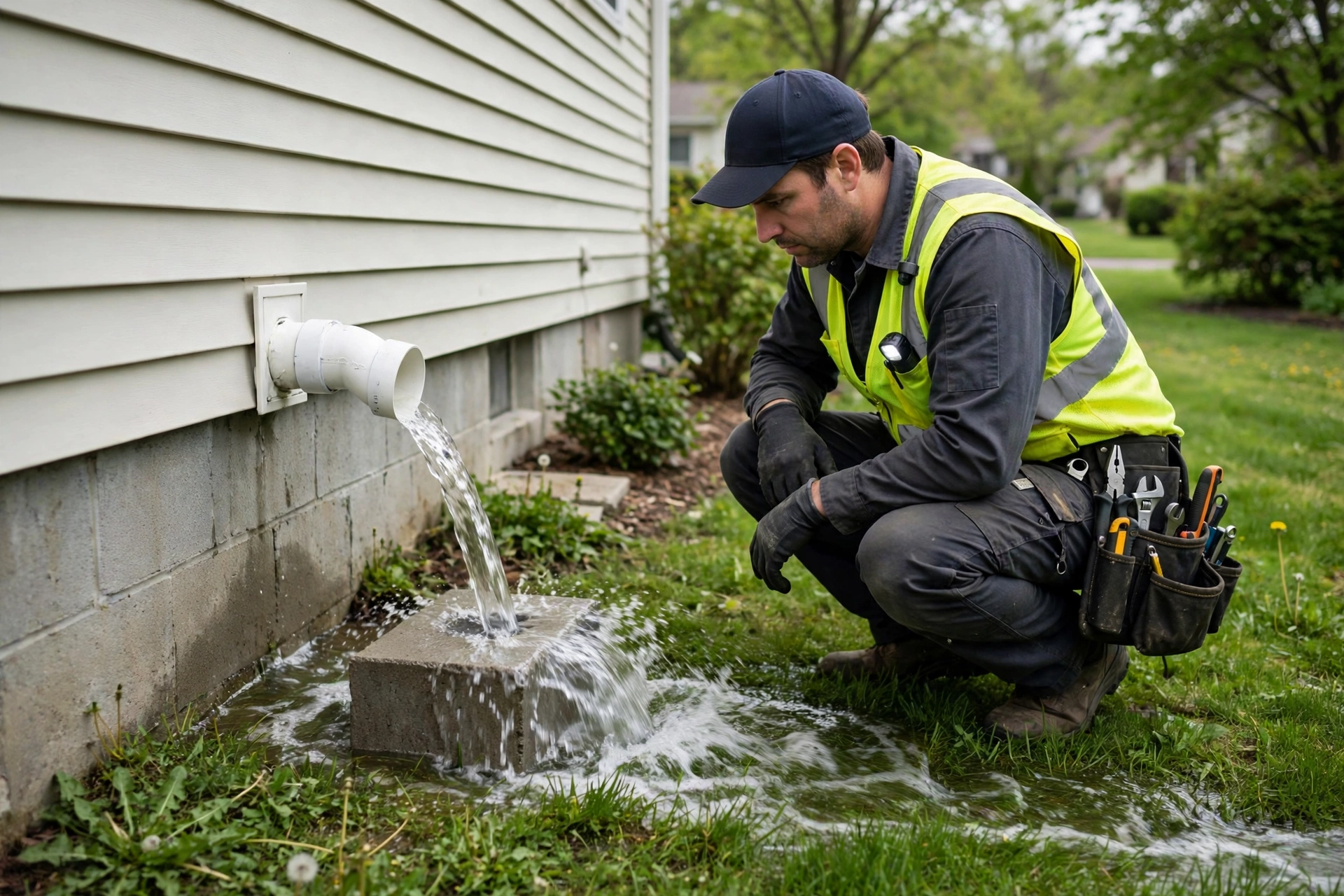
- Confirm the water exits outside. Check that water is flowing out of the discharge outlet, away from the foundation. A weak trickle while the pump runs hard means a blockage, a kink, or a frozen section.
- Watch how it stops. If the pump starts and stops every few seconds, the check valve may be failing and letting water flow back into the pit.
If the bucket test fails, or the pump hums without pumping, do not keep running it. Call a plumber and describe exactly what the test showed: whether the pump started, what it sounded like, and whether water came out of the discharge line.
What should you do first if your sump pump fails?
Put safety first. Sump water has passed through soil and the pit, so treat it as dirty water, not clean tap water.
- Stay out of standing water while the power is on. Never wade into a flooded basement while the power is on, or while an electric pump or extension cord sits in the water. Switch off the basement circuits at the panel first, if you can reach it from dry ground — or wait for an electrician if the panel is in the wet area.
- Check the simple causes. If the panel is dry and reachable, check whether the breaker or GFCI tripped and reset it once. Check that the cord is plugged in and the float moves freely. If the power is out, or the pump runs without moving water, the simple checks are done — call for help.
- Move valuables and slow the spread. Lift boxes and electronics off the floor. Towels and a wet vacuum can slow rising water, but they are not a substitute for a working pump.
- Call for help with the water damage. Once the pump is fixed, the wet flooring, walls, and belongings still need proper drying. Our team provides water damage restoration across New Orleans, including moisture checks and drying. Call (504) 520-4646 — we are available 24/7.
- Check for mould early. Dampness left for more than a day or two can feed mould growth under flooring and inside wall bases, often before you can see it. If dampness or a musty smell has been present for days, ask about mold remediation alongside the drying work.
A damp floor is not always a pump problem. A hidden pipe leak under the concrete can look very similar — the slab leak signs to check include a rising water bill and warm spots on the floor. If the pit is dry but the floor is wet, the water may be coming from somewhere else entirely.
How can you prevent sump pump failure?
Most sump pump failures are preventable. The pump fails quietly, in a dark pit, for months — and nobody discovers it is dead until a storm fills the basement. A short routine stops that happening.
- Test it regularly. Run the bucket test once a month in the wet season and at least twice a year otherwise — once in early spring, once in autumn — and again before any big storm.
- Fit a battery backup. A backup battery keeps the pump running through a power cut, when New Orleans pumps are needed most. Check the battery twice a year and replace it every few years — its capacity fades silently.
- Keep the pit and float clear. Clean silt and debris out of the pit once a year, and make sure the float moves freely without catching on the pit wall, the power cord, or debris.
- Check the discharge line before cold weather. Walk the line to its outlet. It should be clear, sloping away from the house, and discharging well away from the foundation. A line that freezes solid at the outlet leaves the pump with nowhere to send the water.
- Replace an ageing pump before it fails. With regular testing and cleaning, a sump pump often lasts around ten years. A pump older than that, or one showing the warning signs above, is living on borrowed time — budget for a replacement rather than waiting for a flood to decide for you.
Will homeowners insurance cover sump pump failure damage?
It depends on your policy. Damage from a sudden, accidental pump failure is often covered, but the pump repair itself, and damage from wear, neglect, or a pump that was already failing, commonly are not. Many standard policies also exclude groundwater seepage unless a sump-pump-failure endorsement was added. Photograph everything, keep your receipts, and check your policy or ask your insurer before work starts rather than assuming either way.
Frequently asked questions
How long does a sump pump last?
With regular testing and cleaning, a sump pump often lasts around ten years. A neglected pump — one with a stuck float, a clogged intake, or a dead backup battery — can fail much sooner, sometimes within a few years.
Can a sump pump fail during a power cut?
Yes. Power loss during a storm is one of the most common causes of sump pump failure, because the pump stops at exactly the moment groundwater is rising fastest. A battery backup keeps it running through the outage.
Why does my sump pump run all the time?
Usually a stuck float switch, a failed check valve letting water flow back into the pit, a pump too small for the water coming in, or very high groundwater. Constant running wears the motor out, so have it checked rather than letting it run.
Should I unplug a sump pump that will not stop running?
No. Unplugging a working pump lets the pit fill and the water spread. Check the float and the discharge line first, and call a plumber if it keeps running — the cause is usually a part that needs replacing.
Does a sump pump need a battery backup in New Orleans?
It is strongly recommended. Storms in New Orleans cut power at the same time as heavy rain raises groundwater, so a pump with no backup is most likely to fail when it is needed most. A backup battery and a high-water alarm are the two cheapest protections you can add.




One Comment